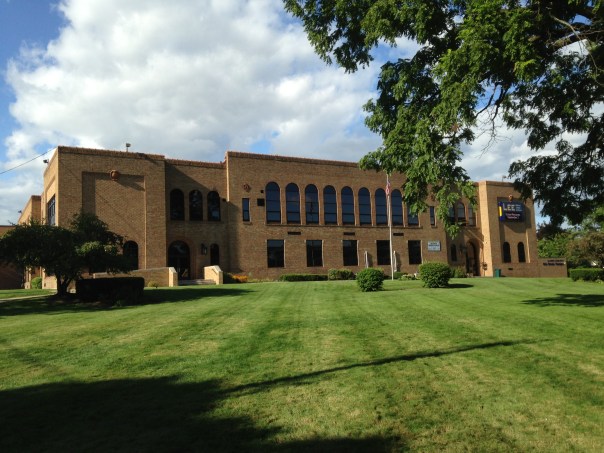
Wyoming Public Schools Superintendent Craig Hoekstra announced over the weekend that students and staff at Gladiola Elementary School will move to remote learning after receiving notification from the Kent County Health Department of a positive COVID-19 test result.
All other WPS school buildings will remain open for in-person learning.
The day of the announcement, Saturday, Oct. 17, the district was notified by the Kent County Health Department (KCHD) that an individual at Gladiola elementary had received a positive COVID-19 test result. Due to the extent of possible students and staff who made contact with this individual, the KCHD has recommended that the district close Gladiola elementary for in-person instruction.
The closure period will run from today, Monday, Oct. 19, through Wednesday, Oct. 28, and all “learning during this timeframe will be conducted online,” according to the statement.
“Out of an abundance of caution and in collaboration with the Kent County Health Department, it has been determined that closing the building will give the KCHD the necessary time to complete contract tracing and contact any staff and/or student(s) that may have come in contact with those who have tested positive,” according to the statement. “This will also allow us to slow any potential community spread. During the closure, the District will thoroughly clean and disinfect the school building while staff and students are not present.”
The district statement also “urges all WPS staff and students who experience symptoms or who may have been exposed to COVID-19 to get tested and self-quarantine. Parents are encouraged to monitor their children for the onset of any symptoms related to COVID-19. If there is any change in your child’s health, please contact your medical provider.”
The KCHD offers free COVID-19 screenings at multiple sites via appointment or walk-in. More information on sites and appointments is available online here or by calling 616-632-7200.
The district also “urges all of our students, staff and families to comply with the CDC guidelines to avoid further spread of COVID-19 in our community.”
Gladiola families were reminded to check their email and ParentVue accounts for additional updates.
More information on Wyoming Public Schools is available at wyominggps.org.
The Kent County Sheriff’s Department works to combat community violence, but it is looking to get some help with newly funded grants to community nonprofits. (KC Sheriff’s Department)
The Kent County Board of Commissioners announced this week the recent allocation of $500,000 of CARES Act funding to community violence prevention grants “to help stem the increasing rates of violence occurring during the COVID-19 pandemic.”
The grant program will be administered by the Heart of West Michigan United Way.
Grant applications are due to the Heart of West Michigan United Way by noon on Monday, Oct. 19, and all funds must be expended by Dec. 15, 2020 pursuant to federal requirements.
“We have seen a rise in violent crime throughout the County since the start of the pandemic,” Kent County Sheriff Michelle LaJoye-Young said in supplied material. “We need to work together as a community on prevention and education initiatives that can help reduce the incidents that result in violence.”
The Community Violence Prevention Grant Program will assist nonprofit organizations in preventing violent behaviors from occurring, stopping the progression of violence, and rehabilitating individuals with established violent behavior, according to the announcement.
To receive a grant, applicants must be a 501(c)(3) based in Kent County, have been in existence for at least one year, deliver all programming in Kent County, comply with all applicable state and federal laws, and provide a written summary of the project and its outcomes in January 2021.
A selection committee comprised of Kent County leaders, law enforcement, and community members will award grants ranging from $5,000 to $150,000.
“Ensuring we have a safe community is a fundamental role of government. However, we alone cannot solve the spike in violent crimes that is occurring because of COVID-19,” Kent County Board of Commissioners Chair Mandy Bolter said in supplied material. “It was a priority for the board to support local, grassroots programs that are working to make our communities safe for all.”
On the latest episode of WKTV Journal In Focus, on Nov. 3., on the back side of their very crowded ballot, Godfrey-Lee Public Schools district voters will be asked to support a bonding proposal which would allow the district to put out bonds for about $18 million for a wide range of building and facility projects.
The district not only faces the task of modernizing portions of its middle and high school that are nearly 100 years old, it must make repairs to a portion of the building which collapsed last year. But modernization and repairs are only the most obvious part of the long-range plans the district has for its buildings.
With us to talk about the bond proposal, what it would fund and why this choice of timing to take it to voters, is district superintendent Kevin Polston.
WKTV Journal In Focus airs on cable television in the Wyoming and Kentwood areas on Comcast WKTV Channel 26 and on AT&T Channel 99 Government channel (For dates and times on Channel 26, see our Weekly On-air Schedule. For dates and times on Channel 99, visit here). All individual interviews included in episodes of WKTV Journal In Focus are also available on YouTube at WKTVvideos.
With more fans allowed in the stands thanks to last week’s MHSAA decision on easing capacity limits at football games, East Kentwood High School will host Jenison this week in an important OK Conference Red contest.
WKTV’s Featured Game crew will be at the 7 p.m. game and will broadcast the game live on our cable television channels as well as live-steam it at WKTV.org.
The Falcons enter the contest with a 1-2 record in the shortened 6-game regular season, while the Jenison Wildcats are 2-1. While both teams will make the expanded playoff field this season under a yet-to-be fully defined Michigan High School Athletic Association (MHSAA) format, East Kentwood head coach Tony Kimbrough wants his team to get on a roll — both offensively and defensively.
WKTV caught up with Coach Kimbrough, and senior Chris Brown, to talk about the expanded playoffs and what’s happening on both sides of the ball for the Falcons.
WKTV featured games will on cable television in Wyoming and Kentwood on Comcast Channel 25 and AT&T Channel 99 Community Channel, and we will livestream games where allowed on WKTV.org (click on Live).
WKTV will also rebroadcast the games on the night of the game and various days and times the week after. See the programming schedule at wktv.org. For more information on WKTV coverage of football and other fall prep sports, follow us at wktvjournal.org/sports.
All Featured Games, as well as other high school sports and community events covered by WKTV’s video coverage team, are available on-demand within a week of play at wktvlive.com.
With election day now less than four weeks away, Kent County Clerk Lisa Posthumus Lyons announced this week her office’s Kent County Votes, a voter education effort which offers county voters information resources “to vote safely and securely up to and on November 3rd.”
Part of that effort is a public service announcement recorded at WKTV Community Media, as well as radio and digital advertisements, and upcoming tele-townhall events will provide voters the opportunity to ask questions of Kent County election administrators.
The effort also includes a redesign of the Kent County Elections website, now accessible via KentCountyVotes.com.
“Your right to vote is sacred, and so is your right to safety,” Posthumus Lyons said in supplied material and the WKTV video. “In Kent County we take both very seriously. COVID-19 has disrupted a lot this year, but it won’t disrupt this fall’s election.”
Four tips for voters
According to a statement from the clerk’s office, there are four aspects of the Nov. 3 election voters should be aware of:
Whether voters cast their ballots in-person at the polls or cast an absentee ballot, their vote will be counted this year. Clerks across the county are busy modifying polling places to adhere to CDC safety and social distancing guidelines as well. It will be safe to vote in person. Polling locations can be found at kentcountyvotes.com.
Recent election law changes make registering and voting easier than ever before. Every registered voter now has the right to vote absentee without needing an excuse. Also, citizens can register right up to and even on election day at their local clerk’s office, and still cast their ballot. However, it is highly encouraged to register before election day.
The new State of Michigan Absentee Ballot return envelope. (WKTV)
Those choosing to vote absentee have three options for returning their ballots: hand deliver a completed ballot to your city or township clerk’s office; return the ballot by mail, but plan accordingly by mailing the ballot back at least 7-10 before Election Day; or drop your ballot off in a designated secure drop box in the city or township where the voter is registered. Drop box locations can be found at kentcountyvotes.com.
Posthumus also reminds voters to “be patient when it’s time for results … The Clerk’s office expects a larger-than-ever number of absentee ballots, which might mean waiting a little longer for results. Kent County election officials will work as quickly as possible to report complete and accurate election results.”
Godfrey-Lee Public Schools announced today, Oct. 7, that it has made rapid-response saliva tests available to all students and staff with symptoms consistent with COVID-19.
According to a supplied statement, the testing program is a pilot project conducted in collaboration with the Kent County Health Department and Arctic Medical Laboratories, and provided at no cost to students or families. Students or staff that are flagged by daily health screenings will be eligible for testing that has a 24-hour response time.
“Testing is another mitigation strategy we believe to be critical in keeping our schools open for in person learning.” Kevin Polston, superintendent of Godfrey-Lee Public Schools, said in supplied material.
The pilot project at Lee will be closely watched by the Kent County Health Department (KCHD) and other health officials.
“Once we learn valuable lessons from this pilot with the Godfrey Lee school district, we will offer this rapid test resource to other Kent County School districts,” Joann Hoganson, KCHD Community Wellness Division director, said in supply material. “Our goal is to identify COVID-19 students and staff quickly so that they can be isolated. This will help prevent the spread of the virus in the schools.”
Similar to other testing sites in Kent County, private health insurance or Medicaid will be billed for the testing for those covered by insurance, according to the announcement. And the county health department is using federal CARES Act funding to pay for tests for uninsured individuals “to make testing accessible to all” students.
“Collaboration amongst public organizations demonstrates the mutual value of service to our community,” Polston said. “Our shared responsibility is maintaining overall public health and safety. Schools are vital for learning, but also for other essential services critical to student wellbeing. Accessible, rapid-response testing will keep our schools as safe as possible.”
Following the Friday, Oct. 2, decision by the Michigan Supreme Court to strike down Gov. Gretchen Whitmer’s COVID-19 related executive orders, the Kent County Health Department issued a statement today that, in part, said that “orders for isolation and quarantine are not affected by the Supreme Court’s ruling.”
The Oct. 5 statement, attributed to Dr. Adam London, Director of the Kent County Health Department (KCHD), was in response to the supreme court ruling that the Governor did not have the authority to issue executive orders under emergency declarations past April 30 of this year.
“Actions such as orders for isolation and quarantine are not affected by the Supreme Court’s ruling,” Dr. Landon said in the statement. “These actions are authorized under the Michigan Public Health Code, a law that was enacted by the Michigan Legislature in 1978. The KCHD will continue to use public health orders and enforcement actions as appropriate under law as this agency has done for many decades.”
The KCHD statement also “stresses” the importance of adhering to the guidelines set forth by the Centers for Disease Control and Prevention to mitigate the spread of COVID-19. Those strategies include wearing facial coverings in indoor public places, maintaining social distance, frequent hand washing, and staying home if you are sick.
“The KCHD is confident Kent County residents will continue to take the steps necessary to place their families, friends, and coworkers at the least possible risk for contracting COVID-19,” according to the statement.
Also according to the statement, the KCHD “is hopeful the Legislature and the Governor will work together to protect public health in a collaborative and expedited manner. The KCHD is communicating closely with officials at the Michigan Department of Health and Human Services and other local health departments to identify pathways forward which respect rule of law and are protective of the health and safety of our communities.”
Gov. Whitmer, also today, Oct. 5, issued a statement that address the issue of continued health concerns related to the COVID-19 pandemic.
Gov. Gretchen Whitmer. (Governor’s office)
“Governor Gretchen Whitmer and Michigan Department of Health and Human Services (DHHS) Director Robert Gordon filed a motion with the Michigan Supreme Court (today) requesting that they clarify that their October 2nd ruling does not take effect until Friday, October 30th. … Ensuring this transition period will allow the governor, local health departments, and the Michigan Legislature to work together to put protections in place that will keep Michiganders safe and protect our economy.”
The first day of fall is here, on Sept. 22, and Frederik Meijer Gardens & Sculpture Park has opened its annual fall horticulture exhibition, Chrysanthemums & More!
The exhibition, which opened Sept. 18, reportedly the largest of its kind in Michigan, features expansive displays of chrysanthemums, fall foliage and family-friendly activities. The exhibition will be on display through Nov. 1.
“This year’s theme for Chrysanthemums & More! is ‘Naturally’,” Steve LaWarre, Meijer gardens director of horticulture, said in supplied material. “Our goal is that guests can experience the more natural and untamed side of the autumn season through the various displays of color, texture and patterns that are carefully designed to play upon the natural beauty of the changing fall landscape.”
Aware of the need for social distancing, even outdoors, plant displays throughout Meijer Gardens will intentionally be open and airy, “highlighting movement in contrast to a more traditional tight and manicured aesthetic of years past.”
The tower of mums at Meijer Gardens. (Supplied/Peter McDaniel)
The focal point of the inside display will be entering the Grace Jarecki Seasonal Display Greenhouse and witnessing a floor-to-ceiling chrysanthemum display. Presentations of large disbuds and beds of colorful plantings will complement this feature in the nearby Earl and Donnalee Holton Victorian Garden Parlor.
Outdoors, expansive beds of lush chrysanthemums will be arranged in stunning sweeps of color and will be balanced by a variety of ornamental plantings that highlight nature’s beauty.
Other activities coming this fall at Meijer Gardens include the Fall Bonsai Show, giant pumpkins and “Hallowee-Ones”.
Fall Bonsai Show, sponsored by the West Michigan Bonsai Club, will take place Oct. 3–4, and is open with regular admission. A variety of bonsai will be on display, from trees in early stages of training to lovely older trees. Also, visitors can watch bonsai artists at work and shop for bonsai trees as well as bonsai tools and supplies.
Dress up is encouraged but there will be no tricks or treats. (Supplied)
Also on that weekend will be Fall Family Day, on Oct. 3, 1-4 p.m., which will be focused on the Lena Meijer Children’s Garden. Activities include fall-inspired tunes and autumn-themed stories, a fiber arts demonstration and a naturalist walk.
Finally, Hallowee-Ones, for the “wee ones,” will occur Oct. 23, from 10 a.m. to noon, with parades at 10:15 and 11:15 a.m. This special event is designed for the youngest visitors, and children are encouraged to dress as a sculpture, mammal, fish, insect, bird, tree, flower, geologist or in any other way that highlights something about the Lena Meijer Children’s Garden. “No tricks, no treats, just fun!” according to supplied material.
On the latest episode of WKTV Journal In Focus, we host a discussion on the City of Wyoming Lions Club, a local member of Lions Clubs International, the world’s largest service club organization, with clubs in more than 200 countries.
Wyoming’s club, like all clubs, support the local community in various ways and assist people throughout the world with a focus on programs such as sight programs, guide dogs, donations to vision clinics, and support of various other community organizations.
With us is Kyle Austin, Wyoming Lions Club vice president and membership chairman, and we talk about what the local club does and the need for volunteer member to help them do their good work.
WKTV Journal In Focus airs on cable television in the Wyoming and Kentwood areas on Comcast WKTV Channel 26 and on AT&T Channel 99 Government channel (For dates and times on Channel 26, see our Weekly On-air Schedule. For dates and times on Channel 99, visit here). All individual interviews included in episodes of WKTV Journal In Focus are also available on YouTube at WKTVvideos.
On this episode of WKTV Journal In Focus, we have three short Zoom interviews with the Kent County Health Department. First we catch up with the ongoing and extensive work by the department during this time of the COVID-19 pandemic, but the department is also involved in more routine but non-the-less important activities including the need for important vaccinations and an on-going health survey.
First In Focus is an update on the current state of the COVID-19 pandemic here in Kent County, what has been done and what is being done by the Health Department and its local partners to keep us healthy and get us through these difficult times. With us is Dr. Adam London, Director, Kent County Health Department.
While the county Health Department’s relentless work protecting the community during this pandemic is probably first in everybody’s mind, county health workers are also concerned about the expected return of flu season — and the need for routine vaccinations of all kinds, for children and adults. There is also an ongoing countywide health survey of importance in process.
We talk with Mary Wisinski, Kent County Health Department Immunizations Supervisor, and then have a discussion on the current Kent County Health Department’s 2020 Community Health Needs Assessment with Maris Brummel, Kent County Public Health Epidemiologist. (The survey, which is available in Spanish as well as English, takes about fifteen minutes to complete and is available online at https://bit.ly/kentcounty20. Paper copies are also available.)
WKTV Journal In Focus airs on cable television in the Wyoming and Kentwood areas on Comcast WKTV Channel 26 and on AT&T Channel 99 Government channel (For dates and times on Channel 26, see our Weekly On-air Schedule. For dates and times on Channel 99, visit here). All individual interviews included in episodes of WKTV Journal In Focus are also available on YouTube at WKTVvideos.
The Kent County Board of Commissioners last week approved $2 million, part of a nearly $115 million federal CARES Act grant awarded to Kent County earlier this year, to help county schools reopen safely during the COVID-19 pandemic. All county schools — public, private and charter — are eligible for the funding.
The grants are based on the number of students enrolled in each school in 2019, with schools receiving approximately $16 per student, according to supplied material. The grants provide schools with flexibility in how they use the funds as they continue to implement back-to-school plans.
“We are fortunate to have this federal funding and be able to provide our schools with the resources they need to ensure our children continue to learn and grow,” Kent County Board of Commissioners Chair Mandy Bolter said in supplied material.
Eligible uses of the funding could include purchase of personal protection equipment and sanitation supplies, technology costs necessary for enhanced virtual learning, or to finance mental healthcare and nurses.
“We appreciate the support of the Kent County Board of Commissioners. This approval will help schools secure the needed resources and services to meet the needs of students during this pandemic,” Kent ISD Superintendent Ron Caniff said in supplied material.
The Kent County Board of Commissioners has previously allocated CARES funding for other programs to assist communities during the coronavirus pandemic, including the Kent County Small Business Recovery Program, shelter assistance, non-profit assistance, and a business personal protection equipment program.
For more information about the CARES Act and related Kent County efforts, visit here.
Grand Rapids Public Museum Vice President of Science and Education Dr. Stephanie Ogren and John Ball Zoo’s Bill Flannagan. (Supplied/Grand Rapids Public Museum)
The Grand Rapids Public Museum (GRPM) is participating in various scientific research projects along the Grand River with local partners. The future restoration of the Grand River will include restoring the namesake rapids, and activation of sites along the Grand River identified as key locations for public engagement, including the GRPM.
The GRPM provides historical, cultural and scientific interpretation to the watershed including how our actions have affected and will continue to affect the future of natural and human systems. To tell the river restoration story, there are data and knowledge gaps that the Museum and partners are working to fill, including information about the historic and current fish community, how humans interact with the river, and how the restoration actions may change human behavior. The Museum and partner agencies have teamed up to answer some of these questions. The Museum’s research team is led by the GRPM’s scientists on staff, Dr. Stephanie Ogren, Vice President of Science and Education and Dr. Cory Redman, Science Curator.
“It’s a rewarding experience to collaborate with local partners while working on research projects that will help us better understand the dynamics of the Grand River, said Dr. Stephanie Ogren, the GRPM’s VP of Science and Education. “The Grand River is such an important resource and focal point within Grand Rapids, and it’s our goal to conserve and share it’s impact with the community.”
Angler Counts The Grand Rapids Public Museum, Encompass Socio-ecological Consulting LLC, John Ball Zoo and the Lower Grand River Organization of Watersheds are studying how the Grand River is used by anglers. The research will help document the long-term changes that occur when the city of Grand Rapids begins the river rehabilitation that will add two miles of rapid habitat throughout downtown Grand Rapids, as proposed by Grand Rapids White Water. The research uses a citizen science technique where professionals and the public work together to document the number of people fishing in the downtown reach, how they are fishing and the general locations. Citizen Science Training for Angler Counts will take place on September 8 at 6 p.m. (by registration only) on the Museum’s South lawn, nearest the Blue Bridge. To register for Citizen Science training please visit grpm.org/citizenscience. Training will take place outside in small groups. Masks are required and social distancing measures will be in place.
A Rainbow Darter (Supplied/Grand Rapids Public Museum)
Fish Community Assessment This annual assessment of fish species will provide a baseline dataset of fish communities in the area of the proposed restoration project. Fish communities are counted through electrofishing surveys. It is a partnership between Grand Valley Metro Council, Grand Valley State University, Encompass Socio-Ecological Consulting and the GRPM.
Lake Sturgeon Juvenile Assessment This research team is working to document young Lake Sturgeon in the Lower Grand River. If found, these fish would indicate successful reproduction and recruitment into the Grand River population. This research project is led by the Museum in partnership with Encompass Socio-Ecological Consulting, John Ball Zoo and Grand Valley Metro Council.
Macroinvertebrate Assessments Annual macroinvertebrate (aquatic insects) surveys are conducted near the Museum’s Spillman Carousel in the Grand River. This project was completed in partnership with the Grand Rapids White Water Summer Science and Leadership program in 2019. Due to COVID-19, the GRPM is completing the work this summer. The Museum is contributing to a large data collection effort, spearheaded by Grand Valley Metro council with many partners.
For more information on the GRPM’s research projects, please visit grpm.org.
Grand Rapids Public Museum Science Curator Dr. Cory Redman (sitting) and Cara Decker look through materials collected from the Grand River. (Supplied/Grand Rapids Public Museum)
Annually MSU and 4-H students show off their livestock for live auctions at the Hudsonville Community Fair as part of a final project. Due to COVID-19 the fair cancelled for 2020. This news left young individuals devastated without the opportunity to showcase their livestock that they had worked hard to train and raise.
Some of these students have been preparing for live auctions since July of 2019. As families have been widely affected by the pandemic, these students also live in households of families struggling during this crisis.
To warm the hearts of these young students, Hudsonville Community Fair partnered with Miedema’s Charity Auctions to host an online auction. This auction helps to provide financial means for these students seeking to attend college and showcase at future livestock auctions.
Andrew Meekhof-Vanspyker show his sheep. (Supplied/Hudsonville Community Fair)
The auction contains a wide variety of beef, pork, and lamb for sale on Miedema’s website and is scheduled to end Thursday, Aug. 27.
Kent County and the Grand Rapids Area Chamber of Commerce, on Aug. 18, announced the current status of the Kent County Small Business Recovery Grants fund, a program which intends to use $25 million in federal CARES Act funds to provide grants — not loans — to county small businesses impacted by the COVID-19 pandemic.
During a Zoom press conference, it was announced that the program has received 2,112 applications and 1,318 businesses have qualified for short-term economic relief grants ranging from $5,000 to $20,000. Qualifying businesses are those which have suffered lost business and income due to the COVID-19 pandemic.
In June, the Kent County Board of Commissioners approved a plan to disperse the $25 million CARES Act dollars — a portion of the $94.2 million approved for allocation from the $114.6 the county has received for pandemic relief — to small businesses in the form of grants and technical assistance. The board also selected the Grand Rapids chamber to be the application, review and selection recommendation organization for the small business grants.
To date, 721 grant checks totaling $5.9 million have been mailed to small businesses throughout Kent County, according to information supplied during the Zoom press conference. Another $4.4 million will be distributed to approximately 597 businesses as soon as the required paperwork is complete. So less than half the total $25 million has been distributed or earmarked for distribution.
“Our small businesses are struggling through no fault of their own as a result of the pandemic,” Mandy Bolter, Kent County Board of Commissioner Chair, said in supplied material. “We worked quickly to get aid into their hands to help keep the economy moving and protect the jobs of our friends, families and neighbors. While we have more work to do, I’m thankful for the efforts of my fellow commissioners, business groups, community members, and county staff who successfully implemented the first round of grants.”
According to information compiled and released by the Grand Rapids Chamber of Commerce, overall and using the chamber designations, the list of 1,318 awardees is comprised of 36.6 percent White/Caucasian, 12.9 percent Hispanic/Latino, 21.4 percent African American/Black, 13.3 percent Asian, 1.4 percent Middle Eastern, 8 percent multi-racial, and .2 percent Native American businesses. Additionally, 6.3 percent of applicants did not indicate their racial or ethnic classification.
The fund is designed to support for-profit businesses with 0 to 25 full-time equivalent employees located in Kent County. It is also focused on businesses that have not been able to access to, or have been declined for, other local, state, or federal relief funds, or “need additional support to weather this crisis,” according to the chamber’s website.
“Our team at the Grand Rapids Chamber has worked purposefully to provide assistance to applicants to ensure business owners have a smooth application process,” Dante Villarreal, vice president of business and talent development at the chamber, said in supplied material. “The need for this relief is critical, and we are working to ensure this funding is allocated quickly and efficiently.”
During the Aug. 17 Zoom press conference, Villarreal said there are about 5-6 weeks remaining in program, and that the chamber is now focused on bars and restaurants to reach out to with information. He also said the average award was about $8,000, and that service based industry is largest grant recipients, at about 49 percent.
Villarreal also emphasized that not only is grant funding still available, but qualification verification and application assistance from chamber staff is available as well.
One local small business which has benefited from the grant program, and the assistance of the chamber, is Mod Bettie Portrait Boutique.
Elise Kutt, of Mod Bettie Portrait Studio, discussed the value of her gaining a grant from the Kent County Small Business Recovery Grants program. (from a GR Area Chamber of Commerce video)
“At the beginning, when COVID struck, I had no idea what we were going to do,” Elise Kutt, founder of Mod Bettie, said in a chamber-produced video. “Receiving this grant, for my business, allowed me the ability to take care of business … The unknown is the scariest part, and now I feel so much relief and I am able to put my time and energy back into what I am really good at.”
Villarreal also said chamber staff is available to provide technical assistance, including cost-cutting measures, six-month cashflow projection, analysis with a business consultant, creditor recommendation review, and connections to other critical resources.
A week after the announcement that high school football competition will have to wait until spring 2021 — at the earliest — an expected announcement by the Michigan High School Athletic Association on whether girls volleyball, boys soccer, and girls swimming and diving would be allowed in Wyoming and Kentwood high schools is being delayed until at least next week.
According to a statement today, Aug. 20, from the Michigan High School Athletic Association (MHSAA), its Representative Council has “approved the start of competition in girls volleyball, boys soccer and girls swimming & diving in regions of Michigan authorized for that activity by Governor Gretchen Whitmer’s executive orders, with competition in those sports pending in regions where those activities are not yet allowed” as part of state actions preventing spread of COVID-19.
“Our Council has made clear it is ready to offer students these opportunities, pending approval from Governor Whitmer that we may do so,” Mark Uyl, MHSAA executive director, said in supplied material. “We have been told that within a week, future guidance will address athletic issues that exist in current executive orders. We are awaiting that guidance.”
Schools in the northern Lower Peninsula and Upper Peninsula — designated as Regions 6 and 8, respectively, by Gov. Whitmer’s executive orders — are allowed to begin competition this week, on Aug. 21, as originally scheduled.
But schools in all other regions (1-5, and 7) must delay any competition for the time being, according to the announcement. Kent County is in Region 2.
Lee High School soccer practice (from 2019). (WKTV)
Local high school volleyball, soccer and swim teams may continue outdoor practice, “pending further executive orders allowing for the opening of indoor facilities and physical distancing while competing in those areas,” according to the announcement.
Teams began outdoor practice in volleyball, soccer, swimming and diving, cross country, golf and tennis on Aug. 12. Lower Peninsula girls golf and boys tennis could have began competition Aug. 19, with cross country competition beginning Aug. 21.
Football practice began Aug. 10, but on Aug. 14 the Representative Council voted to postpone the Fall 2020 football season to Spring 2021, also due to COVID-19 concerns.
MHSAA staff, according to the announcement, was authorized by executive order to create all guidance for a return of school sports, “and over the last eight weeks has worked to fulfill this mandate while complying with all of Governor Whitmer’s executive orders. The Council was prepared today to approve competition in volleyball, soccer and swimming & diving for all schools in all regions, but was unable to do so because of questions remaining on which activities are still not allowed.”
So the MHSAA, like local high school athletes, coaches and parents, continues to wait state government action.
“The MHSAA and Representative Council are committed to following all current and future Executive Orders and safety precautions,” Uyl said in supplied material. “However, we need more answers before we can give all of our member schools the go-ahead to play each other again, and the majority of our schools are in regions that are not yet allowed to take part in volleyball, soccer and swim.”
Extra coach contact, practice days for football and others
Also in the MHSAA announcement, it was stated that the MHSAA Representative Council did approve out-of-season coaching adjustments allowing football and spring sports coaches more contact with their athletes in advance of the 2021 season.
East Kentwood High School’s football team (shown at practice from the 2019-20 season). (WKTV)
To provide additional offseason activity for sports that have had their full seasons canceled or moved, the council approved 16 contact days for football and all spring sports to be used for voluntary practices among students from the same school only.
Football may schedule their contact days from Aug. 24 through Oct 31. Spring sports — baseball, softball, girls soccer, track and field, girls and boys lacrosse, boys golf, Lower Peninsula girls tennis — may schedule their 16 contact days for voluntary practices from Sept. 8 to Oct. 31, “if the school permits and all safety protocols are followed.”
Football and all spring sports then may conduct skill work with coaches and up to four players at a time beginning Nov. 1 until the first day of official practice this upcoming spring. Coaches also may work with an unlimited number of players on general conditioning during that time.
A calendar for the inclusion of football into Spring 2021 is expected to be released later this fall, “upon Council approval at a later meeting,” according to the announcement.
The Michigan Department of Health and Human Services (MDHHS) announced last week that, as a response to the continued COVID-19 pandemic, approximately 350,000 Michigan families will continue to have access to additional food assistance benefits during August.
Michigan previously approved the additional food assistance through July and now that is being extended for the month of August with approval from the U.S. Department of Agriculture Food and Nutrition Service, according to the MDHSS statement.
“COVID-19 and its impact on the economy of the nation and state has made it more difficult for many Michigan families to pay for nutritious food,” Lewis Roubal, chief deputy director of opportunity for MDHHS, said in supplied material. “The department wants to provide additional assistance to help them through this health care and economic emergency.”
Eligible clients will see additional food assistance benefits on their Bridge Card by Aug. 30, with payments beginning for some households on Thursday, Aug. 20. Additional benefits will be loaded onto Bridge Cards as a separate payment from the assistance provided earlier in the month.
Nearly 1.5 million people in Michigan receive federal Supplemental Nutrition Assistance Program (SNAP) benefits through the state’s Food Assistance Program, according torte statement. Households eligible for Food Assistance Program benefits will receive additional benefits in August to bring all current SNAP cases to the maximum monthly allowance for that group size.
This change only applies to customers not currently receiving the maximum benefit amount. The 350,000 households that receive increased benefits represent close to 50 percent of the more than 700,000 Michigan households that received food assistance in June. The remaining households already receive the maximum benefit.
Eligible families do not need to re-apply to receive the additional benefits. People who receive food assistance can check their benefits balance on their Michigan Bridge Card by going online to www.michigan.gov/MIBridges or talk to a consumer service representative toll-free at 888-678-8914. They can ask questions about the additional benefits by calling or emailing their caseworker.
Customer service is available 24 hours a day, 7 days a week. Spanish and Arabic service is available. If you are deaf, deaf/blind or hard of hearing or speech-impaired, call the Michigan Relay Center at 7-1-1.
The Kent County Board of Commissioners announced Aug. 6 that it is seeking residents who are interested in serving the community through appointment to various boards, commissions, and committees. Most positions begin January 2021.
For example, the county Veterans Services Committee is seeking veterans who served honorably on active duty in the U.S. Armed Forces to work to support the county’s veterans population.
Kent County residents may apply for the various vacancies by completing an online application on the county’s website at accessKent.com/boardappointments. Resumes and cover letters are encouraged and may be attached. The application deadline is Sept. 30.
After the deadline, applications for the vacancies will be reviewed by the Legislative & Human Resources Committee, which will then recommend candidates to the full Board of Commissioners for final approval.
There are openings for terms effective Jan. 1, 2021 (unless otherwise noted) on the following:
Agricultural Preservation Board (openings for agricultural interest representative and township representative)
Community Corrections Advisory Board (openings for service provider and business representative)
Community Health Advisory Committee (openings for community-based organization representative, health care provider, and faith-based organization representative)
Community Mental Health Authority (Network180) Board (term begins April 1, 2021)
County Building Authority
Department of Health and Human Services Board
Fire Commission (openings for elected official and public representative)
Friend of the Court Citizen’s Advisory Committee (opening for custodial parent)
Gerald R. Ford International Airport (GRFIA) Authority Board
Grand Rapids-Kent County Convention/Arena Authority (openings for Kent County county resident and non-county resident (must live in Allegan, Barry, Ionia, Mecosta, Montcalm, Muskegon, or Ottawa counties)
Kent County Community Action Advisory Governing Board (openings for consumer, private, and public sector)
Kent County Family & Children’s Coordinating Council (openings for advocates and private funding representatives)
Kent District Library Board (Region 3, a resident of Alpine, Plainfield Township, or City of Walker; and Region 7, a resident of Byron Township or City of Grandville). Applicants must live in Region 3 or 7.
Remonumentation Peer Review Group (must be a professional surveyor to apply)
Road Commission Board
Residents with questions about the appointment process should contact Natasha Karambelas in the Board of Commissioners’ Office at 616-632-7580 or natasha.karambelas@kentcountymi.gov.
Michigan Department of Health and Human Services this week issued an emergency order requiring COVID-19 testing for agricultural and food processing employees.
The order, according to an Aug. 4 statement from the state, “makes Michigan a national leader in COVID-19 safety protections for agricultural and migrant workers, building on Executive Orders from Gov. Gretchen Whitmer requiring workplace safety measures in meat and poultry processing plans and safe housing for COVID positive migrant workers.”
“The men and women who work in our fields and food processing plants are at particular risk for COVID-19, and they need and deserve protection,” Robert Gordon, MDHHS director, said in supplied material. “Today’s order will help to reduce the spread of COVID in communities across Michigan and reduce the pandemic’s disparate impact on Latinos.”
In recent weeks, there have been 11 identified outbreaks in farms and food processing plants in Michigan, according to the state. In addition, Latinos are 5 percent of Michigan’s population but represent 11 percent of COVID cases in which the individual’s ethnicity is identified.
“The department will work with employers and housing operators to ensure timely reporting of testing data and access to PPE so that together we can prevent further viral spread,” Gordon said.
The order makes several requirements for migrant housing camp operators to provide COVID-19 testing, including testing of all new residents with 48 hours of arrival, with separate housing for newly arriving residents for 14 days and a second test 10 to 14 days after arrival.
In addition, employers of migrant or seasonal workers, meat, poultry and egg processing facilities and greenhouses with over 20 employees on-site at a time to are ordered to provide COVID-19 testing.
“Ensuring the health and safety of Michigan’s essential food and agriculture workers is paramount to keeping our food supply chain moving,” Gary McDowell, director of the Michigan Department of Agriculture and Rural Development, said in supplied material. “These workers are our frontline staff who are a vital part of bringing our food from farm to plate.”
Employers and housing operators have several options for completing the required testing, including requesting state assistance. And the MDHHS also released a guidance document for employers providing step-by-step information on how employers can complete testing and highlighting resources like grant funding and insurance coverage through Medicaid that can provide financial support for testing.
COVID positive and exposed residents would be required to isolate or quarantine until meeting the return-to-work criteria from the Centers for Disease Control and Prevention. MDHHS will be partnering with Community Action Agencies in impacted communities in order to provide food, housing, and economic support for workers who lose income due to testing.
“It is critical that we keep our workers and their families across the food and agriculture industry safe and healthy,” John Cakmakci, president of UFCW Local 951, said in supplied material. “I applaud Directors Gordon and McDowell for their efforts to protect the people of Michigan and our economy.”
Gov. Gretchen Whitmer has proclaimed August 2020 as Community Health Worker Appreciation Month in Michigan and encouraged Michiganders across the state to take this opportunity to thank the community health workers who have worked tirelessly to fight COVID-19.
“Community health workers have risen to the occasion to protect Michigan residents and battle COVID-19,” Gov. Whitmer said in supplied material. “We are grateful for community health workers who continue to work hard to provide health services to communities across the state. I encourage each and everyone of us to show our appreciation to community health workers by taking steps to make their jobs easier by washing our hands frequently, practicing social distancing, and wearing a mask.”
According to a statement announcing the proclamation, COVID-19 has “shed a light on the inequalities felt by communities of color.” While African Americans represent 13.6 percent of Michigan’s population, they represent 40 percent of the deaths from COVID-19, according to supplied material.
“Community health workers are vital to reaching underserved areas to help promote and protect the health and well-being of their communities,” according to the statement.
Community health workers serve in all regions of the state to help prevent and manage chronic conditions, develop healthy lifestyles, improve maternal and child health, and improve rates of preventative screenings. They deliver health and social services to underserved communities across Michigan through outreach, enrollment and patient education.
Kent County’s COVID Relief Subcommittee, drawing on a nearly $115 million federal CARES Act grant sent to the county earlier this year, approved a $2 million allocation to be used by county schools to purchase personal protective equipment (PPE) “to assist schools in dealing with the ongoing coronavirus pandemic.”
According to a July 30 county statement, the next step will be consideration and expected approval by the Kent County Commission’s Finance Committee, and then the full Board of Commissioners at its next meeting on Aug. 27. Most Kent County school districts are expected to be open by that date.
The funds would be allocated to public, private and charter schools, Board of Commissioners chair Mandy Bolter said to WKTV, and while allotment “details are still being finalized but in our initial discussions we would most likely use the last student count submitted by the schools to the state.”
The county COVID Relief Subcommittee members include commissioners Bolter, Stan Stek, Diane Jones, Emily Brieve, Roger Morgan, Jim Talen, Phil Skaggs, and Robert Womack.
“As schools consider how to reopen this fall, the safety and mental health of our children are the primary concerns of every parent I know,” Commissioner Bolter said in supplied material. “By allocating this funding, we can be part of the solution to keep our kids and teachers as safe as possible and help to bring back some normalcy in this crazy time.”
The Kent County Board of Commissioners has previously allocated CARES funding for other programs to assist specific segments of the county during the coronavirus pandemic, including funds being allocated to assist in small businesses recovery, for use by non-profit organizations services and shelter assistance groups, and a business PPE program.
For more information about the CARES Act and related Kent County efforts, visit accesskent.com.
Kentwood Public Schools latest back-to-school plans, announced in a district-wide letter July 27, includes a two-week remote/virtual education period for all students as the district prepares for a possible return to in-school learning and parents can have more information before making their decision on having their students attend school at home or in classrooms.
Superintendent Michael Zoerhoff, Kentwood Public schools. (Supplied/KPS)
“Kentwood Public Schools is bound by the directives from the Governor’s Office, the Michigan Department of Education and the various Health Departments,” Kentwood Public Schools Superintendent Michael Zoerhoff said in the letter from his office. “Since the guidelines from the Governor’s Office are yet to be finalized, KPS planning has to remain highly flexible.”
The district conducted several parent surveys over the past several months, according to the letter, and the “results identified a split perspective. Many families want school to start with ‘in person’ learning; while others want to start with remote/virtual learning.”
As of July 27, Kent County is labeled to be in “Phase 4” of the Gov. Gretchen Whitmer’s reopening plan, which means schools may open for in-person learning. with restrictions. But if the Governor moves to the county to “Phase 3” then schools must stop all in-person learning and go completely to remote learning.
According to the district letter, the current plan begins school on Monday, Aug. 24, with all students involved in remote/virtual learning for the first two weeks. On Sept. 8, the day after Labor Day, parents can choose to shift their student to the option of in-person learning.
The stated reasons for the two-week remote/virtual beginning of school include:
In addition to being introduced to the academic content that will be studied for the term, the first two weeks will be focused on training students and staff on the safety protocols and cleaning procedures for a safe in-person return.
Students and staff will learn “positive habits and behaviors” for successful remote learning should in-person learning be shut down and virtual learning become the only option.
Those households intending to use the remote/virtual learning option will be able to have computers delivered to students needing a device, and families will have an opportunity to evaluate our new remote learning platforms and compare them, to “make an informed choice when in person learning becomes an option on September 8.”
“Kentwood Public Schools will also have time to observe and learn from those area districts that engage in person student learning immediately,” according the letter. “We can benefit from seeing what others do or fail to do.”
Mask and busing policy detailed
If in-school education is available and chosen, the Governor’s current Return To School requirements are that students and staff in grades 6-12 must wear a face mask if they are attending in-person learning, and students in grades K-5 will be “strongly encouraged” to wear a face mask.
Kentwood Public Schools “has worked with our business partners and Spectrum Health to purchase many approved face masks for those who do not have one, forget to bring it to school or lose their mask,” according to the district.
And while busing will be provided for students who attend in-class school, “we will follow the requirements in the Governor’s Return To School regarding social distancing and face mask covernings. This will require us all to be flexible as there will be a limited number of students allowed on each bus run. Those bus runs will be published and communicated once we know how many families need transportation.”
While the exact mode of education for Kentwood Public Schools students is in flux, Superintendent Zoerhoff, in the letter, made clear the district’s ultimate goal.
“Kentwood Public Schools, together with parents and the community, will educate all students in a safe, secure environment,” he said. “We are committed to excellence, equity and diversity in education. Our goal is for each student to master and apply the essential skills to be a successful, productive citizen.
“These challenging times will pass, but the quality education that your children receive at KPS will serve them for a lifetime.”
For more information on Kentwood Public School’s back-to-school plans and other COIVID-19 related district communications visit kentwoodps.org/covid-info.
Flesh-eating bacteria can be contracted when open wounds are exposed to brackish ocean water. Contaminated seafood can also result in infection. (Courtesy Spectrum Health Beat)
It’s a horrible fate: You take a cool dip in the ocean and become infected with flesh-eating bacteria.
Climate change is making this terrifying scenario more common in the northern part of the United States, one infectious disease expert says.
These infections are caused by Vibrio vulnificus bacteria. There are about 80,000 such infections each year in the United States, according to the U.S. Centers for Disease Control and Prevention.
Most infections resolve within a few days, but there are about 500 hospitalizations and 100 deaths each year due to such infections.
There are a number of ways to protect yourself, according to David Cennimo, an infectious disease expert at Rutgers New Jersey Medical School.
Vibrio bacteria can get into the body through open wounds. If you have any, it’s best to stay out of the water, especially brackish water. Cover the wound with a waterproof bandage if it’s likely to come into contact with water or raw seafood or raw seafood juices, Cennimo advised.
Cook all seafood thoroughly and wash your hands after handling raw shellfish, he added.
Most infections caused by Vibrio bacteria are gastrointestinal and cause food poisoning-like symptoms, such as diarrhea, vomiting, cramping, abdominal pain and sometimes fever. Symptoms usually start one day after ingestion and last for three days.
Skin infections caused by the bacteria may be inflamed and red, with blisters. The site may also turn deep blue like a severe bruise. A fever may develop and confusion can occur in severe cases. Immediate emergency medical care is required because the infection can progress rapidly to death, Cennimo said.
For most people, the skin infection can be treated with antibiotics. However, necrotizing (flesh-eating) infections can be very serious and move very fast.
People especially at risk of severe and aggressive infection include those with a weakened immune system due to conditions such as liver disease, cancer, diabetes or HIV, and those who are on immune-suppressing therapy or are recovering from stomach surgery.
East Kentwood High School’s football team (shown at practice from the 2019-20 season) and other local football programs will have restrictions on how they practice in August due to the COVOD-19 situation. (WKTV)
The Michigan High School Athletic Association’s Representative Council announced July 29 a continuation of its “phased-in practice and competition” schedule for traditional fall high school sports “in hopes of continuing to deter the spread of COVID-19.”
The Council affirmed that lower-risk sports — including Wyoming and Kentwood area high school girls golf, boys tennis, cross country, and girls swimming & diving — may begin practice on Aug. 12 and begin competition on their traditional start dates of Aug. 19 and 21.
However, moderate and high-risk sports — football, girls volleyball and boys soccer – may begin practice, with limitations, but not competitions until additional decisions by the MHSAA, expected to be made by Aug. 20.
In addition, recommendations on spectator attendance will follow before the start of competition, according to the MHSAA statement, and it is possible “spectators will be limited in accordance with Governor (Gretchen) Whitmer’s executive orders on large gatherings.”
According to the July 29 statement, practice for boys soccer and girls volleyball may begin on Aug. 12, but football will delay the start of practice with full player pads and equipment until Monday, Aug. 17. The week of Aug. 10 “may include football practice sessions consisting of conditioning, physical training and skill work with no other player equipment except helmets. This week of acclimatization is similar to allowed summer football activities that have been ongoing for schools since June.”
David Kool, the new South Christian athletic director, on the set of WKTV Journal Sports Connection. (WKTV)
David Kool, athletic director at South Christian High School, told WKTV he welcomed the expanded clarity as to what his school’s teams and student athletes can and cannot do — “All in all, this was a very positive step for high school athletics in Michigan.”
“It is great to know that all fall sports will be able to begin practicing on time to a certain extent,” Kool said. “We are thrilled that golf, tennis, cross country and swimming can begin practice and competitions without delay. Soccer and volleyball are also able to begin practice without delay which is great news.
“Football, being in a helmet-only (practice restriction) for an extra week, is a great decision and made sense for our student athletes. The next step is getting encouraging news on August 20 that soccer, volleyball and football may begin competitions and we are hopeful that will happen.”
Limits also placed on scrimmages, tournaments and invitationals
Among the other actions announced by the Representative Council, the MHSAA’s 19-member legislative body, was the cancelations of scrimmages in all fall sports for this school year, and limitations on numbers of teams that may compete together at regular-season tournaments, invitationals and other multi-team events.
“The Council believed eliminating scrimmages emphasized the importance of keeping teams from mixing before the first date of competition, and the regular-season limitations may lessen opportunities for viral spread while still allowing meets to be conducted,” according to the MHSAA statement.
The expected Aug. 20 decision on competition for football, girls volleyball and boys soccer is “dependent on how the spread of the virus is trending statewide”, including “sustained metrics measuring virus spread and/or progression by schools and regions across the state according to Gov. Whitmer’s MI Safe Start Plan,” according to the statement.
“The Council, reflecting on the positive impact on their athletes this summer from taking part in offseason training, feels it’s of utmost importance to continue athletic activity moving forward,” MHSAA Executive Director Mark Uyl said in supplied material. “If we take a month off, our students will find opportunities to compete through non-school entities that may not be as focused on safety. Our athletic directors and coaches can provide the safest-possible environment to return to sports, and this phased-in approach to competition will help schools continue building on progress already made”
The MHSAA also has posted sport-by-sport guidance documents outlining increased precautions designed to limit the viral spread, plus a four-page overview with precautions that apply generally for all sports.
Specific sport guidelines and the overview are available on the respective sport pages of the MHSAA website, at mhsaa.com/sports.
For Kentwood firefighter and emergency medical technician Darryl DeVries, learning American Sign Language had been on his to-do list since he was a high school student in the 1980s.
But a little more than a decade ago, when he had already been working full time for the city of Kentwood for almost a decade, he decided ASL probably wasn’t in the cards for him anymore.
And then a chance encounter after a Kentucky church service got DeVries to thinking that maybe his high school hopes were still alive.
City of Kentwood firefighter Darryl DeVries (Supplied)
“I was standing alone,” he recalled recently, “not knowing anyone when someone tapped me on the shoulder. I turned around and was met by a guy, John, with a warm, contagious, ear-to-ear smile.”
Darryl reached out his hand and said hello. John replied by signing. And Darryl had two immediate thoughts.
“First, I thought ‘if only I had learned sign language’,” he said. “Second, I thought ‘go figure, I just cut it from my wish list.’ ”
But John had other ideas and ended up teaching Darryl the ASL alphabet that day.
“And I have been learning ASL ever since,” he said with a smile.
Kentwood non-profit helping out
For a few years he studied ASL on his own, using books and online resources and even attending a church which provided services in ASL.
Then driving past Deaf and Hard of Hearing Services one day, he saw a sign for ASL classes. He stopped in and met some of the staff, including Executive Director Deb Atwood.
“D&HHS has pretty much taken me under their wing ever since,” he said, “always supportive and encouraging.”
Part of that support and encouragement has been working with Community Education Coordinator Nancy Piersma, a Native Deaf Facilitator.
“Nancy has spent hours tutoring me in translating the questions we routinely go through with patients and teaching me signs unique to West Michigan,” he noted.
It’s what D&HHS does, said Atwood.
“We’ve been around for almost 25 years,” Atwood said, “and a big part of our mission has always been what I’d call the education and advocacy piece. We do cultural and sensitivity training around issues relating to the Deaf, we work and partner with other organizations and state agencies, we offer the ASL classes that Darryl took. It’s hard work, but it’s always gratifying to see when people have that ‘aha moment’ as Darryl did and as so many others have. That’s what makes it worthwhile.”
DeVries added that in his work, he has had several opportunities to use ASL.
“It is neat,” he said, “to see a patient’s reaction change from ‘This guy won’t understand me’ to ‘What? Wow! He’s signing!’ Just being able to say my name and something like ‘I help you’ makes a huge difference.”
A West Michigan native and University of Michigan graduate, DeVries said that ASL is one more way to break down barriers and eliminate differences, to “understand each other and find common ground.”
He added: “Kentwood is a very diverse community. I wish I could speak fluently with everyone I meet, but I have chosen to dive into ASL. ASL is amazing when you see a patient’s face light up when they realize you are communicating with them in their silent language which is often overlooked and avoided. ASL is one of the most used, least-known languages in the United States.”
DeVries is eligible for the City of Kentwood’s Language Incentive Program which encourages employees to apply their language proficiencies in service to Kentwood’s diverse community.
New and current employees with excellent language skills who meet proficiency requirements earn monetary bonuses through the program and are tested in their non-English language of choice on an annual basis.
In addition to providing classes, tutoring and more for DeVries, D&HHS also worked with Kentwood’s Human Resources department to develop an ASL test that qualified him for language incentive pay and has worked with him each year on his retest.
For more information on the Kentwood-based Deaf and Hard of Hearing Services, visit deafhhs.org.
Late last month, Kent County allocated $9.5 million in federal CARES Act dollars to create the Kent County Non-Profit Organization COVID-19 Grant Fund. The group chosen to administer the grant applications and awards is, appropriately, the Heart of West Michigan United Way.
Heart of West Michigan United Way’s Shannon Blackmon-Gardner, vice president of community impact. (HWMUW/Adam Bird)
On the latest WKTV Journal In Focus, we talk with a Heart of West Michigan United Way’s Shannon Blackmon-Gardner, vice president of community impact, about the fund, how they were selected to administer the grant process, some of the qualifications and application process — and most importantly, why the grant fund is important to non-profits and to the community.
WKTV Journal In Focus airs on cable television in the Wyoming and Kentwood areas on Comcast WKTV Channel 26 and on AT&T Channel 99 Government channel (For dates and times on Channel 26, see our Weekly On-air Schedule. For dates and times on Channel 99, visit here). All individual interviews included in episodes of WKTV Journal In Focus are also available on YouTube at WKTVvideos.
Wyoming Public Schools held a WHS Senior 11 Night Celebration Parade Monday, June 15, and WKTV was there. (WKTV)
By K.D. Norris
ken@wktv.org
As part of its effort to recognize the Wyoming High School Senior Class of 2020 despite the COVID-19 school shutdown in the spring, Wyoming high will hold a special graduation ceremony on Tuesday, July 28.
While the ceremony at Wyoming High School will be accessible in-person for only 2020 seniors, and limited family and friends, it will be available on radio and on a Facebook livestream feed with video provided by WKTV Community media.
“We are excited to recognize and celebrate the Wyoming High School graduating class of 2020,” Josh Baumbach, Wyoming High School principal, said to WKTV. “Our seniors missed out on some pretty significant events this year as a result of the pandemic and it’s important to us to do what we can to provide a ceremony for our seniors and their families to attend.
“Although this ceremony will be different due to restrictions on gatherings and other social distancing protocols that will be in place, it will be an opportunity for the seniors to cross the stage and celebrate with their family and we hope this will provide some closure as the graduating class of 2020 moves forward to the next stage in their lives.”
WKTV was also on-hand when Wyoming Public Schools held its Wyoming High School Senior 11 Night Celebration Parade June 15. See a story and video here.
The planned July 28 ceremony will begin at 7 p.m. with welcome and opening remarks and speeches.
“Participants can listen to the speeches with their families in their vehicles on the radio or via live stream,” Baumbach said. “After the speeches, each senior will be able to walk into the stadium with their immediate family to cross the stage and pick up their diploma cover. Parents and family can capture the moment with a video or a picture.”
The ceremony can be viewed using this live stream link. The audio of the ceremony will also be available on 94.1 FM station.
The ceremony will include individual students walking across a stage in cap and gown to get a diploma cover. Once all student names have been called, and all students are in their cars, students will step back out of their car and the entire Wyoming High School graduating class of 2020 will be recognized and will be asked to flip their tassel.
Baumbach also said the event is also a great example of cooperation and collaboration within the Wyoming Public Schools system and with other school districts.
“We appreciate the collaboration with Grandville High School and Godwin Heights High School as we planned our event,” Baumbach said. “Additionally, special thanks goes out to our (WPS) Superintendent Craig Hoekstra and the many wonderful staff members that are part of our high school and district staff that helped step up to support this planning.”
Communities like Vista Springs offer the care that’s needed while still providing a safe environment that fosters flexibility, comfort, and fun. Because so many older adults are making this move to assisted living, studies are showing that the world of aging adults is shifting significantly. Some examples of this include:
1. Assisted living is a more cost-effective option
A 2015 Genworth Financial survey revealed that the median cost for a single person to live in a private room in assisted living in the U.S. was $23,200 whereas the cost for a private room at a nursing home was $91,250.
2. Fewer older Americans live alone
The Pew Research Center reports that since 1990, the number of older Americans who are living alone dropped from 29% to 26%. This is partially due to the attractive option of living with a spouse in assisted living communities.
3. Nursing homes aren’t always the best option
When loved ones begin researching options for an aging family member, often times they assume a nursing home will be the end result. However, many times that isn’t what ends up taking place. In one study, 59 out of 100 people who were investigating nursing homes ended up determining that assisted living was a better option. (An assessment by a care professional can help you to identify what level of care is needed and if assisted living is the best choice.)
4. Memory care is possible with assisted living
A diagnosis of dementia or Alzheimer’s can be difficult, and many might assume that finding quality care outside of a treatment center or nursing home might be challenging. But in reality, many assisted living communities offer advanced memory care programs that help to decrease agitation, wandering and other unfortunate side effects. As conditions advance, exclusive memory care areas help provide safe and comfortable accommodations.
5. Assisted living is the future of senior care
Assisted living communities first became available in the 1980s, and since then they have grown substantially. The National Investment Center reports there are now over 6,300 assisted living communities in the United States with about 500,000 occupied apartments.
U.S. Sen. Gary Peters will be in Wyoming this week to visit a local business. This photo is from a visit to another business in Traverse City this year. (Supplied)
U.S. Sen. Gary Peters (D-MI) will visit City of Wyoming business Total Plastics International Friday, July 24, in a non-public event to “highlight work to support businesses adapting to challenges posed by COVID-19”, according to a July 22 statement form the senator’s office.
The senator, currently running for re-election, will also “discuss efforts to strengthen domestic medical supply manufacturing and production in Michigan, (and) reduce dependence on foreign countries,” including China, according to the statement.
Total Plastics International received a loan from the Small Business Administration’s Paycheck Protection Program (PPP) as part of the federal CARES Act. More recently, Sen. Peters helped pass legislation that gave small businesses with PPP loans — such as Total Plastics International — more “flexibility in using the forgivable loans to maintain operations,” according to the statement.
Total Plastics International is a distributor and manufacturer of plastic sheet, rod, tube, film and tape that has operated in Michigan for over four decades, according to supplied material. Since the onset of the Coronavirus pandemic, Total Plastics International has altered their business model to produce personal protective equipment (PPE) for frontline health care professionals and essential workers throughout the country.
With the gentle passing of time, and as we grow in experience and maturity, we can sometimes find ourselves getting bored with the hobbies that we’ve been enjoying for many years. That’s not to say that the hobbies haven’t been pleasant, but at this point, it just may seem like—something is missing.
Having more time in retirement offers the opportunity to expand our knowledge base in new, exciting places. Not only can this be a fun journey, but it also offers tremendous benefit to health, happiness, and mental sharpness.
An opportunity to turn dreams into reality
A large percentage of people who retire eventually elect to downsize from a large home, condo, or co-op to an assisted living community that can better meet the needs of aging adults. Their lives may have changed dramatically, and they now feel the emotional need for a comfortable transition to a more relaxed and fun-filled lifestyle that is more suitable for aging adults.
Moving into a well-run, friendly and luxurious assisted living community can be an excellent opportunity to make new friends, try a few new things and discover new passions. Let’s be frank, who doesn’t want more leisure time to enjoy life’s pleasures? This remains the case for those dealing with health challenges and disabilities.
Exciting new activities
With assisted living activities, the objective is helping people enrich their lives in a new home and friendly community. These activities encourage people to have fun and try new things whether it’s learning to play chess, learning to play pool, or exploring computer classes where they can send and receive photos of their adult children, grandchildren, and their siblings. They may not physically be able to visit foreign countries, but they can take a tour via the internet.
Assisted living activities like arts and theater appreciation improve the quality of life for both caregivers and loved ones. Artistic expression can put a sparkle in their eyes and an uplifting sense of achievement.
For those who have had a burning desire to create and develop a blog, write a children’s book, or try their hand at poetry, assisted living creates an ideal and safe environment for this type of artistic exploration.
Gardening is also an extremely popular choice. It provides community members with the opportunity to experience nature in a very intimate and personal way. It’s also perfect for stress relief, relaxation and heart health. Nurturing and caring for a tiny and delicate flowering plant as it slowly grows into a magnificent work of nature can be an incredible experience.
There are so many activities that can ignite a fun and active spirit no matter the participant’s age. And even if it’s something entirely new to you or your loved one, the key element is finding the strength to embark on something new. Who knows? It just may be the key part to discovering a brand-new passion in life.
Michigan previously approved the additional food assistance for March through June, according to the July 15 statement, and now that is being extended for the month of July with approval from the U.S. Department of Agriculture Food and Nutrition Service. (Supplied)
Gov. Gretchen Whitmer and the Michigan Department of Health and Human Services (MDHHS) announced July 15 that approximately 350,000 Michigan families will continue to have access to additional food assistance benefits continued during the month of July as a response to the COVID-19 pandemic.
Michigan previously approved the additional food assistance for March through June, according to the July 15 statement, and now that is being extended for the month of July with approval from the U.S. Department of Agriculture Food and Nutrition Service.
“Many Michigan families are still struggling to put food on the table as a result of this global pandemic,” Gov. Whitmer said in supplied material. “These additional payments will help many Michiganders as they continue to deal with an unprecedented public health and economic emergency.”
Eligible clients will see additional food assistance benefits on their Bridge Card by July 30, with payments beginning for some households on July 20. Additional benefits will be loaded onto Bridge Cards as a separate payment from the assistance that is provided earlier in the month.
Nearly 1.5 million people in Michigan receive federal Supplemental Nutrition Assistance Program (SNAP) benefits through the state’s Food Assistance Program, according to the statement.
Households eligible for Food Assistance Program benefits will receive additional benefits in June to bring all current SNAP cases to the maximum monthly allowance for that group size. This change only applies to customers not currently receiving the maximum benefit amount. The 350,000 households that receive increased benefits represent close to 50 percent of the more than 800,000 Michigan households that received food assistance in May. The remaining households already receive the maximum benefit.
Eligible families do not need to re-apply to receive the additional benefits. People who receive food assistance can check their benefits balance on their Michigan Bridge Card by going online to www.michigan.gov/MIBridges or talk to a consumer service representative toll-free at 888-678-8914. They can ask questions about the additional benefits by calling or emailing their caseworker.
Customer service is available 24 hours a day, 7 days a week. Spanish and Arabic service is available. If you are deaf, deaf/blind or hard of hearing or speech-impaired, call the Michigan Relay Center at 7-1-1.
The Heart of West Michigan United Way and Kent County this week announced a county grant fund to support local nonprofit organizations providing certain relief services during the COVID-19 public health emergency.
Late last month, the Kent County Board of Commissioners allocated $9.5 million in federal CARES Act dollars to create the Kent County Non-Profit Organization COVID-19 Grant Fund.
Applicants must be a local 501(c)(3), 501(c)(4), or 501(c)(6) nonprofit health and human service organization located within Kent County and “serving individuals and communities within Kent County that have been directly affected by COVID-19 and continuing to provide services throughout the pandemic,” according to a July 14 statement.
According to the statement, grant requests ranging from a minimum of $5,000 to a maximum of $150,000 are being solicited from nonprofits seeking funding for provision of COVID-related services. Nonprofits can apply for amounts within this range deemed “appropriate to CARES Act expenses.”
Eligible expenditures include, but are not limited to, the following COVID-19-related expenses, according to the statement:
Expenses for food security, food access, and/or food delivery
Expenses for personal basic needs such as personal hygiene products, diapers, etc.
Expenses to cover transportation needs
Expenses for services specifically targeting at-risk youth
Expenses for academic and/or mentoring services to facilitate distance learning
among school-aged children/youth, including technological improvements
Expenses to cover physical health care access and services.
Applications will be accepted until the funds available are allocated or until Oct. 1, whichever occurs first.
Given this time of COVID-19, and with seniors particularly at high risk, the work of the Area Agency on Aging of West Michigan has become all the more important.
WKTV Journal In Focus last week had a Zoom interview with Carly Whetstone, outreach specialist for the local agency, to talk about the group, its history, and the ways it is working for senior and senior caregivers.
The group is headquartered in Grand Rapids but serves a nine-county region that includes coverage in Wyoming and Kentwood. It is part of nationwide network of nonprofit agencies created in 1974 by the federal government to be one-stop shops with information about programs, services and housing options to seniors.
For more information on the Area Agency on Aging of West Michigan call 616-456-5664, visit their website at aaawm.org and for specific caregiver support visit caregiverresource.net.
WKTV Journal In Focus airs on cable television in the Wyoming and Kentwood areas on Comcast WKTV Channel 26 and on AT&T Channel 99 Government channel (For dates and times on Channel 26, see our Weekly On-air Schedule. For dates and times on Channel 99, visit here). All individual interviews included in episodes of WKTV Journal In Focus are also available on YouTube at WKTVvideos.
Meals on Wheels of West Michigan received a grant from the Consumers Energy Foundation. Shown is an undated photo of a Meals on Wheels prep kitchen. (Meals on Wheel)
The Consumers Energy Foundation today announced $135,000 in grants to assist 14 Michigan nonprofit organizations, including several in West Michigan which serve Wyoming and Kentwood, to help the organizations “meet critical needs as they serve residents the COVID-19 pandemic has affected.”
The latest round of grants is part of more than $3.6 million in donations made since March, according to a July 13 statement from Consumers Energy.
Among the local groups to benefit from the grants are the Meals on Wheels Western Michigan of Grandville, the Boys & Girls Club of Grand Rapids Youth Commonwealth of Grand Rapids, and the Women’s Resource Center of Grand Rapids.
“We want to do our part to help people, businesses and communities that will continue to feel the pandemic’s effects for months,” Brandon Hofmeister, president of the Consumers Energy Foundation, said in supplied material. “These nonprofits are meeting some of the most critical and urgent needs of Michigan’s people and communities hit hardest by the impact of COVID-19.”
The new grants will help nonprofit organizations in various ways, allowing them to “provide food and personal supplies to clients, buy cleaning supplies, and meet equipment and furniture needs as organizations change how they serve the public,” according to the statement.
Among the other statewide organizations gaining Foundation grants are: Family & Children’s Services of Mid-Michigan of Midland, Housing Resources Inc. of Kalamazoo, the Foundation for Mott Community College of Flint, Bethesda Lutheran Communities of Frankenmuth, Charitable Union of Battle Creek, Muskegon Rescue Mission of Muskegon, Clothing INC of Mount Pleasant, Ministry with Community of Kalamazoo, Eastside Community Action Center of Lansing, Family Counseling & Children’s Services of Lenawee County/Catherine Cobb Safe House of Adrian, and Love Thy Neighbor Grand Traverse Region of Traverse City.
The Consumers Energy Foundation is the charitable arm of Consumers Energy, Michigan’s largest energy provider. For more information about the Consumers Energy Foundation visit ConsumersEnergy.com/foundation.
The topic of savings and expenses becomes heavily-discussed as more and more adults reach retirement age and no longer can rely on a steady income. There are many areas that seniors need to have plans in place for post-retirement, including living expenses, daily costs, gifts, vacations, and—most importantly—healthcare.
While Medicare will help out with covering some healthcare costs, there are still a lot of important healthcare expenses that come directly out-of-pocket. It’s important to seriously consider the care costs you will likely encounter as you age, and make plans for how you will pay for these needs. Here are four tips for how you can approach financial planning for post-retirement healthcare expenses.
1. Learn what Medicare doesn’t cover
Medicare, or federal health insurance for those 65 and over, is the main way that seniors plan to take care of medical expenses after retirement. Medicare covers many things including hospital visits, general medical insurance, and some prescription drugs, but it doesn’t cover everything. In fact, some major medical expenses that most—if not all—seniors need aren’t even partially covered under basic Medicare plans, which can lead to problems for seniors who don’t have another plan in place.
Dental
Having good dental health and receiving dental care is incredibly important to ensure that your retirement years aren’t spent in pain. However, Medicare doesn’t cover routine or complex dental procedures—causing many seniors to make the mistake of skipping out on dental care altogether.
Vision
While Medicare does cover the cost of eye disease and injury treatments, it doesn’t cover routine vision care like annual appointments and eyeglasses, all of which can lead to major out-of-pocket expenses.
Hearing
Common hearing treatments that seniors often need as they age, like hearing aids, are not covered through Medicare. A good pair of hearing aids can help you stay communicative and social as you age, as well as significantly reduce your chances of developing memory diseases, but paying for them yourself can be expensive.
Long-term care
Medicare will only pay for long-term care housing like a nursing home if it is directly related to the recovery of a specific medical procedure. It won’t cover activities of daily living or instrumental activities of daily living, which many seniors need as they age. Examples of necessary care services not covered under Medicare include:
Eating
Bathing and personal care
Toileting
Money and financial management
Medication distribution and management
House maintenance and cleaning
Moving to a wheelchair or in and out of bed
2. Know your family history
You can try and predict what medical expenses you might need to plan for by taking a close look at your family’s medical history. If you see patterns or know that certain diseases and medical problems have affected your family in the past, you can take the necessary steps to address paying for those concerns should you have them as well.
It’s also a good idea to examine your own life choices and see if there are any habits or behaviors—such as smoking—that might contribute to a significant medical care expense after you hit retirement age.
3. Explore Medicare Advantage plans
While Original Medicare, or Medicare Parts A & B, don’t cover any of the areas mentioned above, there is a chance that a Medicare Advantage Plan might pick up some of the slack for important vision, dental, and hearing medical expenses.
There are lots of different types of Medicare Advantage plans, such as:
Health Maintenance Organizations
Preferred Provider Organizations
Private Fee-for-Service Plans
Special Needs Plans
Medicare Medical Savings Account Plans
Each type of Advantage plan has different associated costs and coverages, so it’s important to explore the different options and find a plan that meets your care needs while being affordable within your healthcare budget.
4. Start planning & budgeting now
Every day that you wait to make a plan for unexpected healthcare costs is a day where you might might not have enough savings. It’s important to take action today to plan for your important medical expenses and start creating a budget and looking into different funding options for senior health expenses.
You can speak with a financial advisor or go through your finances yourself to see where your spending can be cut and put into a retirement fund or health savings account. If you are already retired, think about ways you can save money and reduce daily costs to plan for healthcare expenses in the future.
Finally, while it’s not fun to think about, the reality is that 70% of seniors will need long term care and those odds include you. Start exploring options like assisted living today so you can have a plan already in place when the time comes to make the move to a senior care community.
A group of 86 Michigan restaurant and bar owners last week announced the launch of “Michigan Restaurant Promise”, a new initiative to ensure the health and safety of their employees, customers and communities during the COVID-19 pandemic.
“COVID-19 has had a significant impact on West Michigan and many businesses — particularly bars and restaurants — have suffered,” Grand Rapids Mayor Rosalynn Bliss said in supplied material. “It’s great to see this group rally together to protect the health and safety of their employees, customers and our community.”
Among the local restaurants and craft breweries involved are Mitten Brewing, Brewery Vivant (parent company of Kentwood’s Broad Leaf Beer) and Long Road Distillery.
“As restaurant owners and managers, we feel a sense of responsibility for the health and well-being of our employees, our guests and the community at large,” Kris Spaulding, owner of Brewery Vivant, said in supplied material. “That’s why we started this initiative — to show our communities we are taking this seriously and are committed to protecting their health and safety.”
There is also a concern about those establishments not as committed as others.
“It’s frustrating to see bars and restaurants not enforcing the health and safety guidelines laid out to slow the spread of COVID-19 in our communities,” Chris Andrus, owner of Mitten Brewing, said in supplied material. “Those establishments threaten to undo the many sacrifices our community and industry have made and undermine the hard work of establishments like mine committed to keeping the public safe.”
The effort could also serve as a model for the state.
“Small businesses are the heart of West Michigan and it’s great to see this group of local restaurant and bar owners be leaders in putting people first,” Hanna Schulze, president of Local First, said in supplied material. “The Michigan Restaurant Promise can serve as a model for other communities to hold their local businesses accountable and encourage them to prioritize the health and wellbeing of their employees and customers above all else.”