Category Archives: Local History

Wyoming high honors past, present during Hall of Fame basketball night

Angel Chan talks to WKTV about her being honored. (WKTV video)

By WKTV Staff
ken@WKTV.org


Wyoming High School honored great players past and present as the Wolves hosted their Hall of Fame Basketball Community Night, and hosted Hudsonville high’s teams, for a pair of games and several ceremonies Friday, Feb. 15.

The highlight of the evening was Wyoming Hall of Fame (which includes players from Wyoming Park and Rodgers high schools) inducting Rick Heuvelman, Robin Bolitho, Angel Chan, Roxie Claxton, Dave Greco and Anthony Thomas — as well as the 1994 state semi-final Wyoming Park boys basketball team.

But there was plenty of other events on what was also 2018-19 basketball senior night. On the boys side, four seniors played their final regular season game on their home court. They were Payton Stark, Andrae Wells, Menilek McGee and Zach Fry.

1994 Wyoming Park team

At the halftime of the boy’s game, the 1994 Wyoming Park boys basketball team, led by coach Kelly McEwen, was recognized and honored.


Their 22-5 record won an OK White conference championship, along with a district, regional and quarterfinal championship. According to supplied information, the team was comprised of five seniors and nine juniors, and “they combined defensive toughness and offensive togetherness” to defeat two of the top three ranked Class B teams in the state during its 1994 tournament run, including a dramatic 64-60 victory over a 24-1 Sturgis team. In that game the team made 13 three pointers, which tied a tournament record for 3’s made in a game at that time.


The team included Mike Brown, Marc Drougal, Mark Herrema, Jerry Jordan, Terry Krosschell, Daryl Lamar, Joe McKenzie, Kirk Scharphorn, Shawn Veenstra, Mark Baker, Ryan Baumbach, Joe Burke, Bob Henning and Matt Perez, along with assistant coach TJ Restau and head coach McEwen.


Individual Hall of Fame inductees

After the conclusion of the boys game that night, the individual Hall of Fame inductees were honored.


Heuvelman is a graduate of Rogers High School, where he played football, basketball, and baseball, and was Athlete of the year at Rogers High School in 1974. He earned All Conference honors in football on offense and defense. In baseball, he was All Conference for two years. Heuvelman went on to play baseball at Aquinas College, where in 1979 he was named to the All American Baseball Team and is also in the Aquinas College Hall of Fame.

Bolitho graduated from Rogers High School in 2001. She was a four year varsity basketball letter winner while averaging 17 points a game. She was a three-year All Conference, All Area player in basketball. In 2001 She was received basketball All State honors and her teams won the conference championship for two of her four years. In softball, she was on three state championship teams. During this time she was All Conference, All Area, and All State three times at three different positions.


Chan was one of Wyoming Public Schools best basketball players. She earned her varsity letter at Wyoming Park all four years and was twice selected to the Associated Press and Detroit Free Press All State team. In 2004 and 2005 She was O.K. Gold All Conference and scored over 1400 points for Wyoming Park. She led her basketball team to Conference Championships and to the State Regional Finals. After high school, Chan received a full ride scholarship to play basketball at Central Michigan University. At Central Michigan she became one of the schools all-time leading scorers.


Greco played for three years of varsity football at Wyoming Park. He was named to the 1979/80 All Conference all Areas football team. His senior year, he was All Area and All State in football at Wyoming Park. In 1981 he was selected from thousands of players throughout the State of Michigan to play in the 1st Annual MHSAA High School All Star at Michigan State University. In baseball, he was a three-year letter winner, two-year All Conference, and his senior year was selected to the All Region Team. As a one-year wrestler his senior year he was 15-8 and a member of the Conference Championship team. He went on to play football in college and he earned baseball scholarship to attend Grand Valley State University.


Thomas was a three sport athlete for Wyoming Rogers High School during the 1990-91 season. He played football, basketball and track, and it was in track and field were he set records and went to MHSAA State Meet. He ran the 100 yard dash, 200 yard dash and the 4X100, 4×200 yard relays. In football, he was a two-way starter and selected to the All O.K. White All Conference, All Area and All State Class B teams at Rogers, and was the leader of the Rogers High School 1994 Class B State quarterfinalist. He went on to play football at Ferris State University.


Claxton was honored as a life-time achievement awards winner. In 1988 she started working in the concession stand at Wyoming Park High School. Since then, she has worked on the Frank Grimm Relays, became a athletic booster, band booster, Hall of Fame Committee member, chaperone, academic booster, Bond Construction Committee member, Title IX Committee member, and volunteered at all athletic events — including keeping scorebook for more than 25 years for the boys basketball team. She received her Master’s Degree from Michigan State University at age 55.


At halftime of the girls game, there was a ceremony for the Wyoming Dance Team Senior/Parent Night. Seniors on the team included Taina Rodriguez, Nicole Rodriguez, Guadalupe Rivera-Parada, Sanae Magoon, Heaven Coleman and Ramatu Kanneh.

District Courts of Kent County celebrate 50th anniversary of court system


Many of the Kent County District Court Judges gathered for an 50th anniversary event for the courts. (Supplied/Kent County District Court)

By K.D. Norris
ken@wktv.org

Many of the judges of the District Courts of Kent County, as well as other county leaders, gathered Jan. 11 at the 63rd District Court on East Beltline NE to celebrate the 50th anniversary of Michigan’s district court system.

Established in 1968, when Michigan created district courts and abolished justices of the peace and circuit court commissioners, district courts are seen as “the public’s court” where matters such as small claims, land contact issues and misdemeanor criminal offenses are handed, and where many people attend without an attorney.

At the event, 63rd District Court Chief Judge Sara J. Smolenski spoke at the event about her family’s long involvement with the court system. Her father, J. Robert Smolenski, was a judge for 17 years, beginning in 1968; her brother, Michael R. Smolenski, spent 25 years as a judge; Sara was elected in 1990.

“My brother took over when my dad retired in 1984 … in 1990, I was elected here and my brother was elected to Circuit (Court),” Judge Smolenski said. “So the entire 50 years, there has been a Smolenski on this bench.”

Judge William G. Kelly, of Kentwood’s 62-B court, and a local historian of the court system, also spoke at the event.

“Before it was non-lawyers who handled many of these types of cases,” Judge Kelly said. “When they created this district court (system) 50 years ago, they really did not know what was going to happen. They had a good idea, a very good idea. And I think the creators would be very proud of what they established as the district courts now.”

The local 62-B court, which is celebrating its 40th years of service, opened its doors in January 1979 on 44th Street where a Fields Fabric Décor store now sits, before moving into the Kentwood City Center. In 2002, it moved to its current home in the Kentwood Justice Center.

For short video of the ceremony, follow this link.

The establishment of district courts was June 17, 1968, and most courts began operation on Jan. 1, 1969.

The courts have exclusive jurisdiction over all civil claims for damages up to $25,000, small claims (damages up to $6,000), landlord-tenant disputes, land contract disputes, and civil infractions. The court may also conduct marriages in a civil ceremony.

Additionally, it handles a wide range of criminal proceedings, including most misdemeanors, for which the maximum possible penalty does not exceed one year in jail. Typical misdemeanor offenses include driving under the influence of intoxicants or on a suspended license, simple assault, shoplifting, and possession of small amounts of marijuana.

Lastly, district courts also conduct preliminary examinations in felony cases, after which, if the prosecutor provides sufficient proofs, the felony case is transferred to the circuit court for arraignment and trial.

Further historical information is available on the Michigan District Judges Association 50th Anniversary page.

Snapshots: Wyoming and Kentwood fun news for you

By WKTV Staff

Ken@wktv.org

Quote of the Day

“A little girl giggles when she is denied an ice-cream by her mother. She knows daddy will get her some later.”

                                                   ― Unknown
 
From a previous year City of Kentwood Daddy-Daughter Dance, fun is had by all and memories made. (WKTV)


Dads and daughters dance coming to Kentwood

Fathers can dance the night away with their daughters at the City of Kentwood’s annual Daddy-Daughter Dance, which is set for Saturday, Jan. 26 at the Kent District Library — Kentwood (Richard L. Root) Branch. With an “Under the Sea” theme, this year’s event will run from 6 to 8 p.m. The evening will include dinner, dessert, crafts, a photo area with props and, of course, dancing. For the complete story, visit here.

The Grand Rapids Public Museum. (Supplied)

Local history exhibit at GRPM extended

The Grand Rapids Public Museum exhibition, “Ralph W. Hauenstein: A Life of Leadership” is being extended. Visitors can now experience the life and legacy of Ralph W. Hauenstein through April 14. Hauenstein was a leader in the West Michigan community, remembered for his role as a journalist, his military and intelligence service, his dedication to the Catholic faith, his entrepreneurship, and his philanthropy in Grand Rapids.
For the complete story, visit here.

Joey DeFrancesco having fun in concert. (JoeyDefracesco.com)

Jazz organ on display at St. Cecilia

“Hammond hero” Joey DeFrancesco and his serious jazz playing will be on full display when St. Cecilia Music Center bring multi-talented, multi-Grammy nominated jazz man and his quartet “The People” to Grand Rapids on Thursday, Feb. 7. Tickets are still available. For the complete story, visit here.

Fun fact:

Organ keyboards are called manuals

Most Hammond organs have two 61-note (five-octave) keyboards called manuals. As with pipe organ keyboards, the two manuals are arrayed on two levels close to each other. (Source)

Finding history in West Michigan, Part 3

By Jeremy Witt, West Michigan Tourist Association

Events & Happenings

Experiencing history and learning from the experts is one of the best ways to learn. Check out these events happening in November and beyond. Don’t forget to check WMTA’s event calendar for a full list of upcoming events.


Grab your girlfriends and jump back in time to the 1950s with the Women’s Only Weekend in South Haven from Nov. 8th to 11th. The bash includes rocking music, a sock hop, poodle skirts, and more. Purchase your tickets and plan a whole weekend of retro fun.


Entice your senses with the Encore Tea & Whiskey Weekend at Hart House Bed & Breakfast. Colleen Connon, an expert on tea, and Patrick Cannon, an expert on whiskey, will present their stories and tips on Nov. 9th and 10th. The two-night event includes a welcome reception and tasting, with packages available for your stay.


Courtesy Tulip Time Festival

Enjoy a delicious meal and learn something new at the Pierce Cedar Creek Institute in Hastings and their upcoming Lunch & Learn event on Thursday, Nov. 15th. Titled Reading Between the Lines: Looking for Michigan’s Treaty Lines, the event looks at the reservations and boundaries of the early 19th century that are seemingly gone. If you look carefully, you can still see the marks that are left on the landscape. Historian John Gorentz will guide you on a photographic journey to some of these historical places in Michigan and other states of the Old Northwest.


Henderson Castle in Kalamazoo is one of the most haunted places in Michigan. Listen to the scary stories of yesteryear at the Haunted History Dinner & Tour on Friday, Nov. 16th. The tour will include a rare opportunity to hear some of the spooky tales of this 123-year-old castle. You may even meet a ghost!


Celebrating its 89th year in 2018, Tulip Time has grown over the years to be so much more than a flower festival. Back in 1929, the City of Holland planted its first crop of 100,000 tulips. The overwhelming number of visitors over the years as the festival took shape resulted in the addition of programs, pageantry, costumes, parades, and the popular Dutch Dancers. Each year, Tulip Time strives to showcase all that Holland, Michigan has to offer.

Museums, Cultural Centers & Historical Societies

West Michigan’s many museums, cultural centers, and historical societies dedicate themselves to cataloging and promoting history in fun and unique ways. The main goal of these organizations is to help their communities and visitors from all over learn something new each and every time they visit.


If you visited downtown St. Joseph this summer, you may have noticed that the Krasl Art Center yard was undergoing a major face-lift. This $1.7 million project, known as Sculpting Community, is the third major renovation project since the building’s genesis in 1979. After years of improving the lives of its community, the Krasl Art Center is thrilled to invite you this new, historic project, providing residents and visitors a space to come together and connect with nature, art, and each other.


The Heritage Museum & Cultural Center in St. Joseph prides itself in sharing stories about the community. This museum houses the area’s history, its artifacts, and an archival collection, alongside a research library. It presents stories in spacious exhibit halls and creates new memories in elegant banquet facilities. Come journey into the area’s past, see the present, and receive a deeper understanding and thrill at the possibilities for the future.


The Holland Museum tells the stories and history of the both the Holland area and of the greater West Michigan area. By promoting engagement and change instead of simply dictating information, the Holland Museum has been creating a community with a better and brighter future. Upcoming events in November include a skills workshop to teach the skills of Holland’s early settlers and a landing party for the Mars Lander.


Courtesy Harbor Springs Area Historical Society

The Harbor Springs History Museum, home of the Harbor Springs Area Historical Society, is located in the former city hall building. As the first of two permanent exhibits, the Local History Gallery guides visitors through a multi-layered chronology of the Harbor Springs region. The Discovery Gallery is the second of these permanent exhibit spaces and is filled with hands-on activities for children and their families or teachers. Serving as the museum’s temporary exhibit spaces, the main and north galleries host both traveling exhibits and temporary exhibits from the HSAHS collection.


Historic Charlton Park is located in the Hastings area, and features a recreated, turn-of-the-century historic village and the Irving D. Charlton Memorial Museum. The museum is open until December, giving you plenty of time to stop by yet this year.


LowellArts began with the enthusiasm of community volunteers and funds raised through a visit to Lowell by Artrain USA in November 1976. Originally called the Lowell Area Arts Council, the organization was incorporated as a non-profit organization in 1977. In September 1977, LowellArts became the sponsor of the Fallasburg Arts Festival, a two-day outdoor art and music celebration. Today, LowellArts is creating their own space in downtown Lowell with the help of individual community donations and the Lowell Area Community Fund.


The S.S. Milwaukee Clipper has been transporting people between Muskegon and Milwaukee since 1941. In 1904, the Erie & Western Transportation Company, better known now as the Anchor Line, commissioned a 361-foot passenger and package freight steamer. After years of traveling the waterways of the United States, the vessel found a home in Lake Michigan. On June 2nd, 1941, her name was changed to S.S. Milwaukee Clipper. After a long hiatus that included name changes, new locations, and different owners, the ship returned to Muskegon. Today, the S.S. Milwaukee Clipper stays put in Muskegon Lake as a national landmark and museum.


The Tri-Cities Historical Museum has been cataloging Grand Haven, Spring Lake, and Ferrysburg history for visitors to the area. The museum is made up of comprehensive exhibits that cover many different eras of the area’s past, from prehistoric rocks and fossils to common dry goods shop from 1940s Grand Haven. Each exhibit is housed within a structure accurate to the time it represents. Inside many of the exhibits, learners of all ages are often invited to touch and explore recreations of artifacts in order to make history more relatable.


Courtesy Kingman Museum

The Coopersville Area Historical Society was founded in 1980 to preserve area history for the enrichment of both visitors and local residents. During the Historical Society’s early days, its members met in the town’s former interurban railway depot. In 1987, the Historical Society acquired use of the building from the City of Coopersville. The facility was then open seasonally as a museum with some regular and special exhibits. The historical society and museum continue to support the community with education and preservation.

Finding history in West Michigan, Part 1

By Jeremy Witt, West Michigan Tourist Association


West Michigan and the places you visit while you’re here have a storied history. While you’re in the area, visit some of the local museums or historical centers to learn about where you’re spending time. Also make sure to visit historic sites, from the oldest brewery in Michigan to ghost towns in the Upper Peninsula. You and your family will love learning together during your time here in West Michigan.

Find History Here!

Many West Michigan businesses and organizations have a deep history in the area. See what you can learn about your favorite brewery, attraction, hotel, and more with this insightful guide!

Historic Spots in Southern West Michigan

The National House Inn Bed & Breakfast on Marshall’s picturesque Fountain Circle is the oldest operating hotel in the state of Michigan. The inn was built in 1835 by Colonel Andrew Mann, who used lumber from the Ketchum sawmill and bricks that were molded and fired on-site to construct what has endured as the oldest brick building in Calhoun County. Today, the current owners continuously upgrade and renovate this nationally recognized bed and breakfast inn.


National House Inn Bed and Breakfast

Schuler’s Restaurant in Marshall was founded in 1909 and is currently in its fourth generation. Schuler’s attributes its longevity to the foresight of its founder and the succeeding family members who have used their entrepreneurial skills to build a 100-year tradition of hospitality and fine dining. In a challenging economy and changing marketplace, the iconic restaurant continues to thrive while evolving with the times.


Founded in 1977, the Air Zoo in Portage has a rich history of honoring and celebrating air and space flight. It opened to the public on Nov. 18th, 1979, but planning for the Air Zoo began much earlier. In the late 1940s, Pete and Suzanne Parish, co-founders of the Air Zoo, purchased several aircrafts, and after years of collecting and expanding, the Air Zoo opened a new facility unlike any other in the world. Today, the Air Zoo features new rides, exhibits, and artifacts, while still continuing the Parish’s mission to bring these aircrafts to visitors from around the world.


The Barn Theatre in Augusta is the oldest resident summer stock theater in Michigan. Founded as the Village Players in Richland in 1946 by Jack and Betty Ebert Ragotzy, The Barn Theatre, Inc. was incorporated in 1949 when the Ragotzys began renting the converted barn in Augusta, which they later purchased in 1954. For 50 years, Jack worked alongside Betty, an actress herself, as they ran the Barn Theatre. Today, it stands as the only equity summer stock theatre in the state, drawing nearly 50,000 patrons annually during its 16-week season.


Courtesy Capri Drive-In Theatre

As the oldest brewery in Michigan, Bell’s Brewery takes pride in being a part of the rich history of the Kalamazoo area and helping sustain it. On the walls of the Eccentric Cafe in downtown Kalamazoo, visitors have a chance to view Larry Bell’s personal map, mask, and artwork collections, in addition to vintage beer advertisements and pieces specifically commissioned for the pub. If you’re interested in learning more about the history of the brewery, attend a free tour at either their Kalamazoo or Comstock locations.


The Capri Drive-In Theatre in Coldwater opened in 1964 and was owned and operated by John and Mary Magocs. The duo held a contest to name the drive-in, with the winner receiving a brand new sewing machine. Admission in 1964 was $1 and a cheeseburger was 45¢. As time went on, the drive-in changed hands but continued to be one of the best cinema experiences around. Today, the Capri Drive-In continues to thrive, with an ever-growing and widening audience.

Historic Spots in Central West Michigan

Formerly known as the Pantlind Hotel, the Amway Grand Plaza Hotel in Grand Rapids has a storied history. In 1913, the cornerstone of the Pantlind Hotel was laid, and initial construction of the hotel began. In 1917, the first meeting of the Michigan Tourist and Resort Association, what would eventually become the West Michigan Tourist Association, took place at the Pantlind. By 1925, the Pantlind Hotel was not only the hottest hotel going in West Michigan, but it was also ranked “One of the 10 Finest Hotels in America.” The hotel was acquired by the Amway Corporation in 1979 and reopened as the Amway Grand Plaza two years later. Today, the hotel continues the resurgence of downtown Grand Rapids as a member of the Historic Hotels of America.


Atwater Brewery and Spirits in Grand Rapids is housed in the historic Rowe building at the corner of Michigan Street and Monroe Avenue. While the building has undergone many titles from the initial Hotel Rowe in 1923 to Olds Manor from 1963 to 2001, its integrity withstands the test of time. It’s even still home to the original ballroom floor and chandeliers.


219 North 7th Street in Holland has always been an address associated with fun. The location was once a sporting goods shop, as well as a roller rink and concert hall that regularly attracted famous rock and roll stars. It’s no wonder that Chocolates by Grimaldi, a superstar in the world of handmade chocolates, has also chosen to call it home. In addition to the hand-rolled, hand-dipped, and handmade goodies that they offer, from peanut butter balls and gourmet turtles to chocolate-covered potato chips, they also offer Creative Chocolate Classes and tours.


Celebrating over 20 years, the Christmas Lite Show in Comstock Park continues to wow families looking for holiday fun. This is West Michigan’s largest animated light show and continues to entertain people of all ages. Bill Schrader started the event in 1997, and with the help of his family, it has grown, year after year, to become a tradition for many.


Coopersville & Marne Railway

The Coopersville & Marne Railway Company was incorporated on July 13th, 1989. The initial purpose was to purchase the old Grand Trunk right-of-way between the towns of Coopersville and Marne. When you visit today, you’ll see that their train is usually pulled by a 1950s era 125 ton General Motors SW9 switcher locomotive. If you look around, you’ll see more historic equipment and buildings, reminding you of the railway company’s history as it approaches a 30-year milestone.


The USS LST 393 Veterans Museum in Muskegon is a must-visit location for history buffs. The USS LST 393 was launched in Newport News, Virginia on Nov. 11th, 1942. Immediately after sea trials, she went to work in the defense of her country in Europe. Over nine thousand soldiers made their way to the front aboard LST 393 during WWII. Years of cleaning and painting resulted in a ship that could be toured. Development of the veterans museum has continued with the addition of thousands of artifacts, as well as restoration of more areas of the ship, and the effort continues to this day.


Teusink’s Pony Farm in Holland celebrated its 120th birthday last year! The farm has been owned and operated by the Teusink family, providing fun on the farm. Many of their guests are parents bringing their children to the farm and reliving fond memories from their own childhood. Teusink’s Pony Farm offers activities for every season, whether it’s spring field trips, summer picnics, fall hayrides, or winter sleigh rides.


Based out of Muskegon, Aquastar Cruises has a rich history that goes back over 30 years. The newly-renamed boat was formerly the Port City Princess until very recently. Founder Ralph Precious was known for coming up with some crazy ideas, so when he came home and announced that he wanted to buy a cruise ship, his wife Sylvia rolled her eyes. All these years later, the cruise ship has a new life ahead of it as Aquastar Cruises.


Meijer Gardens’ Chrysanthemums and More! offers mums and much more

The giant pumpkins at the Farm Garden. (Supplied/Peter McDaniel)


By Frederik Meijer Gardens & Sculpture Park


Frederik Meijer Gardens & Sculpture Park is pleased to present the annual fall horticulture exhibition, Chrysanthemums and More! opening to the public today, on Sept. 21. This exhibition, the largest of its kind in Michigan, features expansive displays of chrysanthemums, fall foliage and family-friendly activities. The exhibition will be on display through Oct. 28.


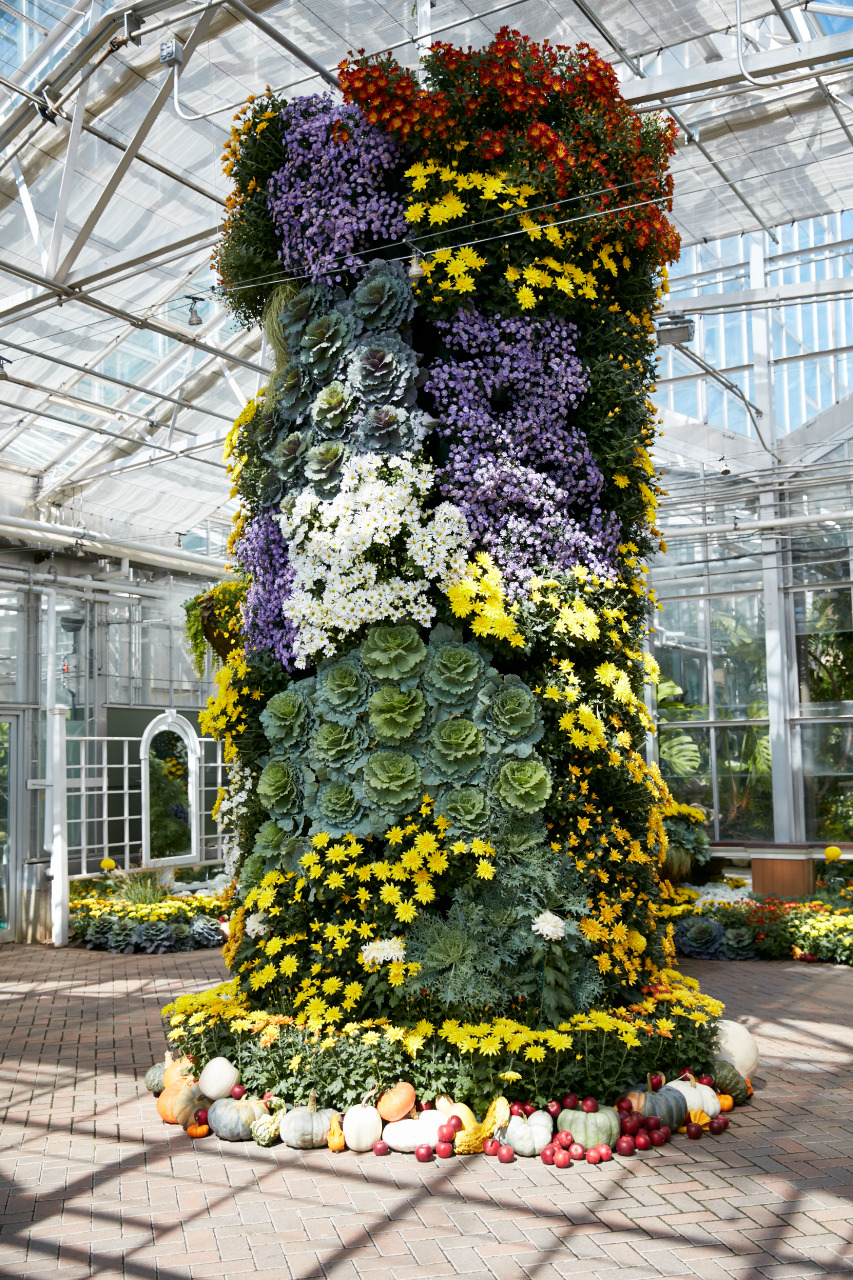
The annual towers of mums at Meijer Gardens. (Supplied/Peter McDaniel)


This year’s focus will be on “Growing Local”, highlighting the local growers, farms, food and drink featured at Meijer Gardens. Guests will enjoy a wide variety of locally grown elements, including decorative, spoon, cushion, and quill chrysanthemums, with “pompon” blooms as small as a nickel to showy “spider” blooms measuring six inches or more in diameter. This exhibition is a feast for the eyes, displaying the versatility of the magnificent mum and much more.


“Our theme this year is ‘Growing Local’,” explained Steve LaWarre, Director of Horticulture. “This is a remarkable way to showcase many of the local suppliers that we work with throughout the year who provide us with thousands of colorful chrysanthemums, gourds, pumpkins and other ornamental items. With this focus on all things local, we have an chance to highlight the wide variety of chrysanthemums and other items grown locally in an exhibition that has become a wonderful fall tradition for our guests.”


Visitors will be greeted with vibrant displays of chrysanthemums from the moment that they arrive and delighted by abundant floral arrangements of these bold blooms as they walk through the scenic corridor inside of the main building. Upon entering the Seasonal Display Greenhouse, a floor-to-ceiling chrysanthemum display will unfold as a focal point. Presentations of a five-sphere topiary, large disbuds and beds of colorful plantings will complement this feature in the nearby Earl and Donnalee Holton Victorian Garden Parlor. Outdoors, expansive beds of lush chrysanthemums will be arranged in large sweeps of color and will be balanced by a variety of ornamental plantings.


Activities such as the Fall Bonsai Show, Giant Pumpkins and Hallowee-Ones are full of family fun throughout the exhibition. Mum Day on October 14 will give visitors a chance to take a walking tour led by horticulture staff, enjoy informational demonstrations and learn more about the chrysanthemum.


The Balk Café will feature seasonal daily dinner specials on Tuesday evenings, with seasonal ingredients coming from Meijer Gardens’ own Michigan’s Farm Garden.


Exhibition Programming


Fall Family Day, Saturday, Oct. 6, 1–4 p.m., included with admission.


Visit the Children’s Garden for lots of fall family fun. Activities include something for all your senses— Press and Pound Color Banners, Autumn-themed Stories, Tree Vest Craft and an “I-Spy” Naturalist Walk about trees.


Herb & Gourd Fest, Midwest Michigan Herb Association and Michigan Gourd Society, Saturday and Sunday, Oct. 13-14, included with admission.


Discover a variety of ways to use herbs and gourds in this annual fall event. A variety of culinary herbs will be featured including hops, the 2018 “Herb of the Year.” Discover the benefits that herbs provide and experience their wonderful fragrances. Kids can participate in a fun art activity with herbs and make their own seed tape to plant in a pot or in the garden next spring. Visit the touchable gourds section and try playing a gourd instrument. Purchase decorated gourds or buy an unfinished gourd and create your own art at home.


Giant Pumpkins at Michigan’s Farm Garden, Saturday and Sunday, Oct. 13-14, included with admission


Enjoy giant pumpkins on display at Michigan’s Farm Garden. Weighing in at hundreds of pounds, these pumpkins will amaze kids and adults alike. Learn all about pumpkins as you sort varieties and answer quiz questions at the Pumpkin Discovery cart. Or try your hand at a pumpkin bean bag toss and play a unique pumpkin game “Which Vine is Mine?” to learn about how pumpkins grow.


Mum Day, Sunday, Oct. 14, 1-4 p.m., included with admission


Enjoy tours and demonstrations led by members of the horticulture department.


Tuesdays at the Farm, Tuesday, Oct.r 16 and 23 , 5-8:30 p.m., included with admission


Eat, drink, and dance in the crisp autumn air. A food truck and the Balk Café will be serving up local fresh fare along with West Michigan beers, hot cider, and adult cocktails. Dance to a string band with accompanying square dance caller.


WKTV to broadcast Armand Merizon documentary as major show opens in Muskegon

“This Was My Land” (1990). Armand Merizon gave this painting to Dave and Muriel in exchange for a Lake Michigan painting he wanted back and destroyed. (Supplied)


By WKTV Staff

ken@wktv.org


Between an opening of a major show of the works of West Michigan artist Armand Merizon in Muskegon, the availability of a superb art book on the artist, and WKTV’s airing of a documentary on the artist, now is the perfect time to catch up with one of the region’s premier painters of landscape (and much more).


The show, Armand Merizon: His Life & Art, will open at the Muskegon Museum of Art on Thursday, Sept. 20, with a free to the public opening reception and book signing from 5:30-7 p.m.


WKTV will air “Armand”, the Armand Merizon documentary, three times this week to coincide with the Muskegon exhibit, on WKTV Cable Channel 25 on Tuesday, Sept. 18 at noon and at 6 p.m., and on Wednesday, Sept. 19, at 8 p.m.


And at the museum’s exhibit opening Muriel Zandstra, author of Armand Merizon: His Life and Art, will be on hand to sign her book, which will be available for purchase in the museum store.


Zandstra’s book on Armand more than just a literary effort


Armand Merizon (1920-2010) was a lifelong Grand Rapids painter remembered for his detailed landscapes and brilliantly colored abstractions, according to supplied information. A founding member of the Grand Valley Artists organization, he influenced generations of West Michigan artists and was an active and supportive presence in the community.


Armand Merizon in studio (with image of musical influence Beethoven). (Supplied)

This exhibition highlights his entire career, beginning with the precocious landscapes of his late teens and ending with the intuitive abstractions of his final years.


Raised in a conservative Dutch Calvinist household during the Great Depression, Merizon struggled to find his place, ultimately following his passion for art. With limited training, he was able to turn his natural talents for observation and rendering into complex and intricate landscapes and illustrations. Tragically, at mid-career, he began losing his vision to macular degeneration. Rather than abandon painting, he moved in an abstract direction, presenting the landscape in bold strokes and hot, vibrant colors, ultimately painting by intuition instead of sight.


Organized by the Muskegon Museum of Art, the exhibition presents more than 20 paintings from West Michigan collections, including landscapes, abstractions, and several of the artist’s political works. Armand Merizon: His Life and Art is shown in conjunction with the recent release of a biography by the same name, written by his long-time friend and collector Zandstra.


After its close at the MMA, the exhibition will travel to the Dennos Museum Center in Traverse City.


In addition to the special opening with the art book author, other related programs include:


“On An Overgrown Path” (1997). (Supplied. Collection of Sidney J. Jansma, Jr.)

“The Paintings of Armand Merizon: A Closer Look”, a Friends of Art Program with MMA senior curator Art Martin, on Wednesday, Oct. 17, at 10:30 a.m. Martin will examines Merizon’s paintings over the course of the artist’s career. The program is free and open to the public, but paid admission is required for gallery entry.


A film screening of the documentary “Armand” and a discussion led by Zandstra will take place on Thursday, Oct. 25, from 6-8 p.m. “Armand” tells the story of the nearly blind 20th Century American artist using personal interviews, historic film footage, and more than 100 of his paintings.


The film, according to supplied information, traces Merizon’s search for truth and his portrayal of the social, political, and environmental issues of the 20th Century. It is also a story of perseverance as he battled macular degeneration and rheumatoid arthritis. Despite his ailments, he vowed, “I will paint until my nose touches the canvas.”


Director, executive producer, and close friend of Armand, Zandstra, will hold a question and answer following the film showing.  Admission for the film is free and open to the public.


For more information on the Muskegon Museum of Art  visit muskegonartmuseum.org .


Going green in West Michigan

By Jeremy Witt, West Michigan Tourist Association


It’s important to take care of our planet, and luckily, many West Michigan businesses are helping, one step at a time. These organizations that are making sure they’re taking care of the environment, while still providing the best experience for travelers. Keep an eye out for some of the green practices that West Michigan businesses are adopting next time you stop by.

Environmentally friendly places to stay

Grand Rapids’s CityFlatsHotel is the first LEED Gold-certified hotel in the Midwest. In addition, AHC+Hospitality properties, located in downtown Grand Rapids, each participate in green initiatives. The Downtown Courtyard Marriott ships partially used soaps to Clean the World, where they are sanitized and sent to people in need. The nearby Amway Grand Plaza is going strawless across all of the hotel’s outlets, while the JW Marriott focuses on recycling throughout the hotel. These properties are all helping preserve the environment.


In Mecosta County, being eco-friendly is something that hospitality businesses have been doing for years. Most of the hotels have a detailed green program as part of hotel policy. The Holiday Inn and Conference Center is the best example of a company with an eco-friendly initiative, known as the “Green Engage” system.


Crystal Mountain in Thompsonville is dedicated to sustainability throughout all of the resort’s offerings. For their Farm-to-Table series, the Crystal Mountain culinary team works with local farms, making personal visits to build a custom three-course menu. Their spa has also been named Sustainable Resort Spa Of The Year by Green Spa Network. Relax knowing that your stay at Crystal Mountain comes with an eye for sustainability.

Eat and drink with sustainable initiatives

Downtown Market (file photo)

The Downtown Market in Grand Rapids was the first market in the country to receive LEED Gold certification. Inside and outside, from the ground to the rooftop, Downtown Market has put thoughtful effort into making an environmentally friendly facility.


The Mitten Brewing Company in Grand Rapids has successfully launched its new Sustainability Program. With the craft beer industry a driving force in the Michigan economy, it is important that they implement a program for environmental responsibility. In the first few months, they replaced much of their disposable materials, such as napkins, straws, and trash bags with eco-friendly industrial compostable alternatives. They have begun to track data and progress toward a more water-efficient establishment, a task not easily undertaken in the brewing industry. Upcoming projects include partnerships with BarFly Ventures Sustainability Program as well as evaluating the energy efficiency of their buildings.


Brewery Vivant, also in Grand Rapids, is the epitome of an eco-friendly business here in Michigan. They’re the first LEED-certified microbrewery in the world, and they’re a certified B Corp, a Gold-level, bicycle-friendly business, and, in 2016, they installed 192 solar panels atop the brewery and pub, making them the 31st largest brewery solar array in the world. Their dedication to being eco-friendly continues with their use of local farms, meaning that the ingredients going into your beer or meal is being produced not too far away.


Being green and environmentally-friendly doesn’t tell the whole story at Bell’s Brewery in Kalamazoo. They view sustainability as the capacity for their business to thrive in future generations, all while using practices that focus on good environmental stewardship. They want to act in ways that provide benefits now and for generations to come. Reducing impact, increasing energy efficiency, and recycling only scratch the surface. Bell’s invites you to join them for a free brewery tour in Comstock and Kalamazoo to learn more about how they approach sustainability. Reserve your tour on their website.


Be green the next time you decide to go out with your friends for a cold one. Arcadia Brewing Company in Kalamazoo has a pet-friendly beer garden with direct access to the Kalamazoo River and Kalamazoo River Valley Trail. This means that you can get to Arcadia by kayaking, canoeing, biking, and walking. Instead of driving, hop on one of these trails next time you make your way to Arcadia. They also installed 536 solar panels in 2016, generating equivalent to roughly 25% of the brewery and tavern’s total consumption.


Grand Rapids Brewing Company (courtesy Barfly Ventures)

Virtue Cider in Fennville minimizes environmental impact in many aspects of their business. They purchase fruit direct from local farms in southwest Michigan, which keeps the supply chain short and their carbon footprint small. Their cider houses use extremely minimal climate control, just as traditional European cider makers did and still do today. In fact, their fermentation cider house is underground, which maintains a more consistent temperature year-round without climate control. You can view these facilities during one of their regularly offered tours. Additionally, the Michigan Agriculture Environmental Assurance Program named Virtue Cider an Environmentally Verified Farm in December 2016, a distinction that they are very proud to have earned.


Barfly Ventures is working hard to be sustainable across all 14 of their locations. These include HopCat in Lansing, Kalamazoo, and Grand Rapids, Grand Rapids Brewing Company, and Stella’s Lounge in Grand Rapids, all of which participate in this program. Through their various sustainability efforts, Barfly Ventures has been able to divert waste, recycle, protect clean water, and be more energy efficient.


Visit the Holland Farmers Market on Wednesdays and Saturdays, and support local agriculture. By purchasing locally grown produce, you’re helping to cut back on packaging and emissions that would otherwise be used to transport goods to grocery stores from across the country.

Things to do while going green

When looking for eco-friendly practices and sustainability take notice of the historic architecture and charming small towns throughout West Michigan. They epitomize the green effort, and one of the shining examples of preservation in this part of the state is the historic Tibbits Opera House in Coldwater, built in 1882. According to the National Trust, “The greenest building is the one already built.” The organization affirms, “historic preservation is the very definition of sustainability: a smart, efficient way to reuse a community’s resources and keep its character at the same time.”


Saugatuck Antique Pavilion is not only reducing, reusing, and recycling, but they are also updating their lighting system throughout with LED lighting in an effort to cut down on energy use. Stop by the Saugatuck Antique Pavilion and save both money and the planet!


Courtesy Saugatuck Antique Market

Park the car and make your way around Muskegon on your bike. They have over 100 miles of trails for you to explore, including the paved Musketawa Trail from Muskegon to Marne through farmlands, wetlands, and villages. When you bike through West Michigan, you’re saving the Earth from your car’s emissions, so give it a shot. The environment will thank you.


The business of vacationing itself in South Haven makes it easy to go green. Downtown, the river, beaches, and attractions are all within walking distance. You can easily park your car for a week and never have the need to drive, reducing greenhouse gas emissions. Enjoy the refreshingly clean breezes of South Haven.

Evolution of Meijer Gardens summer concert series a bit of a surprising success

This slideshow requires JavaScript.

By K.D. Norris

ken@wktv.org


There is no plan to change its name to Frederik Meijer Gardens, Sculpture Park & Summer Concert Amphitheater, despite the growth of the Gardens music venue from its modest beginning with modest expectations in 2003 to a 30-concert-a-year, 90-plus percent sellout annual attraction.


But there is no doubt that the Fifth Third Bank Summer Concerts at Meijer Gardens is a promotional and financial success story for one of West Michigan’s premier cultural attractions.


While David Hooker, President and CEO at Frederik Meijer Gardens & Sculpture Park, did not come to his position until three years after the amphitheater opened, he recently told WKTV that few in leadership at the Gardens really expected the venue and the concert series to grow into what it has become.


David Hooker, President and CEO at Frederik Meijer Gardens & Sculpture Park. (Supplied)

“By virtue of what has happened since then, it is proof that we didn’t have any idea. We had high hopes … (but) there has been a wonderful reception of our series by the community,” Hooker said. “I forget the exact year, but we did a major expansion on the amphitheater, five or six years ago, by the generosity of Fred and Lena Meijer we were able to do that. … low and behold, a few years later, we outgrew that. So now we are at it again.”


The “at it again” Hooker is referring to is the two-year makeover of the amphitheater currently at mid-stage, with upgrades to back stage area and the amphitheater’s distinctive acoustic bandshell, and a complete makeover of the venue’s handicapped, sponsor and VIP seating sections. (After this summer’s concert season is complete, a significant alteration and expansion of the venue’s outside entrance, concession area and restroom layout will begin to be ready for the 2019 season.)


While the sponsor and VIP seating area has increased capacity from 242 portable chairs in the past to 410 permanent seats, high and in the back of the amphitheater, and there has been a slight expansion and reconfiguration of the general admission grass seating area, the total general admission capacity has remained at 1,900.


The capacity is both intentional on the part of management of the Gardens and important to the concert promoter who has worked with the venue from its first year — when Art Garfunkel and the Charlie Daniels Band headlines a 10-concert series that was not always well attended.


A probably sold-out crowd that comes to Meijer Gardens Summer Concert series. (Supplied Meijer Gardens/Tony Norkus)

“What Meijer Gardens has out there is pretty unique,” Chris Mautz, who now runs his own concert promotion company out of Salt Lake City, Utah, said to WKTV. “We have developed based on the success of not just of the attendance numbers but also the success of the connection between audience and artist. We have been very fortunate to develop a positive reputation there as being one of the cool, dynamic places to play on the summer tours.”


Mautz, echoing Hooker, points out that the concert series — deciding which acts are booked — is also a unique collaboration between venue and promoter: “In a lot of ways I see myself as part of an overall team at the Gardens where, over the last decade plus, we have formed a connection and a commitment to really trying to present a diverse and compelling lineup of shows,” Mautz said. “It is much more of a collaborative effort.”


That collaborative effort includes understanding that the musical venue is, first and foremost, at a family-friendly botanical garden and sculpture park, with residential property nearby — neighborly noise concerns and a mostly rigid early “final encore” requirement are often a consideration in booking.


But those requirements have not proved to be an obstacle to either attracting top-talent year after year or prevented the concert series’ growth from its less-than-overwhelming numbers in the early 2000s to being the success it is today.


The concert series, over the years


From 2003 through 2009, the venue booked between 10-13 concerts, but many years had less than half of concerts being sell-outs, according to information provided by Meijer Gardens.


Lyle Lovett is always a favorite. (Supplied)

2010 seemed to be a watershed year as far as popularity, with 10 of the 16 concerts being sellouts and featuring a lineup that opened with a capacity crowd for the Doobie Brothers, and included sellouts from Indigo Girls, Chris Isaak, Lyle Lovett and Garrison Keillor’s Prairie Home Companion.


When the series expanded to 22 concerts in 2011, and 25 in 2012, it also added a few more concerts to appeal to a younger audience, including Guster, Fiona Apple, Andrew Bird, Grace Potter and the Nocturnals, The Head and the Heart, and OAR.


In 2013, the series climbed to 29 concerts and has stayed at 29-31 concerts through this year, with there being sellouts numbering in the mid-20s each year — and each year there seems to be a mix of classic rock, folk, some alt/modern rock, with a jazz or two, as well as something for a more, shall we say, “traditional entertainment” crowd such as Harry Connick Jr., Dancing with the Stars, and the still much-talked-about visit by Tony Bennet in 2015.


For a WKTV story on this year’s concert line-up, visit here.


Concert series a success on multiple levels


The venue and the mix of musical genres and audiences has not only been a success, the summer concert series has benefitted Meijer Gardens on several levels:  promotional, financial and patron inclusiveness.


The entrance to Meijer Gardens. (Supplied)

“A couple of really important things that we tried to accomplish with the amphitheater is that we looked at it as portal to the organization,” Hooker said. “A lot of people … may become a member so they get first dibs on the tickets, and then they sit in that beautiful amphitheater and off to the distance they see … (various gardens and works of art) … and they say maybe I should check out the rest of the organization.


“The second thing we try to accomplish is that we are very intentional about reaching out to all walks of life, to have them come to Meijer Gardens. We want this to be a place were everybody is welcome. There is some intentionality in the artists we select, to attract people from all walks of life.”


And when it comes to the financial benefit to the Gardens, Hooker diplomatically said the concert series has brought in important “cash.” But “that needs to be put into context,” he adds.


“As the Meijer Gardens amphitheater was built, and added onto, and added onto, 100 percent of the dollars that has gone into the amphitheater events has been charitable dollars. So we are able to present the concert series without having to pay for the venue, which is really important.


“If you have to account for that cost out of ticket (costs) it would add a significant amount of money to the cost of the tickets. … The generosity of the Meijer family and the community has done that. And since we don’t have to do that, we do make what I call cash from the amphitheater, which helps, then, to cover the maintenance costs, depreciation costs, so forth, of the amphitheater.”


And the future of the concert series? The 30-concert season seems to be a pretty stable number and, as Hooker said, “We are very committed to the amphitheater and the concert series for the very long term.”


5 Local Things You Need to Know:  For the weekend, to start next week

The Meyer May House maybe the most famous house in Grand Rapids, but there are many grand homes in Heritage Hill that you can check out this weekend. (Supplied)


WKTV Staff

ken@wktv.org


Wyoming: Honor a local hero by attending his statue unveiling


Roger B. Chaffee Photo courtesy of the Grand Rapids Public Museum

While the City of Wyoming has a Roger B. Chaffee Boulevard and an American Legion Roger B. Chaffee Post 154, the hero’s home town was Grand Rapids. So, a full-sized bronze statue of Apollo Astronaut Roger B. Chaffee will be unveiled at 1 p.m. on Saturday, May 19, at the corner of East Fulton Street and Sheldon Avenue NE, near the Grand Rapids Children’s Museum.


For the full story, click here.


Kentwood: While you are out having fun, avoid this roadwork in town


The City Commission recently approved the city’s resurfacing and maintenance program, which includes improvements to 22 miles of major and local roads. We have your list of where to avoid when you are out and about in the city this week: a tentative road construction and maintenance schedule for the summer.


For the full story, click here.


Grand Rapids: Heritage Hill’s annual open house weekend his here


The Annual Heritage Hill Tour welcomes you inside seven restored private houses and three historic buildings. (Supplied)

The Annual Heritage Hill Tour welcomes you inside seven restored private houses and three historic buildings on Saturday, May 19, from 11 a.m. to 5 p.m., and Sunday, May 20, from noon to 6 p.m. Tour offers an interior view of stunning turn of the century homes each uniquely styled by current owners.


For the full story, click here.


Wyoming: Big trucks, hotdogs and loads of fun for kids of all ages


Public Works employee Carlos Ochoa shows off one of the trucks that collects leaves. (WKTV File)

The City of Wyoming is celebrating National Public Works Week once again on Monday, May 21, at the Wyoming Public Works Department, 2660 Burlingame Ave. SW. The event that attracts more than 1,500 visitors gives the public the chance to learn about the city’s Public Works Department and its services, meet community members and much more.


For the full story, click here.


Entertainment: The Grand Rapids Symphony offers up Beethoven’s Ninth


Grand Rapids Symphony, conducted by Marcelo Lehninger, will be in concert this weekend. (Supplied/Stu Rosner)

The Grand Rapids Symphony ends its 2017-18 season with Beethoven’s Ninth at 8 p.m., Friday and Saturday, May 18-19, in DeVos Performance Hall. Beethoven’s Symphony No. 9 is one of the greatest achievements, not only in classical music, but in all of Western culture. Beethoven’s last symphony and his only symphony to use voices began as a defiant statement of freedom hurled at the repressive monarchies of Europe. Today,  the finale of Beethoven’sNinth Symphony, is the official anthem of the European Union.


For the full story, click here.


Don’t miss Heritage Hill Weekend Tour of Homes May 19-20

By Heritage Hill Association


Tour one of the country’s largest urban historic districts and help celebrate the 50th anniversary of the Heritage Hill Association. The Annual Heritage Hill Tour welcomes you inside seven restored private houses and three historic buildings on Saturday, May 19 from 11 am–5 pm and Sunday, May 20 from 12 pm–6 pm.


Tour offers an interior view of stunning turn-of-the-century homes, each uniquely styled by current owners. An elegant Greek revival, amazingly modern Queen Annes, a Chateaux mansion, a Craftsman beauty, a creatively converted 1900 carriage house, and more await you. It’s a celebration of the grandeur and art of the past fused with present-day livability. We’ve come a long way since 1968 when 75% of the neighborhood was slated for demolition.


Advance tickets are $18 and are available at the Heritage Hill Association office or at www.heritagehillweb.org. To obtain tickets by check, send to the Heritage Hill Association, 126 College SE, Grand Rapids, MI 49503. Tickets the weekend of the tour are $25. Free shuttle bus transportation for the tour is provided between featured properties.


Heritage Hill dates back to 1843 and was named by This Old House as one of the “Best Old House Neighborhoods” in the country. Its 1,300 homes represent Michigan’s finest collection of 19th and 20th century American architecture.


Click here for a pdf of this year’s tour flyer.

5 Local Things You Need to Know:  For the weekend, to start next week

Wyoming’s annual Spring Carnival will open this weekend at Lamar Park. (Supplied)

WKTV Staff

ken@wktv.org


Wyoming: City’s family-friendly Spring Carnival at Lamar Park opens 


It’s time to celebrate spring as the City of Wyoming hosts its annual spring carnival at Lamar Park, with the carnival opening on Friday, April 27 and running through Sunday, May 6, at Lamar Park, 2561 Porter St. SW. Carnival times are Monday through Thursday from 4-8:30 p.m.; Fridays from 2-8:30 p.m.; and Saturday and Sunday from noon to 8:30 p.m.


The carnival will feature entertainment for all ages, including games, prizes, and carnival fare favorites. Proceeds from the carnival support City of Wyoming parks and recreation services and the Greater Wyoming Community Resource Alliance or GWCRA.


For the full story, click here.


Kentwood: Police department’s Drug Take Back day planned for Saturday


The Kentwood Police Department will be part of a region wide Drug Take Back day Saturday. (Supplied)

The Kentwood Police Department also will be offering Drug Take Back services Saturday, April 28, from 10 a.m. – 2 p.m. at its department offices, 4742 Walma Ave. SE. Only pills or patches will be accepted at this location.


Those looking to get rid of sharps — the term for medical devices with sharp points or edges that can puncture or cut skin such as needles — should contact the Kent County Health Department about the Sharps program.


Kentwood’s event is part of a region-wide; for the full story, click here.


WKTV sports: Golden Gloves boxing, high school ball games, available


WKTV will rebroadcast its coverage Michigan Golden Gloves state finals this weekend. (WKTV)

If you are fans of local Golden Gloves boxing, WKTV will rebroadcast its coverage of this week’s action on Saturday, April 28, on Comcast WKTV Channel 25 and on AT&T U-Verse Community 99.


But if you are more in the mood for something outdoors, we have your schedule of local high school baseball and softball action around the Wyoming and Kentwood area.


For the full story, click here.


Grand Rapids: GRPM hosts annual cocktails and collections event


Grand Rapids Public Museum will host Collections & Cocktails May 2. (Supplied)

The Grand Rapids Public Museum (GRPM) will once again host Collections & Cocktails, a new annual fundraiser focusing on the museum’s collections, their stories and the preservation and education with these artifacts, on Wednesday, May 2.


This year, Collections & Cocktails will focus on the museum’s transportation collection, featuring dinner and signature cocktails to go along with the exciting stories of artifacts such as Grand Rapids’ own 1949 Herpolsheimer Child Passenger Train, the Austin Model 60, and a 1913 Indian Model E Motorcycle.


For the full story, click here.


Lake Michigan: MSU study looks at recreation, climate change on lakeshore


According to scientists and some users, Lake Michigan is seeing an impact from global warming. (Supplied)

Coastal communities and sensitive coastal ecosystems experience a variety of weather-related impacts that are influenced by changing climatic conditions, but Michigan State University researchers have found that Michigan residents’ opinions about climate change vary for many reasons.


For example, the authors found that greater involvement in outdoor recreation activities, higher levels of education, and lower levels of income were key factors. And, males and older individuals tended to be more dismissive of or disengaged with climate change than their counterparts.


For the full story, click here.


Kent County’s MLK event holds special meaning to attendees, new top administrator

By K.D. Norris

ken@wktv.org


Kent County’s “Honoring the Dream” memorial event, held April 4 at Grand Rapid’s Calder Plaza in memory of the Rev. Dr. Martin Luther King, Jr. on the 50th Anniversary of his assassination, held special meaning to many of the people in attendance.


But it also held a very personal meaning to Wayman Britt, Kent County Administrator/Controller.


It did not escape Britt, an African-American recently selected to lead the daily operation of the county, that he, himself, was an example of the inclusion and opportunities Kent County leaders advocate for and work to embrace.


Wyman Britt, on the set of WKTV Journal: In Focus

“Dr. King meant a lot to a lot of us, and we remember what he stood for … I believe his dream is still alive, but we have to do more,” Britt said to WKTV. “What it does for me is it reinforces the role that I play as a leader in this community. That I do not need to be shy as to who I am: I am a black man who grew up in North Carolina and, one day, believed he would have a place in life to serve others. … I know the labor Dr. King and others put forth so that I could be in a place to serve.”


To see an interview with Britt on WKTV Journal: In Focus, visit our YouTube channel.


The event drew a crowd of several hundred despite the cold, wet noontime weather. It was hosted by the county Administrator’s Office, the Kent County’s Board of Commissioners and the county’s Cultural Insight Council.


The event began with a presentation of the colors by the Kent County Sheriff’s Honor Guard, the pledge of allegiance led by County Commissioner Robert Womack, and the invocation by Bishop Dennis J. McMurray. It ended with a prayer by Rev. Dr. Willie A. Gholston II.


Matthew Budd leading a poem of tribute at the Kent County event. (WKTV)

In between there was a poetic tribute by Matthew Budd and a musical tribute by Ashlie Johnson, as well as the reading of a proclamation by the County Commissioners and a moment of silence led by county Undersheriff Michelle Lajoye-Young.


There were also remarks by Britt, who, in part, discussed the county’s efforts towards diversity and inclusion, including the work of the Cultural Insight Council.


The Cultural Insight Council is a Kent County’s designed to advance diversity and inclusion in the workplace. Formed in January 2001, the CIC is an interdepartmental work group sponsored by the Administrator’s Office. The council is comprised of employees of diverse backgrounds, representing all levels of the organization. Its mission, according to the county’s website, is “To act as a catalyst to foster a culture which recognizes, accepts and values the individual differences of its employees and is responsive to the changing needs of our diverse community.”


“We wanted to gather as a community and spend a few minutes reflecting on the lessons of Dr. King’s life and death,” Darius Quinn, county human resources manager and chair of the CIC, said in supplied material prior to the event. “The CIC is dedicated to providing an environment where diversity, equity and inclusion are valued. This event is a reflection of the standard the County staff strives to achieve every day.”


GVSU will  host 20th annual pow wow April 7-8

The 20th annual Celebrating All Walks of Life Traditional Pow Wow will be at GVSU’s Fieldhouse on the Allendale campus. (Supplied)

Grand Valley State University


Grand Valley State University will host a series of events to celebrate, and learn about, Native American traditions and culture through dance and song on Saturday and Sunday, April 7-8 at GVSU’s Allendale campus.


The 20th annual Celebrating All Walks of Life Traditional Pow Wow will take place in the Fieldhouse on the Allendale campus. Hundreds of people are expected to attend, including many traveling from Native American communities in the Upper Peninsula and Great Lakes region.


The event will celebrate traditional Native American dancing and music with Grand Entry performances at 1 p.m. and 6 p.m., on April 7, and at noon on April 8. Doors open at 11 a.m., both days. There will be Native American handmade crafts and food vendors, as well as a silent auction to raise funds for Grand Valley’s Native American Student Association.


This year, the co-coordinator of the first Grand Valley pow wow will attend the celebration. Scott Herron, a Grand Valley alumnus and biology professor at Ferris State University, coordinated the first pow wow in 1998.


The celebration is free, family friendly and open to the public. It is sponsored by the Native American Student Association, Office of Multicultural Affairs and Division of Inclusion and Equity at Grand Valley.


For more information, visit gvsu.edu/oma/powwow or contact NASA at gvsu_nasa@yahoo.com or the Office of Multicultural Affairs at 616-331-2177.


Kent County to honor the Rev. Dr. Martin Luther King, Jr. on April 4


Submitted by Kent County


Kent County’s Board of Commissioners, Administrator’s Office and Cultural Insight Council are proud to host an event in memory of the Rev. Dr. Martin Luther King, Jr. on the 50th Anniversary of his assassination.


“Honoring the Dream” will bring the community together to demonstrate the unity and inclusion Kent County embraces. The event will be open to the public and held on Calder Plaza, April 4, starting at noon.


“For some of us, the terrible, tragic images of April 4, 1968 are forever etched into our minds,” said Wayman Britt, Kent County Administrator/Controller. “We — as a society — have grown over the past fifty years. Unfortunately, we still see racism, divisiveness, and prejudice today. The goal of this special event is to bring awareness of the life and work of Dr. King and to reflect on how we all can strive to eliminate hatred and bigotry.”


The event was the idea of the Cultural Insight Council (CIC), a self-directed workgroup of more than two dozen individuals from County departments.


“We wanted to gather as a community and spend a few minutes reflecting on the lessons of Dr. King’s life and death,” said Darius Quinn, Human Resources Manager and Chair of the CIC, which was formed in 2001. “The CIC is dedicated to providing an environment where diversity, equity and inclusion are valued. This event is a reflection of the standard the County staff strives to achieve every day.”


The Board of Commissioners have voiced support for the King legacy and will present a Proclamation during the event.


“Kent County is ethnically and racially diverse,” said Jim Saalfeld, Kent County Board Chair. “Therefore, our ability to serve the public in a culturally-competent manner is critical to what we are called to do. I am proud of the work of the CIC and how the employees of Kent County are willing to address this important aspect of public service.”


For crowd planning purposes, the county asks for RSVPs at cic@kentcountymi.gov .


Michigan author strives to keep the art of Armand Merizon alive in new book

By K.D. Norris

ken@wktv.org


Every person who knew the late West Michigan artist Armand Merizon has stories to tell — stories of a complex man’s triumphs and struggles, of a brilliant painter with a sometimes struggling career, but ultimately of an artistic life well lived.


And every person who has seen one of his paintings has his or her own story to tell: the story the acclaimed artist constantly worked to convey in just about every work he created.


Muriel Zandstra — friend, repeated interviewer, and artistic advocate of Merizon for five decades — has her own stories to tell, and she has told them, accompanied by the most complete visual review of the artist’s work, in a new book, “Armand Merizon: His Life and Art”.


Armand Merizon in studio (with image of musical influence Beethoven). (Supplied)

“The reason for producing the book, for all it involved, was more than just good friendship,” Zandstra said to WKTV. “It was an overwhelming belief in the man and his art. I think he’s not just a ‘good’ artist, but a ‘great’ artist and his legacy should live on. I strongly believe, as do all the art professionals who knew him, that Merizon is a significant 20th century American artist who needs to be elevated to his rightful position in the art world.”


The new book was not Zandstra’s first effort to shine a light on Merizon. She co-produced with Jennifer Dornbush a documentary about the artist, “ARMAND”, in 2005, when he was 85 and in ill-health with terrible arthritis in his hands and advanced macular degeneration in his eyes. He died in 2010.


“Since I had already done so much research on him for the documentary, I was the best equipped to take on the challenge of creating a book,” Zandstra said. “Though it was a natural, it was still an unexpected and unsought-after project for my retirement. I needed the help of many professionals to pull it off.”


What they pulled off — she credits the work of Jan Keessen and Randall VanderMey on the book’s dust jacket — was a 240-page, oversized hardcover “coffee table book” of such beauty, such comprehensiveness that it deserves a place of more prominence than a coffee table. It contains photographs of more than 200 of the artist’s works, beginning with an early work from 1932, “Fall Tree”, a stunningly mature pastoral work for a 12-year-old, to one of the last of his paintings, the abstract “In D Minor”, from 2009.


“After coproducing and broadcasting the documentary “ARMAND” in 2005, people wanted to see more of Merizon’s art and learn more about the genius behind them,” she said. “There was not any one gallery or museum where I could direct them to go since so many of his paintings are held in private homes. It seemed the only logical way to get his artwork out there was for someone to come up with a catalog art book. … It would be geared for the general public though also suitable for professionals and serious artists to study and learn from.”


For a short video review of Merizon’s work, and an on-air WKTV Journal interview with Zandstra, see the following video.


Author shares personal stories of artist


Zandstra tells many stories about her interactions with Merizon over the years, both in the book and sitting in the living room of the rural Reed City home she shares with her husband, Dave. Two stories tell of the depth of their relationship: one of a painting given and returned, and another of the artist and his model.


Merizon had a habit of giving paintings in exchange for others’ services rendered — just ask any of a number of local doctors who have Merizon paintings in their offices. In Zandstra’s case, it was a seascape given during the years she babysit for the family; a painting given and then returned and destroyed.


“That painting was a delightful, photographic kind of painting, I was thrilled with it,” she said. “But I could tell over the years that he was doing something deeper. … Even though everybody liked the painting, I was thinking there is something not quite right in this painting.


“One day I said, ‘Would you like to see your paintings that I have? You paint them and then they are gone and you need to see them again.’ He said, ‘Yes I would.’ … I brought them the next time and when he looked at that one he goes ‘Yuck! The horizon line is too close to the center. And the shoreline is washed out.’ He said the only redeeming thing are the clouds in the sky. He said you know, ‘Could I have it back?’ And I said, ‘Yep’. So I just gave it back to him.


“This Was My Land” (1990). Armand Merizon gave this painting to Dave and Muriel in exchange for a Lake Michigan painting he wanted back and destroyed. (Supplied)

“Then a couple months later, when I visited him, he said, ‘I would like to upgrade your collection. I want to give one that Dave would like, that he would relate too as well, he is a farmer, a teacher.’ And he gave me that one painting,” she said, pointing to a wall in her living room and to a ghostly, deeply moving painting titled “This Was My Land”.


Another story led to a painting of Muriel herself by Merizon, included on the book’s dust jacket’s front flap. It is called “Portrait of Muriel” from 1966; it is a delicate facial portrait of soft colors that looks unfinished by design.


“He was always trying new things, as I have said, always experimenting,” she said. “He was doing portraits a lot during he 1950s and ’60s, to make money. But he wanted to try something new. So, I was babysitting for him at the time and he said, ‘Would you mind coming over, I want to try a new technique. I want to just capture the eyes, nose and mouth, because everything else changes in a person — hair styles, your clothing — everything changes, but your facial features stay the same.’


“Portrait of Muriel” (Supplied)

“He did an ink sketch first, then he did this more soft painting. So he had these two done and he said ‘Which one do you like better?’ I looked at them both, and I like the more finished one, with the color in it. So I picked that one, and he said, ‘Well you can have it for $35 dollars’.”


Merizon, Zandstra points out, made a living off his art. And she had no problem paying for his works then, nor later in their relationship.


“What Merizon has given to me personally over the years is invaluable,” Zandstra said. “Besides gifting me several art pieces, he has taught me a real appreciation for the fine arts, a reverence for the natural world, and a deep ethical sense with which to live by. His integrity was impeccable.


“I can never give back to him what he has given to me. I collect his art because I feel it is timeless, thought provoking and a real inspiration to me. It brings joy and peace.”


Leafing through Zandstra’s book one gets the same sense: Timeless, thought provoking, inspirational.


“Armand Merizon: His Life and Art” can purchased the book off E-bay and Amazon, as well as in person at Merizon Studio, Baker Book House, Meijer Gardens, the Grand Rapid Art Museum, Mercury Head Gallery, Perceptions Gallery, Calvin College and Kendall College. For more information on Zandstra and the book visit merizonbook.strikingly.com .

On tap: Share a brew with a boo, beer fest in Kalamazoo, and GR cocktail week 

Beer and cocktails — and drinking responsibly — will be the center of attention in November as several special events come to West Michigan. (Courtesy New Holland Spirits)

By K.D. Norris

ken@wktv.org


Mitten Brewing Company — located in an old firehouse at 527 Leonard St. NW, in Grand Rapids — reportedly has ghosts with a taste for beer. But even spirits need to be 21 years of age to get a cold one, you know.


According to supplied information,, one night in 2012, during the second week of being open, brewery owner Chris Andrus was the last person to leave the Engine House after doing the final floor mop, at 2 a.m., and the first to open the next morning. The story goes, as he inspected the taproom, he noticed footprints left in the dried mop water on the floor.


“At first, Chris thought nothing of it,” we are told. “But after a few minutes of going about his business, he realized no one else had been in the building between his leaving and return, and that the prints were made by bare feet. He returned to the footprints and made a perplexing discovery: they were the footprints of a child.”


More footprints would show up over the years, as did shadows, silhouettes and — of course — noises.


The Mitten’s tap house is the Engine House No. 9 building: built in 1890, a former West Side Grand Rapids firehouse and one of the city’s few remaining Victorian landmarks. It remained an active firehouse until 1966. It was purchased and restored by The Mitten Brewing Company in 2012. So, it  would not be the first haunted firehouse.


So, in case you are into such things, the next time you’re in for a beer, ask the bartenders about the ghosts, or just keep watch.


For more information, visit mittenbrewing.com .


Kalamazoo Craft Beer Festival to have 250+ brews on pour


Talk about the ultimate tasting room …


More than 80 breweries will have more than 250 brews favorite and special up for sampling at the Wings Event Center Saturday, Nov. 4, as the Kalamazoo Craft Beer Festival — and while Michigan brews will, as always, be the focus of the event but  there will also be brews and breweries from all over the United States in attendance.


Among the special brews of note, according to supplied information, are Imperial Voodoo Vator in celebrate of Atwater Brewery’s 20th anniversary, Roak Brewing’s Cucumber IPA, and Hazy Sunset, a New England IPA from Kalamazoo’s own Boatyard Brewing Co.


Since man (or woman) does not live on beer alone — despite what Guinness stout’s makers might say — there will be food trucks on-site at this year’s festival.


The Kalamazoo Craft Beer Festival also is offering ways to make sure everyone gets home safe and sound, so while designated drivers are encouraged, taxis, Ubers, and Lyft rides are also available to and from the event— and cars left at Wings Event Center over-night will not be ticketed. Mobile homes can park and stay in the Wings Event Center parking lot, but there are no hook ups to electrical or water.


For more information, ticket options, and a complete brewery and beer list, visit kalamazoocraftbeerfestival.com .


Hemingway cocktail expert at GR ‘Wine, Beer & Food’ event


Drink what Hemingway drank …


The 10th Annual Grand Rapids International Wine, Beer & Food Festival at Downtown Grand Rapids’ DeVos Place will host Philip Greene, who has studied and written about the influence of cocktails on the Nobel and Pulitzer Prize winning author Ernest Hemingway (among countless others notables) as part of the festival.


The festival runs Thursday through Saturday, Nov. 16-18.


Greene is the author of “The Manhattan: The Story of the First Modern Cocktail” and will release “The Drinkable Feast: A 1920s Paris Cocktail Company” in 2018 — named in honor of Hemingway’s posthumously published work, “A Moveable Feast”.


Greene’s program, “To Have and Have Another” will be presented Friday at 9 p.m. and Saturday at 5 p.m. There is no charge for these demonstrations and cocktail samples will be provided to the audience. He’ll also present four workshops throughout the course of the using spirits from Holland-based Coppercraft Distillery.


The Grand Rapids International Wine, Beer & Food Festival will coincide with the final weekend of Cocktail Week GR, presented by Experience Grand Rapids.


For more information on the festival, visit devosplace.org . For more information on Cocktail Week GR, visit experienceGR.com .


Taste of Redwater event to benefit CASA child advocacy group


Party for a good cause …


West Michigan’s Redwater Restaurant Group will host an evening of “food, philanthropy and fun” — their words, not mine — with food, wine and beer samples available and a portion of the proceeds going to CASA, the Court Appointed Special Advocates for Children in Kent County program which “empowers everyday citizens to stand up for vulnerable children in the family court system.”


To be held Saturday, Nov. 11, from 6-9 p.m., at Redwater’s Work Wine & Grille, located at 500 Cascade Road SE, Grand Rapids, the event costs $40 per person with $5 per person going to CASA.


According to supplied information, attendees will taste appetizers, entrees and desserts prepared onsite by the Chefs from Reds at Thousand Oaks, FireRock Grille, Rush Creek Bistro, Cork Wine & Grille, Vintage Prime & Seafood, and Gravity Taphouse, as well as RedWater’s pastry chef. Live music will be prepared by the band Oxymorons.


For more information visit corkwineandgrille.com/specials/


‘VOICES: a community history project’ rolls out red carpet at ArtPrize Nine

By Victoria Mullen, WKTV


With the second weekend of ArtPrize in full swing and people casting last-minute votes for their favorite works of art, Wyoming-Kentwood Community Media’s VOICES: a community history project powered by WKTV rolled out the red carpet and welcomed scores of visitors to tour our renovated 1958 Airstream® mobile studio and learn more about the oral history project.


VOICES collects, preserves, and shares the stories of West Michigan people from all backgrounds and beliefs, with a focus on Wyoming, Kentwood and the greater Grand Rapids area. 


VOICES is a free public service, offering a comfortable video recording studio with a relaxed atmosphere. High-tech video and audio equipment records the stories of our neighbors, friends and family — any story from anyone — that make up the fabric of our lives and our community. Participants tell their stories of hardships and successes, of what shaped them and their families into the kind of people they are today. Our lives, experiences, joys, sorrows, triumphs and tragedies are what make us all human.


Interviews usually take place between two people who know and care about each other. They can be friends, family or mere acquaintances. At the end of each 40-minute recording session, participants receive a complimentary DVD of their interview. Each recording is also archived with the Library of Congress.


Interviews can be “life reviews,” conducted with people at the end of their careers. Or they can focus on a specific period or a specific event in people’s lives, as with war veterans or survivors of an earthquake, flood or hurricane.


VOICES is available year-round. Our mobile studio will be at ArtPrize Nine again, Friday and Saturday, Oct. 6-7 from 10am-8pm*. Thereafter, it will travel to other locations.


To reserve a time to tell your story, go here.


Upcoming dates at other locations:


Monday-Friday, Oct. 16-20 — Wyoming Public Library (3350 Michael Ave SW, Wyoming, MI) from 10am-8pm*, and Monday-Thursday, Oct. 23-Oct. 26, from 10am-8pm*.


Monday-Thursday, Nov. 6-9 and Monday-Thursday, Nov. 13-16 — Kentwood Public Library (4950 Breton Rd SE, Kentwood, MI), from 10am-8pm*.


*Last appointment of the day is 7pm.

Registration for Science Night at Grand Rapids Public Museum now open

The Grand Rapids Public Museum. (Supplied)

WKTV Staff


The Grand Rapids Public Museum (GRPM), recently announced that registration is open to host a science booth at this year’s Science Night at the Museum, taking place on Tuesday, April 18.


GRPM is inviting local and regional researchers, students and faculty to host a hands-on table display related to their research or field of study, according to supplied material  the event will be  from 5 to 8 p.m. The vision is to have lab groups or individuals putting together innovative ways to engage the public and communicate their research to the community.


A cash award will be given for the most innovative and hands-on interpretation of their research. One winner will be chosen by public vote and a second chosen by the Museum’s education staff.


Applications are open through Feb. 10 and can be found at grpm.org/ScienceNight


Cruising through DreamWheels!

2016 DreamWheels for newsWith Metro Cruise upon us and WKTV’s DreamWheels! set to film on Saturday, we take a look back on the stories of the people and cars who make the cruise such a large attraction. From the history surrounding the inception of Metro Cruise to the shops and talents it takes to rejuvenate the beauty of a classic car, and everything in between, our full coverage is below:


DreamWheels! comes to the red carpet

History of Metro Cruise

Art Cruise

Engine House No. 9

Steve’s Antique Auto Repair

Pal’s Diner

The ‘artwork’ of Dom Federico

Lowriders come to DreamWheels!

Metro Cruise Pin-Up Girls

SoCal Speed Shop comes to Metro Cruise

MOPAR enthusiasts… rev your engines July 30


orange at gilmore car museum

The resounding answer will be “YEAH, it’s got a Hemi!” during the 28th annual MOPARS at the Red Barns Show and Swap Meet that takes place at the Gilmore Car Museum, 6865 W Hickory Rd, Hickory Corners, Mich. on Saturday, July 30 from 9 am to 3 pm.


Presented by the West Michigan Mopar Club, this family-friendly car show and swap meet is the region’s largest all-Chrysler products event of its type. More than 350 Mopars—Chrysler Corporation’s name for its product lines that include Chrysler, Dodge, Plymouth, DeSoto and Imperial—will take over the Gilmore Car Museum historic campus. The show is open to all Chrysler-powered vehicles of all eras, including muscle cars, antiques, street rods and trucks.


This year’s event honors the 50th Anniversary of the Dodge Charger and the Chrysler Street Hemi, as well as the 40th Anniversary of the Dodge Aspen and Plymouth Volare.


The iconic Charger, introduced in 1966 as a two-door, fastback hardtop, dominated NASCAR in 1969. Ten years later, the mopar club logoorange “General Lee” sped onto TV screens in the CBS hit Dukes of Hazzard.


When it comes to muscle cars, the 426-HEMI has obtained legendary status. It was 50 years ago that it first became available on civilian production cars and went on to help define an era and set the question, “That thing got a Hemi?” into our memories.


In 1976, the all-new models Dodge Aspen and Plymouth Volare were designed to be more upscale than their predecessors, Dart and Valiant. Motor Trend magazine named them the “Best Buy of the Day” and followed that up with awarding both as “Car of the Year.”


Saturday’s event promises to be the largest Mopar gathering in the Midwest as it fills the show fields at the Gilmore Car Museum. Whether your dream machine is a Dodge Charger, Plymouth Barracuda, or a vintage DeSoto or Imperial, you’re sure to find it—or that hard to find part needed to finish your project car—at MOPARS at the RED BARNS car show and swap meet on Saturday, July 30.


Mopars-at-the-Red-Barns-300x200

Participants can show their Mopar powdered vehicles for $20 each, while the general public will be admitted for only $12.00 per person. That includes visiting the entire Gilmore Car Museum campus and all exhibits at no extra charge, and those under 11 are FREE!


The Gilmore Car Museum—North America’s Largest Auto Museum—is located just 20 minutes northeast of Kalamazoo on M-43 and Hickory Road.  You can learn more about the Museum and its events at www.GilmoreCarMuseum.org or call 269.671.5089 for more information.


The 28th annual MOPARS at the Red Barns Show and Swap Meet will be sure to please as West Michigan’s largest all-Chrysler products car show, featuring over 350 muscle cars, plus antiques and special interest vehicles!


chargers

For those on the show field, there will be a chance for 84 trophies in 28 classes, covering virtually ALL MOPARS! Plus, special awards will also be given for Best of Show, Class of 1966 in honor of the Gilmore Car Museum’s 50th Anniversary, Best Club Participation, Longest Distance, Dodge Charger & Street Hemi 50th Anniversary, and Aspen/Volare 40th Anniversary. The car show will also include a large swap meet, food vendors, a beverage tent, and live music! For more information please contact the West Michigan Mopar Club at wmmccommander@aol.com.


Exhibitor Admission: $20.00 per vehicle w/two persons

24/7 Information Line: 269.664.5595

New Mini Exhibit ‘An Olympic View’ Opening at the Grand Rapids Public Museum

rio 2016

By: Kate Moore


The Grand Rapids Public Museum (GRPM) announced today the new mini exhibit An Olympic View will open July 23rd. With the Summer Olympics arriving soon, this exhibit celebrates the history of the Games, athletes from Grand Rapids, as well as the Brazil, the 2016 host.


This year is the first year the Olympics will take place in a South American country. An Olympic View allows visitors to learn more about Rio de Janeiro, Brazil leading up to and during the 2016 Summer Olympics. Visitors will learn about Ancient Greek history and see Ancient Greek artifacts that are part of the GRPM’s Collections. Other artifacts include insect jewelry, Brazilian coins, ancient Greek Lekythos as well as much more.


Grand Rapids Public Museum opens a new exhibit tomorrow.
Grand Rapids Public Museum readies for An Olympic View

In the modern era, 12 athletes from Grand Rapids have competed in Olympic Games. Visitors will have the opportunity to learn more about each of these 12 athletes, their sport and if they were Olympic medalists. In An Olympic View visitors will explore the locations of the modern Olympic Games. Visitors will pose as a gold medalist in this year’s Olympics in an interactive photo opportunity.


Admission to the mini exhibit An Olympic View will be included with general admission to GRPM. This exhibit will be on display from July 23 – August 21, 2016, coinciding with the 2016 Summer Olympic Games in Brazil.


The Museum plans to showcase several mini-exhibitions, or pop-up exhibits, each year. They are modeled after pop-up stores, and are intended to be shorter in duration, showcase something new, tie into national and current events and showcase the GRPM’s Collections on a routine basis to the community. For further details visit grpm.org.

John Ball Zoo celebrates 125 years in 2016

john ball zoo logoBy Lizzie Lemur

Additional reporting by Ziggy Zebra


Ah, the Gilded Age. The Gay Nineties. The Mauve Decade. As one waxes nostalgic about the 1890s (easy to do if you didn’t live through them), one tends to forget that in that same decade, the Panic of 1893 sparked a severe depression throughout the country, and crime and poverty were pervasive. There were also many strikes in the industrial workforce.


Things in Grand Rapids mirrored those of the country. But the people of Grand Rapids had at least one respite — a gift bequeathed to the city by an influential personage, John Ball, upon his death in 1884 — forty acres fondly called Ball 40, where John Ball Zoo (JBZ) currently stands.


1 John Ball with his last child
Old guy with a baby. Oh, wait… that’s John Ball!

A pioneer from Hebron, New Hampshire, John Ball (1794-1884) studied and traveled extensively throughout the United States before settling in Kent County and serving in the Michigan legislature, representing West Michigan. He never left West Michigan and is buried in Fulton Street Cemetery, the oldest graveyard in Grand Rapids.


In the beginning, people used the land as a park. In 1890, the Common Council declared that it would be called John Ball Park, and a conservatory and greenhouses graced the grounds.


Historical records indicate that animals were kept beginning around 1891, and Ball 40 became home to raccoons, fox squirrels, rabbits, a woodchuck and two deer (added later in the year, thanks to two aldermen who gave a portion of their salaries to purchase the buck and doe to start a herd). Owls, hawks, a crow and an eagle also called Ball 40 their home.


John Ball Zoo-early zoo exhibits

Notably, there were no lemurs or zebras.


But what’s a zoo without a bear, and “Ol’ Jack” was added to the menagerie in 1894. The following year, a bride for Jack the Bear came on board. Jack escaped the zoo in 1897. He didn’t say why, but legend has it that the bride’s disposition wasn’t all that sunny.


More animals were added each year, and in 1903, Park Day became a city tradition. Workers got a half day off and all the city parks would open on the same day. Band concerts, speeches and just strolling along provided amusement.


john ball zoo installing statueOver the years, the following things happened:


In 1909, a reporter played music from a Victrola in front of various animals. It is said that the animals enjoyed this, but individual responses were not noted. We’re here to say that enjoyment is relative and depends on the music being played and the personal tastes of the animals. We would not jump to the conclusion that animals enjoyed any Victrola recording.


The John Ball statue was installed and dedicated in 1925. (And we ask, what took them so darn long? After all, a gift of 40 acres is not a mere trifle. Nor is it measly.)


Charles Lindbergh spoke to throngs of admirers at the park in 1927. Guess what his speech was about. (Hint: Charles’s mind was on one thing and one thing only.)


Hard times hit in 1930, and some of the animals were taken to other zoos during the Depression. Only a small group of animals remained.


John Ball PARK DAY POSTCARD

In many ways, our history reflects that of most American zoos created in the Victorian era. Before then, only the very rich had access to collections of exotic animals. Cities began to build their own zoos in the late 19th century. For the first time, everyone could share in the mysterious and fascinating world of animals.


Zoos have evolved through the years as we learned more about exotic animal husbandry and exhibit design. Education became a major focus, naturalistic design became a force, and conservation became the mission.


Help JBZ celebrate this special birthday

Sponsor one of its 125 days of animal birthdays or become a member (you’ll get unlimited free admission and many other perks!). JBZ also offers a wild place to hold your next event with a variety of indoor and outdoor venues. Go here for more info.

Want to learn more about JBZ? Visit the website here.

WKTV celebrates Heritage Hill Home Tour with a rebroadcast of popular film series

Exterior shot of the Meyer May House from the home's porch.
Exterior shot of the Meyer May House from the home’s porch.

The annual Heritage Hill Tour of Homes is set to kick off in a couple of weeks and to whet your appetite WKTV will rebroadcast the award-winning “Grand Homes of Heritage Hill.”


“Grand Homes of Heritage Hill” will air Wednesday, May 18, at noon featuring the 2007 Telly Award winning episode “The Voigt House.” Friday, May 20, at 11:30 a.m., all three episodes will air, “The Voigt House,” “The Meyer May House,” and “Connors House.” Hegewald also received a Festival of the Arts film award in the documentary category in 2007 for his work on the series.


“The homes of Heritage Hill have fascinated me all of my life – from their varied architectural styles to their unabashed grandeur,” said Thomas Hegewald in an 2014 WKTV article about the series. Hegewald is the producer, videographer, and writer behind the series. “On every occasion that I have driven through this area, I have gawked at the homes and picked my favorites. I had been volunteering at WKTV for a few months when Tom Norton, the station manager, suggested that I produce a series on these homes. It seemed like an ideal match.”


"The Grand Homes of Heritage Hill" episode feature The Voigt House won a Telly Award.
“The Grand Homes of Heritage Hill” episode feature The Voigt House won a Telly Award.

In 2009, the Grand Rapids Public Museum discontinued the public hours for the Voigt House, making Hegewald’s video the about the only way to peek inside the 19th century home. Built in 1895-96 for the prominent merchant and businessman Carl Voigt, the Voigt family lived in the house continually for nearly 76 years until Voigt’s youngest son, Ralph, died in 1971. In 1974, the Kent County Council for Historic Preservation purchased the home and donated the structure to the City of Grand Rapids. One of the most noted features of the facility is that since it was a one-owner house, the first floor was redecorated in 1907 and never update again with the original silk wall coverings and carpeting remaining.


Hegewald said he selected the Voigt House and the Meyer May House because they both showcased how the original owners had once lived. “The Voigt house featured not only the original furnishings, but the décor as well,” he said. “The only restoration came in replacing an item, and only when completely necessary. Since there had been an addition to the Meyer May House, followed years later by it being broken up into apartments, a complete restoration had to take place to bring it back to its original state.”


Even the details of the Meyer May House were well planned.

The Meyer May House originally was built for a Grand Rapids clothier and purchased and restored in 1987 by Steelcase. The home was opened to the public in 1987 and provides the opportunity to se a Prairie house exactly as Frank Lloyd Wright intended. Along with being part of this year’s Heritage Hill Home Tour, the Meyer May House is open to the public Sundays from 1 – 4 p.m. and Tuesdays and Thursday from 10 a.m. – 1 p.m.


The third home in the series is the Connors House, which is privately owned. While the home was owned by one family, it needed to be brought up to code for electrical and plumbing. “With extensive renovations underway, much thought was also put into the décor of the home to reflect its past, but with a contemporary feel as well,” Hegewald said.


“In the end, I came away with an appreciation for this area in our city – from the original owners who built the homes to those who fought to save them from destruction during the days of urban renewal,” he said. “I also applaud the efforts of the homeowners today who strive to keep up with the amount of work it must take to keep these homes in good repair.”


A greater appreciation of these historic homes and the district they are in is one of the reasons Heritage Hill started its annual Tour of Homes 47 years ago. This year’s tour, which is Saturday, May 21, from 11 a.m. – 5 p.m. and Sunday, May 22, from noon – 6 p.m., features six restored private houses, three historic buildings and two recent additions that demonstrate how new construction can fit into the fabric of a historic district. The tour includes the 1886 Queen Anne-style home built for the Davis family of Stow & Davis Furniture Co.; a 1916 Georgian Manor, a 1906 American foursquare and a 1912 Tudor Revival.


Advance tickets for the tour are $15 and available at the Heritage Hill Association Office, 126 College SE or at www.heritagehillweb.org. Tickets the weekend of the tour are $20. All proceeds go to the Heritage Hill Association and the organization’s historic preservation efforts. A free shuttle bus for the tour is provided between featured properties. For more information on the tour, call 616-459-8950.

Michigan Masonic Library offers a glimpse into the world of the Free Masons

[huge_it_slider id=”50″]


By: Dylan Rettler


The Free Masons, an ancient organization with diverse origins arguably from ancient Egypt to the architectural schools of medieval Europe, continues its outreach to the Grand Rapids Community by way of The Michigan Masonic Museum and Library.


This project demonstrates not only marked differences that the Freemasons appreciate from the past, but also the organization’s continuity of adherence to timeless ideals and traditions. The overwhelming disclosure of Masonic information the library offers speaks to the former, while the latter is reflected by the consistency of rites and conduct expressed through degrees. The diversity contained within the Masonic Library stacks of over 8,000 items has topics with potential relevancy to the general public, the academic community and those with general curiosity. All are the target audience for whom the Masonic Library seeks to enlighten.


Michigan Masonic Library 2The existence of the Michigan Masonic Museum and Library is a testimony to the progress Masonry has made through the decades. Turbulent times in the Brotherhoods history necessitated covertness, resulting from a tendency towards persecution of the organization and its members, sometimes manifesting itself in outright illegality of their existence. Not until 1717 in England did the order officially announce its presence.


Since the official decree of its existence, the brotherhood has made a divulgence of a massive amount of self-referential material, much of which is available within the Michigan Masonic Museum and Library. This release of information, among other things, clearly indicates the Masons have experienced a marked transformation.


Currently, the Masons are not a secret society, but a society that has secrets. Theses secrets are limited to ideas such as means of recognition, i.e. handshakes, body postures and terms designating a true initiate.


While the Museum demonstrates the aformentioned metamorphosis, it also expresses certain fundamentals that are etched upon the continuum of ideals and traditions still appreciated by modern masons. Belief in a supreme deity, the brotherhood of man, and the recognition of an immortal soul are three long-held requirements for membership well documented within the stacks of the library. An additional exemplification of the consistency the order has maintained is illustrated through the symbolism the library shelves reveal.


Two of the most iconic signs are the square and compass. The square represents a standard of interpersonal integrity and honesty a Mason holds himself to while the compass denotes certain introspective boundaries of conduct that are adhered to. This solidarity concerning traditions also manifests itself above the library within the congregational halls of rite. Temple Chambers are still arranged as they were long ago, ubiquitous with symbolism and often a reflection of the Temple of Solomon. The library leaves no doubt that the Masons have preserved among other things much of its primary beliefs, symbols and traditions from ancient times.


Michigan Masonic LibraryThe Masonic Library has made significant progress in its mission to inform and educate Grand Rapids and other communities about its organization. The Library, once a far off collection in Alma Michigan, has come now to rest for more than a decade on the foundation floor of 233 Fulton St.


One noteworthy addition is an impressive collection of museum artifacts, some dating back to the 1700s. Another advancement keeping in step with the now, is the Library’s online content found online at the library website, Facebook and YouTube (indexed at Michigan Museum and Library). The collection is now readily available to the Grand Rapids community, and is the largest collection of any Masonic Library in the state.


The library museum continues to speak as the dual dynamic of change and preservation previously illustrated. The library also represents an ongoing invitation, offering more than a glimpse as to who the Freemasons are and what they represent.

Chicago’s Young Lord founder helps document the history of Grand Rapids southeast, southwest areas


By Joanne Bailey-Boorsma

joanne@wktv.org


When Anita Christopher, the director of senior programs at the United Methodist Community House, met Jose “Cha Cha” Jiménez, she had no idea he was the man behind Chicago’s legendary Young Lords of Lincoln Park.


And Jiménez did not know any of Christopher’s past which included being a member of Western Michigan University’s Black Action Movement, which shutdown WMU’s Student Center in the late sixties, shortly after Martin Luther King Jr. had died.


However, the two quickly learned they had a lot in common. Both lived in Kentwood. Both had been active with civil rights movements and both shared a passion of preserving their culture’s past.


That passion lead to Jiménez extending his current project of documenting the Young Lords in Lincoln Park through oral histories to residents living on the southeast and southwest sides of Grand Rapids.


In celebration of the two projects is “A Neighborhood Affair to Preserve Community” Tuesday, March 29, from 4 – 8:30 p.m. at Grand Valley State University’s Kirkhof Center, Pere Marquette Room 2204, on the Allendale Campus at 1 Campus Drive. The event features the Young Lords of Lincoln Park oral history project, including a clip from the upcoming documentary, and the release of 46 oral histories from residents living on Grand Rapids southeast and southwest side. The Grand Rapids oral histories will be available through Kent District Library and the Young Lords of Lincoln Park are available at gvsu.edu/younglords.


Cha Cha Jiménez and Anita Christopher

In 1980, Jiménez had moved to Grand Rapids to take a break from the pressures of the Young Lords, a gang based in Chicago’s Lincoln Park that he helped transform into a civil rights group for the Puerto Rican community. Jiménez eventually enrolled at Grand Valley State University where he decided, as an undergraduate project, to document the Young Lords in Lincoln Park.


When Jiménez began helping at the United Methodist Community House, he saw the same thing that had happened in the Lincoln Park area was happening to those on the southwest and southeast sides of Grand Rapids. The residents – especially the older ones – were being displaced by urban renewal.


“We talk about walkable communities,” Jiménez said. “How can residents walk to the stores or the businesses if they are being pushed further and further to the outer fringes where they have to take a bus to get anywhere?”


In an effort to develop a conversation on how to best accomplish renewal while meeting the needs of those who live in the neighborhood, Jiménez began to record the oral histories of area residents.


The histories provide a view into a portion of history that does not always make it to the school textbooks, Christopher said. To provide a connection to the youth with their elders and to give students of various backgrounds a sense of who they are and where they came from. Both Jiménez and Christopher agreed that having that connection, builds a sense of pride.


“It is like a tree with no roots,” Christopher said of youth without a sense of history. “It is not very stable and with a strong wind, could blow down.”


The oral histories also provide something else – that no matter your background, everyone has faced struggles and challenges that connect cultures and people together. Jiménez and Christopher discovered that as Christopher, who was interviewed for the project, told her story of BAM’s occupation of the Student Center.


The interviews are as diverse as the people. Christopher said she learned from a woman who had been coming to the Community House for the past 10 to 15 years that she had been involved in the march at Montgomery and helped stage a boycott with Rosa Parks. Jiménez admitted he learned some new things as well. “I interviewed one woman who is Anglo-Saxon and she talked about how she was a sharecropper. To be honest, I always thought sharecroppers were mostly Latino families.”


Jiménez added the interviewee said “she had always wanted to write book about her life and I told her that now she had through telling her story here.”


“A Neighborhood Affair to Preserve Community” is free and open to the public. Reservations are requested by Friday, March 25. To reserve a spot, email, younglordsmail@yahoo.com.

The story of one B-17 Bomber, some high school students and Virginia’s most photographed spots

By Joanne Bailey-Boorsma
joanne@wktv.org

[huge_it_slider id=”29″]


While Grand Rapids’s South High School has been closed for almost 50 years, the school’s spirit remains strong as its Varsity Club still meets regularly along with other alumni get-togethers.


No one can deny that the spirit of South High School is just as strong now as it was when the school was open and one person who can attest to that is author and 1962 graduate Sandra Warren.


“It was quite an amazing school,” Warren said. This might be an understatement since within its graduating classes were former president Gerald R. Ford (1931) and singer Al Green (1966). And the students did some amazing things such as raise $375,000 through the sale of war bonds and stamps to purchase a B-17 Bomber – aptly titled “The Spirit of South High” – for the World War II effort, the subject of Warren’s latest book.


“The students did all of this work to raise this money for the B-17 and there was a dedication on April 6, 1944 and from there it flew off with no one ever really knowing what happened to it,” said Warren, who will give a presentation on her book “We Bought a WWII Bomber: The Untold Story of a Michigan High School, a B-17 Bomber & the Blue Ridge Parkway” on Monday, March 7, at Grand Rapids Public Main Library, 111 Library St. NE.


“There were these wonderful stories that it had won all these battles in defending our freedom,” Warren said. One South High alum took it upon himself to find out what happened to “The Spirit of South High” and with the aid of another – Ford – he discovered its history was not that glamourous. The bomber was used for training in the United States and was dismantled in Columbus, Ohio, according to a military report.


“Many of the alums were disheartened to learn the end of the story was it was used for training,” Warren said, adding that during one of her presentations about South High she stated “I wonder how many pilots it had trained. It could have had far more of an impact on the war as a trainer than if it had gone off into the war.”


A classmate, who also was a veteran, heard that comment and decided to see if he could find a list of those who had trained with South High’s B-17 Bomber. What he discovered was the bomber had a much more colorful past than originally reported.


“The Spirit of South High” never fought in the war, nor was it dismantled as reported, instead it had crashed during a training exercise in the area that today is considered one of the most photographed places in Virginia – Mabry’s Mill. What made it even more interesting is that no one from Virginia’s Patrick County Historical Society or historians for the Blue Ridge Parkway, the road where Mabry’s Mill is located, knew anything of the crash.


“I had one historical member say to me that he had been involved with the group for decades and couldn’t figure out why he did’t know about the crash,” said Warren, who has copies of the reports made by those involved in the crash. “I went on a local radio station in Patrick County asking people if they remember the crash to contact me and we started getting calls.”


At the time of the crash, Oct. 1, 1944, the land was a pig farm. The original accounts talk about how the neighbors helped the pilots all of whom got out of the plane safely. The six-member crew were being retrained to lead their own combat units, Warren said, adding that all of the crew members had amazing records with one being involved with the atomic bombing of Japan.


“The military took what it could savage from the plane after the crash,” Warren said. “The farmer had to sign a paper stating it was OK for the military to leave the smaller pieces of metal on the land.”


Warren visited the crash site last May and discovered that much of those small pieces are still there. The area has been marked as an archeological dig site and Warren said she hopes to have a national marker placed there.


“It really is a magically story,” Warren said. “It is quite amazing what these students did and in the end, just how much of an impact the bomber did have on the war effort.”


Sandra Warren’s presentation on her book “We  Bought a World War II Bomber: The Untold Story of a Michigan High School, a B-17 Bomber & the Blue Ridge Parkway,” is at noon March 7 at the Grand Rapids Public Library. For more information on the presentation or other library activities, visit www.grpl.org or call 616-988-5400.

Rarely exhibited Newcomb ceramics, tableware, jewelry, textiles and more on display thru April 17 at GRAM

Platter, c. 1942-1948. Gulf Stream. Sarah A. E. “Sadie” Irvine with Kenneth Smith or Francis Ford. Newcomb Art Collection, Tulane University

By GRAM


Between 1894 and 1948, some of the most beautiful and functional art objects of the Art Nouveau and Arts and Crafts movements were created at the Newcomb Pottery Enterprise in New Orleans. The Pottery was an innovative educational experiment as much as an operational facility: it was conceived in the late 19th century at Newcomb Memorial College, Tulane University’s coordinate institution for women, as an income-generating venture for women training in the applied arts.


The Newcomb School operated under the philosophy that no two handcrafted objects should be alike, as evident in the wide-ranging works of the exhibition. The selection of handcrafted objects showcases the Pottery artisans’ unique interpretations of animal and botanical subjects, including the flora and fauna of the American South.

Sadie Irvine at the Newcomb Pottery Studio


Women, Art, and Social Change includes examples from the full range of the Newcomb collection, from the naturalistic, blue and green tones, to the signature design of vertically banded spatial divisions, to the austere, modernist aesthetic that celebrated the vessel form. The exhibition is rounded out with historical photographs and artifacts that lend additional insight into the Newcomb Pottery story.


The exhibition serves as a retrospective of the works of the students and teachers of Newcomb Memorial College, and their important contribution to women’s rights and social change. The Newcomb model proved successful during a time of economic hardship, providing financial stability and economic autonomy for numerous women, who established themselves vocationally as independent artisans, instructors, activists, and businesswomen. This pioneering cohort of self- reliant women not only made a lasting impact on the art community, but also proved the value of an education, during a time in which learning opportunities for women in the Deep South were lacking.


Over 125 rarely exhibited Newcomb ceramics, tableware, jewelry, textiles, bookbinding, and graphics, from one of the most remarkable collections of 20th century American pottery, are on display at the Grand Rapids Art Museum (GRAM), 101 Monroe Center NW. Call 616.831.1000 for info.

Kentwood ‘founder’ remembered for his passion, dedication

A picture of the first Kentwood City Council from "The Story of Kentwood." Quentin 'Jack" Ward is on the far left.
A portion of a picture of the first Kentwood City Council from “The Story of Kentwood.” Quentin ‘Jack” Ward is on the far left.

It has been a long time since Quinten “Jack” Ward has walked through the doors of the City of Kentwood but his influence and passion for the city can still be felt today.


Ward, considered one of the founding fathers of the City of Kentwood, died Feb. 11 in Denver, Colorado, surrounded by family. He was 90.


“I remember he was very active and very passionate about the city,” said Nancy Shane who started with the City of Kentwood in 1974 as the mayor’s secretary. Shane currently is the assistant to the Kentwood fire chief.


“He was one of the original leaders who helped to shape our city,” Shane said. “He was very conservative and really set the tone and the direction for the city fiscally.


“The city has continued to follow his direction and because of that we have been without the problems that some of our neighbors have had.”


It was the mid-1960s when a group of Paris Township citizens decided enough was enough when it came to the annexation of township industrial property. In 1964, enough votes were garnered for the formation of a nine-member Charter Commission and the three-year clock started ticking to secure charter approval from voters and the Michigan Secretary of State.


With some other charter changes, including the establishment of wards, the charter was approved in 1967 with Paris Township becoming the City of Kentwood.


Ward was one of the first commissioners elected to the council and he served as a first ward commissioner from 1967 to 1981. Shane said she remembers that he simply decided not to run for election in 1981. Ward did run for mayor in 1979 but was defeated by Marvin Hoeflinger. It was also the same year that the city’s first female commissioner, Joyce Van Keulen, was elected.


According to “The Story of Kentwood,” from 1967 to 1977, “the elected officials of Kentwood occupied themselves with setting up a new city government and all its many services – including fire and police, protection, zoning, sanitation and libraries.


Shane said while Ward had a passion for the whole city, one of his personal projects was the city’s library. A year after the city incorporated, a library was built at 200 44th St. and in 1969 was moved to a rented building at St. Mary Magdalen Church. Plans were in the works to construct a new library but was delayed when city leaders discovered that it would be more than twice the budgeted amount. In 1975, the new facility would be built at 4700 Kalamazoo Ave. SE. Ward also would see the construction of Kentwood’s City Hall at its current location, which was dedicated in 1977.


According to a recent obituary in “The Grand Rapids Press,” Ward graduated from the University of Michigan in 1952 with a bachelor’s degree in electrical engineering and also earned a master’s degree in business administration from Western Michigan University.


He worked for Lear Siegler and joined six other engineers to form a small business that grew into X-Rite, which pioneered a new era in the science of color measurement. Ward’s interest in sailing also inspired him to also start The Sailboat Center, a family business in  Grand Rapids.

Community Builders: Early African-American Women in Grand Rapids

Mary Roberts Tate For over 25 years the Greater Grand Rapids Women’s History Council has underwritten efforts dedicated to rediscovering and crediting the rich past of area women, including the history of the 115-year-old Grand Rapids Study Club, the oldest African-American women’s club still in existence.


During the 1890s, local women’s clubs proliferated so rapidly, and organized women into such a social force, that newspapers were compelled to create new sections featuring their plans and activities. These early accounts revealed that  all women, from Grand Rapids Jews to Polish Catholics, gathered for self-education and charitable purposes. Along with the African-American Married Ladies Nineteenth Century Club in 1898, they hosted state and nation-wide gatherings to publicly denounce racist articles.


In 1907, five local African-American women’s groups, representing a small percentage of the city’s population, hosted the Michigan Federation of Colored Women’s Clubs. Delegates were welcomed by the Grand Rapids mayor and treated to gracious receptions and trolley tours. Hosts included African-American women leaders like Emma Ford and Mary Roberts Tate who began speaking their minds in public, on area stages, and in newspapers.


On February 11, in a program series of the Grand Rapids Historical Society, Yvonne Sims and Jo Ellyn Clarey will tell a fascinating story that corrects errors and fills gaps in Grand Rapids history. They will reintroduce the Beverly sisters, address misinformation about Hattie – the first African-American teacher in the Grand Rapids Public Schools – and introduce her longer-lived sister, Ethel, whose contributions to the community were much more extensive.

Ethel Beverly Burgess (left) and Hattie Beverly (right)


While women community builders, especially the African-American, have often been forgotten locally, ignored statewide, and dismissed nationally, Grand Rapids women have been breaking down barriers impeding them from the very beginning. Only now are women’s historians pulling their stories out of the rich social environment that fostered their emergence onto the public stage. And their histories are now challenging almost every generalization made about them ever since.


Event Details:


Date: February 11, 2016 at 7:00pm
Location: John F. Donnelly Conference Center at Aquinas College – 157 Woodward Lane SE, Grand Rapids
Co-Sponsors: Grand Rapids Study Club & the Greater Grand Rapids Women’s History Council


About the Presenters:


Yvonne Sims has helped lead significant community events as the Forum on Violence and won the Giants Award in 1986 for community service. As a native Grand Rapidian, she has served as a Lifestyles columnist for the Grand Rapids Press and invested in projects of the Grand Rapids Study Club, the city’s longest-continuing African-American women’s group. Her historical programs and oversight of club archives have been a major addition to local women’s history.


By profession a literary scholar, Jo Ellyn Clarey taught at a variety of academic institutions before redirecting her path into the world of local women’s history. She has helped document the achievements of lost women and forgotten events, including those representing early African-American women in Grand Rapids. Besides winning the 1999 Albert Baxter Award in local history, she has served on the boards of the Greater Grand Rapids Women’s History Council, the GR Historical Society, the GR Historical Commission, and organized women’s history research and programming statewide and nationally.

‘Toy Stories’ at the Holland Museum Will Tease Out Your Inner Child

Toy stories at Holland Museum
By Victoria Mullen


Remember the playthings you had as a kid? That favorite toy you took with you everywhere, even to bed–like a teddy bear missing an eye and loved to tatters? I never had a teddy bear, but I did have a cute little red corduroy horse. I don’t recall his name.


Such simple things we appreciate much too late.


Until Feb. 27, you can find a glimmer of childhood past and wax nostalgic at Holland Museum’s “Toy Stories” exhibit, a fun-filled display with hundreds of toys dating back to the late 1800s. It’s the collection of Merrill Taylor and her late husband, Tom, who spent much of their adult lives collecting antique toys, games, decorations and advertisementsvintage toy popeye.


You know what? The Taylors sound an awful lot like my Aunt Marina and Uncle Bob, who are now in their very late 80s. Maybe you have a family member like this, too. Aunt Marina and Uncle Bob collected everything—and I mean everything. Kewpie Dolls. Beanie Babies. Mickey Mouse figures and dolls. Vintage teddy bears. Glassware, magazines, lamps. My uncle had a penchant for Quaker Oat cereal boxes–his collection was stacked to the ceiling. He also had a collection of gem stones, cat whiskers… the list goes on. Wait. It was my aunt who collected the the cat whiskers.


One really cool feature of the Taylors’ toy collmarblesection is this: They will let you play with them. The exhibit also has an interactive “Toy Lab” that helps people learn about the mechanics and science of invention by building their own toys.


The collection has been featured in Country Living and other notable magazines. There is no apparent theme, just a chaotic and delightful mix of toys. The Taylors have never sold any of the toys from their collection.


“Toy Stories” will be on display through Feb. 27 at the Holland Museum, 13 W. Tenth St. in, of all places, Holland, Michigan. For more info, go here.

‘History Detectives’ Shares the Scoop on Kindergarten and ‘Radical’ Women in 1890s Grand Rapids on Jan. 23

GRPL History SleuthWho knew Kindergarten has a history? Revolutionary German methods for teaching young children were adopted in Grand Rapids when members of the Ladies Literary Club (LLC) founded a Kindergarten Training School in 1894. The Froebel Foundation’s Scott Bultman will use his vast collection of photographs and documents to report on how LLC women lured the country’s best teacher here from Chicago and how the daughter of Grand Rapids’ first architect devoted her life to the movement.


Kindergarten became both a calling and a career opportunity for local women from varied socio-economic levels and racial backgrounds. Built by dedicated women reformers and philanthropists nationwide, the movement spawned settlement houses and the YWCA, as well as temperance and suffrage initiatives. Grand Rapids’ fascinating story will illustrate the overall national history.

History Detectives will be held from 9:30 am-4 pm. “Kindergarten and ‘Radical’ Women in 1890s Grand Rapids” by Scott Bultman kicks off the day at 9:30 am. Sponsored by the Greater Grand Rapids Women’s History Council, this event is FREE.

Other session topics include:Kindergarten Assoc.

  • Kindergarten and “Radical” Women in 1890s Grand Rapids
  • When “Everyone Knew Everyone”: Forming a Latino Community in Mid-Century West Michigan
  • Retail Icons: Shopping Downtown in 1950s Grand Rapids
  • New-Car Smell: Nostalgia and the Story of Grand Rapids Car Dealerships
  • Modern Design Leader: The Story Behind Herman Miller
  • The Intoxicating History of River City Brewing


Each session will last 45 minutes and will be presented by a local author or historian. From 4:30-6 pm participants are invited to an after-party at Mitten Brewing Company to talk about the day over a beer or two.


*Limited Seating – Space is limited and seating is offered first come, first served. There will be an overflow room available with a simulcast video presentation. History Detectives will be held from 9:30 am-4 pm on Saturday, January 23 in the Ryerson Auditorium at the Grand Rapids Public Library, 111 Library St. NE. The program is free and open to the public. For more information, call 616.988.5400 or visit our website at www.grpl.org. The Grand Rapids Public Library connects people to the transforming power of knowledge. Click here for a brochure.


Partnering organizations for the day include the Grand Rapids Historical Society, the Grand Rapids Historical Commission, the Western Michigan Genealogical Society, the Grand Rapids Public Museum, the Kutsche Office of Local History at GVSU and the Greater Grand Rapids Women’s History Council. A box lunch is available for $10 and must be ordered in advance by calling 616.988.5492 or by emailing rsvp@grpl.org.

Historical Detectives Program Investigates Local History

ToylandBy: Kristen Krueger-Corrado


History can be fascinating and enlightening because it gives us the opportunity to see how people lived before us. In a way, we’re seeing our future, because at some point the history books are going to look back at our time period and the way we lived.

HistoricalCars


Far too often, history is digested and explored at the national level. Wars and major events that almost everyone can relate to are often discussed. However, local history can be just as fascinating. It’s your backyard. It’s someone or something a generation or two before you actually experienced in first-person.


The Grand Rapids Public Library has partnered with six local historical agencies to present the History Detectives program. The day-long event will be held on Saturday, January 23 and run from 9:30 am to 4:30 pm at the Ryerson Auditorium in the Main Library – 111 Library St NE.


The event is free and open to the public. Six, 45-minute session topics presented by a local author or historian will be available. Session topics include:


•    Kindergarten and “Radical” Women in 1890s Grand Rapids
•    When “Everyone Knew Everyone”: Forming a  Latino Community in Mid-Century West Michigan
•    Retail Icons: Shopping Downtown in 1950s Grand Rapids
•    New-Car Smell: Nostalgia and the Story of Grand Rapids Car Dealerships
•    Modern Design Leader: The Story Behind Herman Miller
•    The Intoxicating History of River City Brewing

foxdeluxebeer


After the sessions are history, all participants are invited to an after party at Mitten Brewing Company to further talk about the day over a couple brews.


A box lunch is available for $10 and must be ordered in advance by calling 988-5492 or by emailing rspv@grpl.org.


Partnering organizations include the Grand Rapids Historical Society, the Grand Rapids Historical Commission, the Western Michigan Genealogical Society, the Grand Rapids Public Museum, the Kutsche Office of Local History at GVSU, and the Greater Grand Rapids Women’s Historical Council.

Listen to GRAAMA: Conversations with the Elders Bring to Life Experiences of a Bygone Era

GRAAMABy Victoria Mullen

Long before the advent of written language, storytellers used the spoken word to preserve a record of past experiences from one generation to the next. Oral history was transmitted in song or speech and took on many forms: chants, folktales, ballads, sayings, or songs–knowledge shared without a writing system. This was especially key where people of a society were denied access to education or were afraid to leave a written GRAAMA 3record of their knowledge.

In America, slaveholders forbade slaves from learning to read or write to keep them in ignorance; the idea was to discourage escape or rebellion. In fact, the legislation that denied slaves formal education likely contributed to their maintaining a strong oral tradition, a common feature of indigenous African cultures.

African-based oral traditions preserved history, mores, and other cultural information among the people. This was consistent with the griot practices of oral history in many African and other cultures that did not rely on the written word. The folktales offered African Americans the opportunity to inspire and educate one another.

GRAAMA 2It is the rich, local history that Grand Rapids African American Museum and Archives (GRAAMA) now seeks to preserve by interviewing the elders of a bygone era–the ’40s, ’50s, and ’60s. It doesn’t really seem that long ago, but once the keepers of the stories are gone, the histories will be lost forever.

The new organization has recently launched a multimedia project called ‘Grandma’s Voice.’ Made possible in part by a $25,000 grant from The Michigan Humanities Council through funding from the W.K. Kellogg Foundation, the acronym is a play on the word, ‘Grandma,’ which conveys the museum’s core mission: to document the oral history from some of the area’s oldest living people–particularly women–who can offer insight into their long-ago experiences. Some people are 80 to 100 years old, so time is of the essence.

GRAAMA has teamed up with the Grand Rapids Urban League and the KuGRAAMA 4tsche Office of Local History at Grand Valley State University. The organization is looking for elderly folks who can tell the story of early Grand Rapids or the surrounding area.

You don’t have to be a grandma to share your stories. GRAAMA encourages families and individuals to inspire others by sharing skills, experiences, and knowledge with other creative minds. Call the elders of your family, and then email george@graama.org. The organization says that those who are interviewed will receive a small stipend. The finished audio/video disk will be the main attraction at Museum once it opens in 2016.

For more info, go here.

Images courtesy of GRAAMA

Experiencing History in West Michigan

USSSilversides
USS Silversides

West Michigan is full of rich, vibrant history, and many opportunities to get out and experience it. Experiencing history, rather than simply reading it out of a textbook, provides a far richer understanding of the people, places, and experiences of the area. We’ve collected some of our favorite ways for you to experience the varied history of the region, from living history parks to visiting the seat of Michigan’s only monarchy to tasting ice cream from a 120 year old company.

USS Silversides Submarine Museum

Tour a restored WWII Submarine, a Prohibition-Era Coast Guard Cutter and the Naval Museum at the USS Silversides Submarine Museum in Muskegon. This is a wonderful opportunity to experience what it was really like to sail a sub trolling the waters of the South Pacific 60-plus years ago. Named for a small fish of the same name, the Silversides once slid beneath the surface of some of the most dangerous waters in the world.  You can walk the deck topside as well as the major internal compartments below deck.  Keep an eye on their calendar for special lectures, classes and performances, too!

LakeshoreMuseumCenterLakeshore Museum Center

The Lakeshore Museum Center is a fun and fascinating museum which preserves and interprets through exhibits, education, and programs the natural and cultural history of Muskegon County. Take a 400 million year journey that explores the prehistoric plants and animals of Michigan’s past, or get pulled into the Science Center where everyone can learn about simple science through hands-on activities. Some of their permanent exhibits include, “Coming to the Lakes” featuring a life-sized mastodon, fur trader’s cabin and tools used during the lumbering era! The “Habitats Gallery” tells of native plants and animals.

Coopersville Historical Society Museum

Coopersville Historical SocietyHighlights of the Coopersville Area Historical Society Museum include extensive railroad and interurban train displays, a sawmill exhibit circled by a model railroad running through logging territory, an early schoolroom, household furnishings and business displays, among which is an extensive recreation of an early local drugstore. Also featured is the Del Shannon monument and exhibit which commemorate the life and career of Coopersville’s native son who gained international fame in the 1960’s as a recording artist and songwriter. A Lincoln log activity area, along with other exhibits, is popular with younger visitors. The Museum’s collections are enhanced by the quaint and nostalgic atmosphere of its two buildings.

The main museum building is a Michigan Historic Site and on the National Register of Historic Places. The charming brick structure was once a depot and substation for the area’s electric powered interurban rail line, the Grand Rapids, Grand Haven & Muskegon Railway, which ran from 1902-28. A rare passenger car from the railway, Car #8 – Merlin, sits beside the building where it once made many daily stops. The car is undergoing stages of restoration. Adjoining the former depot is the rustically designed Sawmill & Early Settlers Building which houses exhibits reminiscent of early settlement days.

Grand Traverse Lighthouse

Grand Traverse LighthouseLocated at the tip of the Leelanau Peninsula near the village of Northport, the Grand Traverse Lighthouse is one of the oldest lighthouses on the Great Lakes, and guided ships through the northern entrance to the Manitou Passage for 150 years. Today it is a museum surrounded by a picturesque state park where visitors can envision the once-isolated life of lighthouse keepers and their families, with extensive exhibits and period furnishings from the 1920s and 1930s. Its popular “volunteer lighthouse keeper” program provides an opportunity to live in the lighthouse, carrying on routine maintenance and answering the questions of its frequent visitors.

Castle Farms

Castle FarmsTreat your family to nearly 100 years of history at Castle Farms of Charlevoix. Inspired by French castles, Castle Farms was built in 1918 as a model farm. Closed in 1927, the beautiful stone buildings fell into disrepair. In later years, the Castle served as an artist’s mecca, and also rock n’roll central, with performances by 100 different rock groups. A restoration begun in 2001 completed the Castle’s transformation. Tours include viewing displays of antique toys, castles, royalty items, and WWI museum. Train buffs and kids of all ages will love the indoor train displays. Open year round, Castle Farms is a spectacular piece of Michigan history to explore.

Hudsonville Ice CreamHudsonville Creamery & Ice Cream

Started in 1895 as a farmers’ cooperative, the Holland-based Hudsonville Creamery & Ice Cream is the largest manufacturer of branded ice cream in Michigan. Nearly 90 years ago, in 1926, the company was located in Burnips—in north-central Allegan County. Four of the six original flavors remain in the company’s portfolio: vanilla, chocolate, strawberry and butter pecan (orange pineapple and Tootie Fruitie since been discontinued).

Today, this Midwest company has been producing its creamy, delicious ice cream – using many of its original flavors, while at the same time creating refreshing new recipes inspired by the Great Lakes. A recent partnership with Travel Michigan and the Pure Michigan brand has resulted in a plethora of flavors that give a nod to the agricultural industry here in the Great Lakes State. Current Limited Edition Flavors include Pumpkin Pie, Pure Michigan Salted Caramel Apple and Pure Michigan Winter Campfire. Year-round offerings such as Sleeping Bear Dunes Bear Hug, Mackinac Island Fudge, Grand Traverse Bay Cherry Fudge and Michigan Deer Traxx, among others.

Others:

Get your history fix with a visit to the below locations to experience a step back in time.

Gerald R. Ford Presidential Museum, Grand Rapids
Gerber Guest House, Fremont
Harbor Springs Area Historical Society
Historic White Pine Village, Ludington
Historical Association of South Haven
Holland Museum, Holland
Liberty Hyde Bailey Museum, South Haven
Michigan Maritime Museum, South Haven
Michigan Flywheelers Museum, South Haven
Music House Museum, Acme
Point Betsie Lighthouse, Frankfort
Port of Ludington Maritime Museum, Ludington
Silver Beach Carousel, St. Joseph
USS LST 393, Muskegon