A simple one-legged stand can help strengthen your lower body, ultimately improving your balance and reducing the risk of falls. (Courtesy Spectrum Health Beat)
Bad balance is a common cause of dangerous falls, especially among older adults.
Falls send more than 2 million adults to the emergency room every year and often result in lengthy rehab stays.
Preventing falls is a priority for staying healthy and preventing painful broken bones as you age. Easy strength and balance exercises that you can do anytime, anywhere, such as tai chi and yoga, can help you stay steady on your feet.
But first it’s important to know how good (or lacking) your balance is.
Grab a friend or loved one, a sturdy chair and a stopwatch to check your balance with a quick test called the single leg stance. It basically involves standing on one leg. Doctors use it to predict who might be at risk of falling.
Stand barefoot in front of the chair but don’t touch it. Cross your arms. Lift one leg up off the floor and start the timer. As you feel yourself start to sway, immediately steady yourself with the chair and stop the timer.
Here are the average times that indicate good balance when you stand on one leg based on age:
Ages 18-39: 43 seconds for men and women
Ages 40-49: 40 seconds for men and women
Ages 50-59: 36 seconds for women, 38 for men
Ages 60-69: 25 seconds for women, 28 for men
Ages 70-79: 11 seconds for women, 18 for men
Ages 80-99: 7 seconds for women, 5 seconds for men
If you become unsteady before your specific time, talk to your doctor. Illness, medication and even footwear can throw you off balance. Together, you and your doctor can find solutions.
You can improve your balance by practicing the one-leg stance, but as a training exercise, hold onto a chair and don’t let go.
Lift one leg for 15 seconds, rest and repeat three times, then switch legs.
The stronger your lower body, the steadier you’ll be on your feet.
For safety reasons, always have someone with you when trying a balance exercise for the first time. Or consider a group balance class.
Many community centers offer fun fitness programs to help adults prevent falls.
Some of the runners at a previous Kentwood Valentine’s Dash 5K. (WKTV)
By WKTV Staff ken@wktv.org
The City of Kentwood will host its third annual Valentine’s Dash 5K on Saturday, Feb. 8, to benefit Kentwood’s Little Free Pantry, which provides food and personal care items to community members in need, no questions asked.
The city announced today that the 5K run/walk will start and end at the Kent District Library’s Kentwood (Richard L. Root) Branch, located at 4950 Breton Ave. SE. Check-in, on-site registration and packet pick-up will all take place at 9:30 a.m. The race will begin at 11 a.m.
The 5K route will include a combination of trails and roads with mile markers and Valentine’s Day candy stations. Valentine’s-themed costumes are encouraged for the occasion. Fellow participants will vote to determine who is the “best dressed” and awards will also be presented to the fastest runners. While the 5K is intended to be a fun run, it will be chip-timed.
Following the race, participates will be invited into the library’s community room for a party that will include music, snacks, a photo booth, the award ceremony and more.
“We’ve found this race route to be enjoyable for everyone from avid race participants to casual walkers,” Spencer McKellar, race organizer, said in supplied material. “Whether this is your first race or one of many you’ve completed, we think you’ll find our Valentine’s Dash 5K offers enough of a challenge and a lot of fun for a brisk Saturday morning.
“Invite your sweetie, family and friends to dress up and take on the course with you, then stick around for more activities at the after-party.”
Online registration costs $30 until Feb. 7, after which the price will increase to $35 for day-of registration. Participant packets include a long-sleeve shirt “and other goodies.” Runners who sign up as a couple will save $5 each.
If participants bring a non-perishable item or additional monetary donation for the pantry, they will be entered to win a special door prize.
The Kentwood Parks and Recreation Department is seeking volunteers to assist with the event. Those interested can sign up online.
This week’s photo comes from the Grand Rapids Civic Theatre. When the house lights came up for a dress rehearsal of Civic’s “A Streetcar Named Desire,” the cast discovered they had literally been playing to the dogs. Ten service dogs in training and their handlers attended one of the final rehearsals for the show, which opened Jan. 10. The event was coordinated with Paws With A Cause, which trains assistance dogs to help a person with a disability to complete essential tasks. “We want to prepare our dogs to work in environments of multiple varying distractions so that they are comfortable doing their job for their clients in everyday life,” said a member of the PAWS Training Team.
Civic’s production of “A Streetcar Named Desire” runs through Jan. 26 at the theater, 30 N. Division Ave. Tickets for the show are available at grct.org or call 616-222-6650.
Do you have a photo to be considered for Photo of the Week? Send it to Managing Editor Joanne Bailey-Boorsma at joanne@wktv.org.
Sue Diehl, Ford airport’s three millionth passenger in 2019, was met with a surprise of balloons, airline vouchers, gifts, free parking, and more. (Supplied)
The Gerald R. Ford International Airport (GFIA) will be surprising two special “GRRand Passengers” on Tuesday, Jan. 21, to commemorate another record-setting year.
Official passenger totals will be released on Tuesday, and Ford Airport calculations show 2019 as the best year in GFIA history. November 2019 was the busiest November in Airport history with 283,895 passengers served, putting the total numbers for the year at 3,276,656 – already surpassing 2018’s total of 3,265,242 with one month left.
Media and the public are welcome to join airport officials as they surprise two lucky “GRRand Passengers” around 12:30 p.m. on Tuesday.
“We have another tremendous year to celebrate and we thought this would be a fun way to engage with our guests and also brighten the days for two very lucky people,” said Tory Richardson, Gerald R. Ford International Airport President & CEO. “We are thankful to live in a community where we have such wonderful support of our Airport, and this is just a small way for us to say thank you to West Michigan for the loyalty throughout the past year.”
The “GRRand Passengers” will each be receiving two $350 travel vouchers and three free days of parking from the Airport Authority, a gift basket of travel accessories valued over $300, and much more.
Airport staff will also be passing out cupcakes, airport trinkets, and registering people to win a $350 flight vouchers from 10 a.m. – 2p.m. that day.
“Signs, Signs, Everywhere there’s signs. Blocking out the scenery. Breaking my mind. Do this! Don’t do that! Can’t you read the signs?”
Five Man Electrical Band
Can you see this scene from “Rocky” and not hear the music in your head? Didn’t think so. (Promotional)
Fun music on a cold night
Stop and think about one of your favorite movies – it won’t be long before you start humming a few bars from the musical score. That’s the power of music in movies. Grand Rapids Pops says a big “Hooray for Hollywood” with Hollywood Hits with music from blockbuster films as Gone with the Wind, Ben Hur, Dr. Zhivago, The Way We Were and Rocky on Friday Saturday and Sunday, Jan. 17-19, in DeVos Performance Hall. Go here for the story.
No longer a death sentence
Currently, thanks to better screening and treatment, more than 17 million Americans who had cancer remain alive, the American Cancer Society says in a report. While this is good news, more good news may be coming. Go here for the story.
WKTV Journal In Focus’s audio only podcast of a Community Conversation on Homelessness featured Kentwood City Commissioner and community advocate Emily Bridson moderating along with Marshall Kilgore and, from left, panelists Hillary Scholten and Bo Torres. (WKTV)
Local immigration discussion
On the latest episode of WKTV Journal’s In Focus series of podcasts, immigration is the topic of speakers including City of Kentwood Commissioner Emily Bridson; Marshall Kilgore, Western Michigan Director for United Precinct Delegates; Hillary Scholten, candidate for the U.S. 3rd Congressional District; and Bo Torres, a Hispanic community leader. Go here for the story.
Fun fact:
7 percent and 1-in-12
Nearly 7 percent of Michigan residents are immigrants, while almost 1 in 12 residents is a native-born U.S. citizen with at least one immigrant parent. Source.
Did you get a telescope over the holidays, or do you have one sitting around collecting dust because you find it difficult to use? Do you want to learn more about what to look for in the sky and resources that can lead to better enjoyment from backyard stargazing?
Learn more about astronomy and the night sky from the Grand Rapids Public Museum (GRPM) and Grand Rapids Amateur Astronomical Association (GRAAA) as they team up again this year to offer three introductory Saturday afternoon classes at Schuler Books and Music, 2660 28th St., Grand Rapids. Each of the one-hour “Astronomy as a Hobby” sessions begins at 10:30 a.m., and is followed by a Telescope Tune-up Clinic from approximately 11:45 a.m. to 12:30 p.m. During the Telescope Clinic, experienced amateur astronomers will adjust personal telescopes and provide advice about proper use. Those wishing to come to only a Telescope Clinic session may do so.
The schedule for 2020 Astronomy as a Hobby classes and Telescope Tune-up clinics:
January 25 – The Ever Changing Sky Attendees will learn what to look for and when; sky motions and seasonal attractions during 2020 for naked eye, binoculars and telescope. Effective viewing of sky objects is highlighted.
February 8 – Telescopes, Accessories and How to Use Them Attendees will learn how to select the right telescope for their background and level of interest, and equipment challenges often encountered by novice amateur astronomers.
February 22 – What’s Next from My New Hobby Attendees will learn about the most recommended guides, star maps and online resources, along with stargazing tips. What options are available to learn more?
All activities are geared to a family audience, and are free and open to the public.
Stop and think about one of favorite movies – the story, characters, the settings. It won’t be long before you start humming a few bars from the musical score.
In fact, you may have thought of the main theme before anything. That’s the power of music in movies.
Grand Rapids Pops says a big “Hooray for Hollywood” with Hollywood Hits with music from blockbuster films as Gone with the Wind, Ben Hur, Dr. Zhivago, The Way We Were and Rocky on Friday Saturday and Sunday, Jan. 17-19, in DeVos Performance Hall.
Grand Rapids Symphony Principal Pops Conductor Bob Bernhardt (Supplied)
Principal Pops Conductor Bob Bernhardt leads the concerts at 7:30 p.m. on Friday and Saturday and at 3 p.m. on Sunday. Please note that 7:30 p.m. is a new start time this season for concerts on Fridays and Saturdays in the Fox Motors Pops series.
Visual images including movie stills and brief film clips will be part of the show.
Tickets for Hollywood Hits start at $18 adults, $5 children, available by calling the GRS ticket office at (616) 454-9451 ext. 4. Phone orders will be charged a $3 per ticket handling fee ($18 maximum per order). There are no fees for tickets purchased in person at the GRS ticket office at 300 Ottawa Ave. NW, Suite 100, (located across the street from Calder Plaza). Ticket office hours are 9 a.m.-5 p.m. Monday through Friday. Full-time students of any age can purchase tickets for $5 on day of the concert by enrolling in the GRS Student Tickets program.
Tickets are available at the DeVos Place box office, weekdays 10 a.m. – 6 p.m. or on the day of the concert beginning two hours prior to the performance. Tickets may be purchased online at GRSymphony.org.
Remnants of the General Motors strike are holding down the West Michigan economy, said Brian G. Long, director of Supply Management Research in Grand Valley State University’s Seidman College of Business.
Long surveyed local business leaders and his findings below are based on data collected during the last two weeks of December.
The survey’s index of business improvement (new orders) edged up to -7, from -9. The production index also rose to -7 from -9. The index of purchases was marginally better at -17 from -18, and the employment index rose to -2 from -9.
Long said response from the business community to the partial U.S./China tariff agreement has been lukewarm.
“Some of the tariffs on imported materials may be reduced or eliminated, which will help with the reduction in the purchase price for some commodities and materials,” said Long. “Except for aircraft and some miscellaneous construction equipment, we sell China almost no finished products. Our main exports to China are farm commodities, which have gained about 10 percent in price since the news leaked out about the so-called Phase I trade agreement.”
Long added that bigger issues, such as China’s governmental subsidies for certain firms, will need to wait for a possible second agreement later in the year.
The Institute for Supply Management survey is a monthly survey of business conditions that includes 45 purchasing managers in the greater Grand Rapids area and 25 in Kalamazoo. The respondents are from the region’s major industrial manufacturers, distributors and industrial service organizations. It is patterned after a nationwide survey conducted by the Institute for Supply Management. Each month, the respondents are asked to rate eight factors as “same,” “up” or “down.”
The 2019-20 East Kentwood High School boys basketball team. (Supplied/East Kentwood)
By WKTV Staff ken@wktv.org
So far this season, after five non-conference games and their OK-Conference Red opener earlier this week, the East Kentwood boys basketball team has had some success and some struggles executing coach Jeff Anama plan to have a team featuring fast-paced offense and defense.
The Falcons have two players scoring in double figures, several seniors playing key rolls, but have a modest early-season 2-4 record (0-1 in conference) as the team hosts Hudsonville (7-0, 2-0) Friday, Jan. 17, as part of a doubleheader of WKTV Sports Featured Games which will be available on cable television and, later, on-demand at WKTVlive.org.
“The kind of offense and defense we run, I think, is … transition, trying to push the ball quickly, look for opportunities to get easy baskets,” Anama said to WKTV in December as the team prepared for its first game. The team wants “to try to create pressure and turnovers an easier baskets with our defensive transition and defensive pressure.”
We need to “be able to push the ball from one end to the other and create opportunities for the depth that I think we have on this year’s team,” he said. “And with the defensive pressure to make the tempo uncomfortable for the team we are playing.”
Anama’s fast-paced philosophy has shown it sometimes takes a few games to click. Last season, the Falcons started 3-3, but ended up 16-10 overall and won five playoff games before falling to Okemos in the state Division 1 Quarterfinals.
This season’s Falcons, through six games, are led in scoring by seniors Ja’moni Jones (14 points per game) and Jordan Jackson (11.2 PPG), with three players averaging about six points per game: senior JaShon Large, junior Tyane Barnes and super freshman Jy’Air Harris. Jackson and Harris also lead the team in rebounds per game with just over four, while Jones is averaging just under four rebounds and leading the team in assists with about 3 per game.
The usual (and tentative Friday) starters are Jones, Jackson, Large, Harris and senior Urim Sahitolli.
Other players on the team (according to the team’s school webpage) include seniors Sean-Anthony Diggs, Deivi Martinez Abreu, Frey Nickson and Adonis Vashon; juniors Christopher Brown, Eric Cohill, Joshua Mayhue, Kellen Roelofs and Kalil Stimage.
“I would say our team is a team that loves to play basketball and they love to be together,” Anama said.
WKTV broadcasts on Wyoming and Kentwood cable channels. On Comcast cable, Channel 25 is the Community Channel, where sports events and other community events are shown; On AT&T cable throughout the Grand Rapids area, viewers go to Channel 99, and then are given the choice to watch Wyoming (or Kentwood) Community (Channel 25) or Government (Channel 26) channels.
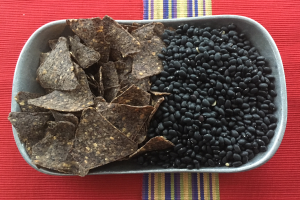
Dry beans, including black beans, are a staple in many Latin American cultures and many cultures around the world. If you have spent any time traveling in Latin America or the Caribbean, you know beans in some form are served at almost every meal. Beans are a great source of inexpensive protein and dry beans store well for a long period of time.
Just as a point of interest, rice and beans and beans and rice are two very different dishes, with the latter being more preferred. Rice and beans are a one pot dish, usually white rice and kidney beans cooked together with onions, garlic, maybe a few other spices and a little coconut oil. Beans and rice, on the other hand, are beans that are slowly stewed with onions, garlic and other spices, maybe even a pork hock for flavor. I like to add cumin, bay leaves and some Marie Sharp’s Habanero Pepper Sauce. This combination creates a delicious sauce to be eaten over a bed of rice.
I have been experimenting with several bean recipes as my son prefers beans to meat and will eat beans and rice every day if I let him. Black beans are by far our household favorite.
Fun facts about black beans
Black beans are botanically known as Phaseolus vulgaris.
Beans and legumes are the fruits or seeds of a family of plants called Fabaceae (also called Leguminosae).
Black beans have several common names including turtle beans, caviar criollo and frijoles negros.
These beans were and still are a staple food in the diets of Central and South Americans, dating back at least 7,000 years.
Black beans have a satiny black skin (technically dark purple) and a white center.
When cooked, the beans have a creamy texture and slightly sweet flavor.
Black beans are an excellent low-calorie, low-fat source of energy and fiber.
One half-cup serving of black beans gives you 8 grams of protein.
Aside from meat products, dry beans are the highest source of protein
available.
Dry beans have more fiber than any other unprocessed food at 15 grams per cup.
One cup of cooked black beans contains less than 1 gram of fat and only 227 calories.
Black beans are also a great source of folic acid, magnesium, potassium and iron.
Adding black beans to your breakfast food will also help your mood
because it helps to stabilize your blood sugar. This means that
including beans in your breakfast or lunch can help prevent that
mid-afternoon slump.
Michigan is the leading producer of black beans, with 58% of the nation’s total production.
Michigan’s Thumb counties, known for its rich farmland, produces more beans than any other place in the state.
Huron County is one of the top dry bean-producing counties in the nation.
Mexico is Michigan’s largest export market for dry beans, especially black beans.
Recipe for Black Beans and Rice
I was recently at a Cuban restaurant in Key West. They serve black beans and rice called Moros y Cristianos, translated literally to Moors and Christians. It is presumed the dish gets its name from the time when the Moors occupied the Iberian Peninsula. The black beans represent the Moors and the white rice represents the Christians.
This flavorful bean and rice dish, representative of Spanish occupation, is popular in Cuba. Every Cuban cook has their own version of the recipe. I’m not Cuban, but here is my version.
Ingredients
½ pound dry black beans cooked with 6 cups of water for 6 minutes in
pressure cooker. One option is to use 3 cups water and 3 cups chicken
broth.
1 tablespoon olive oil
1 large onion, chopped
1 large green bell pepper, cut into ½ inch pieces
4 large garlic cloves, chopped (or 1½ teaspoons garlic powder)
1 tablespoon cumin
2 bay leaves
1 tablespoon ketchup or tomato paste
1 tablespoon Marie Sharp’s Habanero Pepper Sauce (now readily available in the U.S.)
Directions
Heat oil in heavy, large saucepan over medium heat. Add onion, bell
pepper, garlic and sauté until vegetables begin to soften, about 5
minutes. Add 1 cup of beans to pan. Using back of fork, mash beans
coarsely.
In a crock pot, add bean and vegetable mixture along with remaining beans, the water/broth from cooking, cumin, bay leaves, tomato paste and pepper sauce. I leave the cover off or slightly ajar as the beans thicken and flavors blend, stirring occasionally.
Season beans to taste with salt and pepper. Serve over white rice and enjoy.
By understanding the implications of both numbers in a blood pressure reading, you may gain more understanding of your risk for heart disease and stroke. (Courtesy Spectrum Health Beat)
When it comes to blood pressure readings, the “top” number seems to grab all the attention.
But a large, new study confirms that both numbers are, in fact, critical in determining the risk of heart attack and stroke.
Blood pressure measurements are given as a “top” and “bottom” number. The first reflects systolic blood pressure, the amount of pressure in the arteries as the heart contracts. The second reflects diastolic blood pressure, the pressure in the arteries between heart muscle contractions.
For years, systolic blood pressure has been seen as the one that really matters. That’s based on studies—including the famous Framingham Heart Study—showing that high systolic blood pressure is a stronger predictor of heart disease and stroke.
At the same time, though, doctors measure both systolic and diastolic blood pressure—and treatment guidelines are based on both. So just how important is that diastolic number?
“The idea behind this new study was to address the confusion,” said lead researcher Dr. Alexander Flint, an investigator with Kaiser Permanente Northern California’s division of research.
Using medical records from 1.3 million patients, his team confirmed that, yes, high systolic blood pressure was a stronger risk factor for heart attack and stroke.
But those risks also climbed in tandem with diastolic pressure. And people with normal systolic readings were still at risk if their diastolic pressure was high.
“There’s been a common belief that systolic blood pressure is the only one that matters,” Flint said. “But diastolic definitely matters.”
He and his colleagues reported the findings in a recent issue of the New England Journal of Medicine.
The definition of high blood pressure has gotten a revamp in recent years. Guidelines issued in 2017 by the American College of Cardiology and other heart groups lowered the threshold for diagnosing the condition—from the traditional 140/90 mm Hg to 130/80.
The fact that treatment guidelines include a diastolic pressure threshold implies that it’s important.
And indeed it is, said Dr. Karol Watson, a member of the ACC’s prevention section and leadership council.
In fact, she said, doctors once thought that diastolic blood pressure was the more important one, based on research at the time. Then came the studies showing that systolic pressure was generally a better predictor of people’s risk of heart disease and stroke.
In addition, Watson said, high systolic blood pressure is more prevalent, because of natural changes in blood pressure as people age.
“As we get older, systolic blood pressure keeps marching up,” she explained. Diastolic blood pressure, on the other hand, generally peaks when people are in their 40s to 60s—and then it declines.
But it’s clear, Watson said, that while systolic and diastolic blood pressure are different they both deserve attention.
In the latest study, cardiovascular risks rose with each “unit increase” in systolic pressure above 140, by about 18% on average. Meanwhile, each increase in diastolic blood pressure above 90 was tied to a 6% increase in heart disease and stroke risk.
The researchers saw a similar pattern when they looked at blood pressure increases above the 130/80 threshold. That, Flint said, supports the 2017 guideline shift.
The findings are based on over 1.3 million patients in the Kaiser Permanente health system who had roughly 36.8 million blood pressure readings taken from 2007 through 2016. Over eight years, more than 44,000 patients had a heart attack or stroke.
According to Flint, it’s the largest study of its kind to date.
The bottom line for patients, Watson said, is that they should care about both blood pressure numbers.
In her experience, she noted, patients often point to the number that’s in the normal range and say, “But look how good this is.”
Flint agreed, saying that no one should “ignore” the diastolic number.
“It’s important not only in blood pressure treatment, but on the side of diagnosis, too,” he said.
The Wyoming high girls basketball team used a balanced scoring attack, good defense and some clutch free-throw points down the stretch to score a 73-63 win over Wayland Jan. 14. (WKTV)
By K.D. Norris ken@wktv.org
The second game of a long OK-Conference schedule may have been too early to be called a must-win game for the Wyoming High School girls basketball team, but the Wolves Tuesday, Jan. 14, home-court win over then undefeated Wayland was a really good win.
Wyoming (4-5 overall and 1-1 in OK Gold) used a balanced scoring attack and some clutch defense down the stretch to score a 73-63 win over the Wildcats (8-1 overall, 1-1) and give the Wolves a little momentum in conference play.
“Our conference is so tough, Wayland was 8-0 coming in … East Grand Rapids is one of the top teams in the state … anytime we go into our conference, it is a battle,” Wolves coach Troy Mast, now in his fifth year at Wyoming, said to WKTV after the game. “It was early in the season, but we play every game as if it were the last game of the year.”
In the Wayland win, the Wolves were led by 20 points — including six 3-pointers — from senior McKenzie Ruppert and 15 points from fellow senior Mikayla Petree. But they also got 12 points each from junior Taejah Cross and sophomore Michelle McGee, eight points from sophomore Mikayla Marzean and six points from sophomore Marissa Menard.
“Our kids were ready tonight,” Mast said. “I am so proud of how they performed and took care of each other and played so hard.”
Wyoming high coach Troy Mast talking to his team during a win over Wayland Jan. 14. (WKTV/K.D. Norris)
That balanced scoring, from experienced upperclassmen and still-developing sophomores, has been a strength of Wyoming so far this season.
“We do not have one girl we can count on … but we feel like we have five, six, seven girl who can score on a given night,” Mast said. “We just want to win. It doesn’t matter who scores.”
In addition to seniors Ruppert and Petree, the Wolves are also led by senior Aniyah Jones. Other juniors on the squad include Charde’ Fudge, Naomi Goodson and Delfina Hernandez-Key. In addition to McGee, Marzen and Menard, other youth on the team include sophomores Jenna VanderPloeg and Avery Jirous, and freshman Treyah Cross.
“We have senior leaders … Mikayla Petree has been on the varsity for four years … and each year she has taken on more and more responsibility,” Mast said. “But we also have some young kids who can play. We feel like that, as we go though the season, if we can balance those two together, we’ll be alright.”
While Wyoming lost four of seven non-conference games, Mast said there were lessons learned from close, early-season losses to the likes of Forest Hills Central, Grandville and Rockford.
“We felt like we played a tougher (non-conference) schedule than most teams in our conference,” he said.
The Wolves will be at Grand Rapids Christian (7-1, 0-1) for another conference game Friday, Jan. 17.
The Wolves were 8-13 last season and were 5-7 in OK-Conference Gold play. This season the coaching staff includes assistants Julian Goodson (the junior varsity head coach) and Eric Brown.
The Wyoming vs. Wayland girls and boys games were a WKTV Sports Featured Games and is available on cable television and on-demand at WKTVlive.org.
WKTV broadcasts on Wyoming and Kentwood cable channels. On Comcast cable, Channel 25 is the Community Channel, where sports events and other community events are shown; On AT&T cable throughout the Grand Rapids area, viewers go to Channel 99, and then are given the choice to watch Wyoming (or Kentwood) Community (Channel 25) or Government (Channel 26) channels.
In 1995, the Grand Rapids Symphony stepped on stage beneath a new outdoor band shell at Cannonsburg Ski Area, and a new West Michigan summer tradition of great music in the great outdoors was born. The sizzling sounds of the 1990s returns to the 2020D&W Fresh Market Picnic Pops in July with the pop sensation, Hanson.
The Grand Rapids Pops’ 26th annual summer season features the extraordinary fiddle, mandolin and hammer dulcimer virtuosity of Kittel & Co.; the suave and sophisticated, close-harmony vocals of The Doo Wop Project; and the joyously uplifting world music sounds of Ladysmith Black Mambazo.
Sponsored by SpartanNash, the 2020 Picnic Pops, led by Principal Pops Conductor Bob Bernhardt and Associate Conductor John Varineau, opens with Grammy nominees Kittel & Co., fronted by Michigan’s own Jeremy Kittel from Ann Arbor, on July 22. Brothers Isaac, Taylor and Zac Hanson, whose smash hit “MMMBop” was the summer anthem of 1997, join the Grand Rapids Pops at Cannonsburg Ski Area on July 24.
“Symphony Under the Sky” continues with stars of Broadway’s “Jersey Boys” and “Motown: The Musical” singing songs made famous by Frankie Valli and The Four Seasons and Smokey Robinson and the Miracles and more in The Doo Wop Project on July 29. The 2020 Picnic Pops wraps up on July 30 with Ladysmith Black Mambazo, featured prominently on Paul Simon’s 1986 album “Graceland,” which won the Grammy for Album of the Year.
Season ticket sales for renewing subscribers are now underway. Season tickets for new subscribers, offering substantial discounts as well as access to the special event presale for Hanson, will go on sale on Feb. 3.
Single tickets to see Hanson for subscribers go on sale Feb. 24. All remaining single tickets for Hanson go on sale March 2. Single tickets for the rest of the 2020 D&W Fresh Market Picnic Pops go on sale March 9. Call the Grand Rapids Symphony at 616-454-9451 ext. 4 or go online to PicnicPops.org.
Kittel & Co. – July 22
Switching from Bach to Bluegrass at the drop of a hat, Grammy-nominated violinist and fiddler Jeremy Kittel’s goal is “just to make honest music.” The Michigan-born musician has shared stages with artists including Bela Flack, Yo-Yo Ma, Paquito D’Rivera and My Morning Jacket, performed at the Telluride Bluegrass Festival and at Berklee College of Music, and on TV’s “Late Night with Stephen Colbert” and radio’s “A Prairie Home Companion.”
Growing up near Ann Arbor, Kittel recalled “Playing different styles was kind of a dream of mine.” Today, the U.S. National Scottish Fiddle Champion, graduate of the University of Michigan and former member of the Grammy-winning Turtle Island Quartet, plays music drawing from traditional roots, jazz, Celtic, Classical, electronic and more with his all-string band, Kittel & Co., which recently appeared at Interlochen Center for the Arts, at The Ark in Ann Arbor and at Crooked Tree Arts Center in Petoskey.
Hanson – July 24
In 2017, the trio of brothers who make up pop-rock trio Hanson celebrated 25 years of playing music together, selling millions of albums and reaching fans from Tulsa to Tokyo. After five years and two independent albums, Hanson released their major label debut in 1997 and saw a meteoric rise with the international smash single “Mmmbop” from the album Middle Of Nowhere, which garnered multiple Grammy nominations and five consecutive top 40 singles, including “Where’s The Love,” “I Will Come To You” “Weird.”
HANSON | String Theory brings together an exciting collaboration of song craftsmanship and symphonic spectacle framing the established Grammy nominated multiplatinum pop-rock trio’s music with symphonic arrangements.
The Doo Wop Project – July 29
Stars of “Jersey Boys,” “Motown: The Musical” come to town with the classic doo wop sounds of The Drifters, The Del-Vikings and The Temptations. On Broadway, they sang as Frankie Valli and The Four Seasons and Smokey Robinson and the Miracles. With the Grand Rapids Symphony, The Doo Wop Project spans the gamut of tight-harmony vocals from The Crests (“16 Candles”), The Belmonts (“A Teenager in Love”) and The Flamingos (“I Only Have Eyes for You”) and the early days of all-male vocal groups to doowopified arrangements of later songs by Michael Jackson, Jason Mraz and Maroon 5.
Ladysmith Black Mambazo – July 30
In the mines of South Africa, impoverished black miners, living far from their homes and families, created their own genre of vocal music to entertain themselves. In the town of Ladysmith in the African province of kwaZulu Natal, singers honed their craft where Ladysmith Black Mambazo were discovered by Paul Simon who featured them on his 1986 recording “Graceland,” which went on to win the Grammy Award for Album of the Year.
Proclaimed “South Africa’s Cultural Ambassadors to the World” by Nelson Mandela, the multiple Grammy Award winners have shared stages with Stevie Wonder, Dolly Parton, Josh Groban, and the group has been heard on the soundtrack for such films as Disney’s “The Lion King, Part II,” “Eddie Murphy’s “Coming To America,” and Clint Eastwood’s “Invictus.” Benefactor sponsor for the concert is Inclusive Performance Strategies.
Tickets
Series tickets will be available to new subscribers beginning Feb. 3. There is a 3-Concert Series subscription for the Kittel & Co., The Dot Top Project, and Ladysmith Black Mambazo. Subscriptions for lawn seats are $45 for adults or $15 for children ages 2 – 18. Children under age 2 are free. Subscriptions for general admission chair seating are $81 and tickets for individual reserved table seat are $156 or $1,200 to reserve an entire table for eight.
The Flexpass 6-pack offers lawn tickets that can be used in any combination, on any concert night, for Kittel & Co., The DooWop Project, and Ladysmith Black Mambazo. Flexpasses are $114 for adults. Flexpasses cannot be used for the special event Hanson.
Single tickets will be available for Hanson first for Picnic Pops series and Flexpass subscribers beginning Feb. 24 and then for the general public March 2. All remain gin single tickets for the D&W Fresh Market Picnic Pops go on sale on March 9. Lawn tickets for Kittle & Co, The DooWop Project, and Ladysmith Black Mambazo are $22 for adults or $5 for ages 2 -18. Other tickets are $33 for reserved chairs, $55 for individual table seats, and $440 for a full table of eight.
Lawn tickets for the special event Hanson are $45. Other tickets are $67 for reserved chairs, $112 for individual table seats, and $896 for a full table of eight.
You could compare the compatibility of first-grade teachers Julie Dykstra and Sarah Beld to a popular combination: peanut butter and jelly.
“Welcome to the PB and J Suite,” said Dykstra, who with Beld is bringing team teaching to a new level at Gladiola Elementary by combining their classrooms into one super-sized group.
Sandwiched between their two rooms is a connecting space — a former coat closet transformed into a mini-library. Through it, students walk back and forth before settling into reading on one side or math on the other, depending on the time of day.
But the PB and J reference goes beyond teachers working in sync. One first grader defined how students refer to the rooms: “This is peanut butter,” he said referring to the classroom where he stood. “That’s jelly,” he said pointing into the connected classroom.
Together, Dykstra and Beld are teaching 38 students — dubbed Peanut Butter Kids or Jelly Kids, depending on whose student they are on the class roster and because they split up for art, music and gym. All students spend most of the day together, with one teacher leading and the other assisting students individually or in small groups.
When it’s time for quiet reading and writing, students find a spot on either side.
The combined classroom allows for more individualized instruction, including in groups
You Do This; I Do That
The longtime colleagues pitched the idea of joining forces last year. They were both seeing losses in instruction time due to behavior management and found it difficult to meet individual needs of students at different academic levels. Principal Cheryl Corpus agreed to pilot the idea, combining the group of 52 students. There also is a third, traditional first grade classroom.
“By the end of last year, we learned it was powerful collaboration of students and staff alike. Students were able to build relationships across groups and teachers were collaborating every day to meet the needs of their students,” Corpus said. “By maximizing instructional time, supporting one another, and differentiating for the students, we saw impact behaviorally and academically.”
Because of its success at the first grade level, second grade teachers Jennifer Blackburn and Charon Leal also joined their classes this year, sharing 56 students. Their space is different than the first grade teachers; it’s all one big room.
Blackburn said Dykstra and Beld realized some of their students thrived under the combined model, and “sold us the idea.”
For more stories on local schools, visit School News Network at schoolnewsnetwork.org.
At the Jan. 13 Wyoming-Kentwood Area Chamber of Commerce’s Government Matters Committee’s monthly forum at Wyoming City Hall were chamber member and moderator Kathy Bates, chamber president Bob O’Callaghan, Kentwood Mayor Stephen Kepley and Wyoming Mayor Jack Poll. (WKTV)
By WKTV Staff ken@wktv.org
Local governmental leaders — from the mayors of Wyoming and Kentwood, to a county commissioner and state legislators, to representatives of federal officials — looked ahead to 2020 as part of a wide-ranging inter-governmental leaders meeting Monday, Jan. 13. at the Wyoming-Kentwood Area Chamber of Commerce’s Government Matters Committee’s monthly forum at Wyoming City Hall.
The meeting, as always, was hosted by chamber member and moderator Kathy Batey and chamber president Bob O’Callaghan. The intergovernmental discussion hosted by the chamber focuses on issues that effect residents and businesses in the two cities.
The Government Matters meeting brings together representatives from the cities of Wyoming and Kentwood, Kent County commissioners, local Michigan state senators and representatives, as well as often representatives of Michigan’s U.S. senators and U.S. congressman who represent the Wyoming and Kentwood area.
At the January meeting, Kentwood Mayor Stephen Kepley and Wyoming Mayor Jack Poll represented their cities. Kent County Commissioner Monica Sparks was also present. State leaders included Sen. Peter MacGregor and Reps. Tommy Brann and Steven Johnson.
On the federal level, the panel included Brian Patrick, communications director for federal Rep. Bill Huizenga (Michigan Congressional District 2), and Peter Dickow, West Michigan Regional Director for U.S. Sen. Gary Peters.
The next meeting will be Feb. 10, from 8 a.m. to 9:15 a.m., at Wyoming City Hall.
For more information about the chamber and Government Matters visit southkent.org.
The meetings are on the second Monday of each month, starting at 8 a.m. WKTV Journal will produce a highlight story after the meeting. But WKTV also offers replays of the latest meeting on Wednesdays at 7 p.m., as well as on select Saturdays, on Comcast Cable Government Channel 26. For a highlight schedule of WKTV cable programs visit wktvjournal.org.
As caregivers and clinicians navigate the various phases of cancer survivorship, it spotlights the ever-present need for resources that optimize care. (Courtesy Spectrum Health Beat)
More Americans are surviving cancer and their numbers could top 22 million in another decade, the American Cancer Society says.
Currently, thanks to better screening and treatment, more than 17 million Americans who had cancer remain alive, the society said in a report.
While this is good news, it comes with a cautionary note.
Cancer survivors often have long-term difficulties. Many must also overcome barriers to get the treatments they need, the researchers said.
“People with a history of cancer have unique medical, psychosocial and economic needs that require proactive assessment and management by health care providers,” said report co-author Robin Yabroff. She’s senior scientific director of health services research for the cancer society.
“Although there are growing numbers of tools that can assist patients, caregivers and clinicians in navigating the various phases of cancer survivorship, further evidence-based resources are needed to optimize care,” Yabroff said in a society news release.
The report estimated that 8 million men and nearly 9 million women have a history of cancer.
Among the survivors, 68% had their cancer diagnosed five or more years ago and 18% at least 20 years ago.
Also, while nearly two-thirds of survivors are 65 or older, nearly 66,000 survivors are 14 and younger. Close to 48,000 are 15 to 19 years old.
Because of the growing and aging population, survivorship is increasing even though the number of women who develop cancer remains stable and the number of men with cancer declines, the researchers found.
The most common cancers among men are prostate, colon cancer and melanoma. Among women they are breast, uterine and colon cancer.
The report was published in the journal CA: A Cancer Journal for Clinicians.
Climate change, millennials becoming a majority of the workforce, and increasing critiques of tainted donors are changing the nonprofit sector in profound new ways, according to experts and thought leaders at the Dorothy A. Johnson Center for Philanthropy at Grand Valley State University.
Those concepts are just a sampling of emerging trends in the philanthropic sector identified in the Johnson Center’s annual 11 Trends in Philanthropy report, which analyzes upcoming and developing issues in the nonprofit industry.
A significant change to the nonprofit sector in 2020 will be the people working in it. This year, millennials will make up more than half of the workforce in the United States, and the generation’s desire for greater flexibility, transparency and meaning in their work is reshaping how nonprofit workplaces function. Those wants, coupled with the lure of social enterprise companies, may be presenting new opportunities for professional impact.
Nonprofits will also be on the front lines of a global issue: climate change. As the impacts of climate change become more apparent, nonprofit organizations and those who fund them will play critical roles in disaster response, policy change, applying a sustainable and climate-focused lens to existing strategies and advancing new ideas for mitigating and reversing ecological damage.
Another major trend that continues to develop is the increasing number and frequency of so-called tainted money and tainted donors. Common examples of this trend include the philanthropy of the late Jeffrey Epstein, a wealthy financier and convicted sex offender, and the giving of the Sackler family, the owners of Purdue Pharma, which is linked to the opioid crisis. Some experts in the field even argue that the “cleanliness” of any money gained through capitalist practices should be considered suspect. But all of this concern puts the nonprofits who depend, to varying degrees, on private donations in an ethically complicated spot.
Other trends, which are also analyzed in-depth in the report, include:
— Increasing critiques of “Big Philanthropy”
— Data and mapping tools come together to empower community decision making
— Collaboration and consolidation in philanthropy’s infrastructure
— Data science for social impact
— Increased attention to sustainable development goals
— Alternatives to strategic philanthropy are emerging
— Corporate social responsibility employs many models to align business and philanthropy
— Inclusive growth requires urgent collaboration and deliberate patience
“The philanthropic sector is undeniably sharing in this time of marked upheaval and uncertainty,” said Teri Behrens, executive director of the Johnson Center. “Yet, we still see philanthropy as being best positioned to help unite us, domestically and internationally, to address some of the global challenges we face. We are a sector that focuses on solving problems.”
The full 2020 11 Trends in Philanthropy report is available online at johnsoncenter.org
Kentwood resident Sagar Dangal understands people’s hesitation about filling out the U.S. Census. When he saw his first census in 2010, his reaction was much the same.
“I remember when I first saw it, I was like what is the census?” said Kentwood resident Sagar Dangal. “I’m not going to fill this out.”
Flash forward 10 years to 2020, he is not only filling out his own census questionnaire but working within the Bhutanese community to build a bridge of understanding about the U.S .Census and its importance.
This is not an easy task. Concerned over the Nepali minority in Bhutan, the Bhutanese government conducted a census targeting the Nepali community within the country. Due to persecution, many of the Bhutanese Nepali fled the country with a large population, 85 percent of the refugees, eventually settling in the United States.
“The issue of illegal immigrants and the concern of deportation is not something of a concert with the Bhutanese community,” Dangal said, adding most are U.S. citizens having come to the United States in 2007/2008. The older generation still remembers what happened in Bhutan, Dangal said, and that is where the education of what the census is becomes important.
“Once you explain what it is, that it is a count of the people, and not about ethnicity, but rather to assure that your community is getting the funding it needs, then people are more open to it,” Dangal said.
https://youtu.be/WVyfvMdEtsE
A U.S. Census ad designed for the Hispanic community. (U.S. Census Bureau)
Daniela Rojas, fund development and communication manager of the West Michigan Hispanic Center of Commerce said she has found the same with the Hispanic community.
“Response has been pretty positive,” Rojas said. “People may not understand what it is or how it impacts their daily lives, but they are not seeing it as a negative.”
Rojas admitted that the true test will come if people respond by filling out the census in March and April.
A hurdle for the Hispanic community has been concern that census would be use to find illegal citizens even though the question of U.S. citizenship has been removed from the census.
“Of course, we are living in a time of fear and distrust, but I believe we have done well in helping people understand that this is how federal money will impact the next 10 years,” Rojas said.
The West Michigan Hispanic Chamber of Commerce is one of many agencies that has received grant funding from the Heart of West Michigan United Way to help with the U.S. Census. The Chamber has been canvassing communities, giving out materials in Spanish and English and “I Count” buttons at various events, and does work on social media. The organization handed out more than 3,000 flyers at August’s Hispanic Festival.
“We are making sure that people know that the information gathered is helpful not hurtful,” Rojas said, adding that the biggest hurdle has been the lack of smartphones, WiFi and other electronic devices where people could go on their own to learn more about the census. The other challenge has been reaching people who have “thrown up their hands on the census and the government because they really don’t see where it matters.”
https://youtu.be/811HtcnaiM0
A U.S. Census ad focused on the Vietnamese community. (U.S. Census Bureau)
The census does matter, according to Kerry Ebersole, executive director at 202 Census, State of Michigan.
“Every person is profoundly impacted by the the U.S. Census as it is the gold standard in how the federal government distributes its funding,” Ebersole said.
For the State of Michigan, it is about $30 billion from the federal government that is distributed to the state. This covers funding for a number of items such as health care, school lunches, Meals on Wheel, transportation, along with determining representation in the U.S. House and the Michigan House and Senate.
Flyers like this one at Wyoming’s Marge’s Donut Den are being put up to help inform people of the upcoming census. (WKTV/Joanne Bailey-Boorsma)
Helping to spread the word about what the census, the U.S. Census Bureau recently announced an extensive advertising campaign that features ads focused on several minority groups such as the Hispanic population. The 2020census.gov site also includes content and guides in 59 languages, such as Nepali, Dutch, Greek, Spanish, and Swahili, with residents able to respond to the nine census questions online and by phone in 13 languages. The entire 2020census.gov site includes information in both English and Spanish.
To help make sure Michigan citizens are counted, the State of Michigan has established its own website, michigan.gov/census2020 and on social media can be found by searching for Mi Census.
WKTV Journal In Focus’s audio only podcast of a Community Conversation on Homelessness featured Kentwood City Commissioner and community advocate Emily Bridson moderating along with Marshall Kilgore and, from left, panelists Hillary Scholten and Bo Torres. (WKTV)
By WKTV Staff ken@wktv.org
On the latest episode of WKTV Journal’s In Focus series of podcasts, we bring you City of Kentwood Commissioner Emily Bridson’s Community Conversation on Immigration, held Thursday, Jan. 9, at Broad Leaf Local Beer in Kentwood.
The event was moderated by Bridson and Marshall Kilgore, Western Michigan Director for United Precinct Delegates, and included panelists Hillary Scholten, candidate for the U.S. 3rd Congressional District, and Bo Torres, a Hispanic community leader.
WKTV Journal In Focus’s audio only podcast of a Community Conversation on Immigration set-up by Kentwood City Commissioner and community advocate Emily Bridson drew a crowd Jan. 9. (WKTV)
The conversation drew about 100 people, with standing room only, and included discussion on current immigration policies as well as the contributions made to the United States from immigrants — both documented and undocumented. It also included discussion on proposed Michigan governmental action to change the state’s driver’s license laws.
Regular episodes of WKTV Journal In Focus airs on cable television in the Wyoming and Kentwood areas on Comcast WKTV Channel 26 and on AT&T Channel 99 Government channel (see our Weekly On-air Schedule for dates and times).Individual interviews area also available on WKTV’s YouTube Channel at WKTVvideos.
Researchers found that women following a low-fat diet reduced their overall calories, changed their cooking methods and reduced portion sizes of meat and dairy products. (Courtesy Spectrum Health Beat)
Health experts have long touted the benefits of a low-fat diet for preventing heart disease, but now a large study suggests it might do the same against breast cancer.
Researchers found that eating low-fat foods reduced a woman’s risk of dying from breast cancer by 21%. What’s more, the women on low-fat diets also cut their risk of dying from any cause by 15%.
“This is the only study providing randomized controlled trial evidence that a dietary intervention can reduce women’s risk of death from breast cancer,” said study author Dr. Rowan Chlebowski.
He is from the Los Angeles Biomedical Research Institute at Harbor-UCLA Medical Center in Torrance, Calif.
Diet has long been suspected to be a factor in cancer.
Obesity has been linked to 12 different types of cancers, including postmenopausal breast cancer, according to the American Institute for Cancer Research. And, a diet full of healthy foods, such as vegetables, fruits, whole grains and legumes is thought to help protect against cancer.
Chlebowski noted that previous studies have shown a higher cancer incidence in countries where people tend to eat more fat.
The latest study looked at the effect a low-fat diet might have on the incidence of breast cancer and death.
Nearly 49,000 postmenopausal women from 40 centers across the United States were included in the study. The women were between the ages of 50 and 79 and had no history of previous breast cancer.
Eighty percent of the women were white, which Chlebowski said matched the population when the study began.
Between 1993 and 1998, the women were randomly assigned to one of two dietary groups. One group was assigned to a normal diet. This diet had about 32% of their calories from fat. The low-fat group had a target of 20% or less of calories from fat.
Chlebowski said the low-fat diet was close in content to the Dietary Approaches to Stopping Hypertension diet, or DASH diet. This emphasizes eating vegetables, fruits, legumes and whole grains, while avoiding high-fat meats and dairy products, according to the U.S. National Heart, Lung, and Blood Institute.
The low-fat group lost a modest amount of weight. Chlebowski said there was about a 3% difference in weight between the groups. He said the researchers factored the weight difference into their calculations and that weight alone didn’t affect the risk of death.
Women in the low-fat group adhered to the diet for about 8.5 years and both groups were followed for an average of nearly 20 years.
The women in the low-fat group weren’t able to achieve the 20%-or-less target for fat, but they did manage around 25%, according to the researchers. And they did increase their intake of fruits, vegetables and grains.
“The diet was more moderate than originally planned. But we saw a diet of 25% to 27% fat is largely achievable,” Chlebowski said.
He said the researchers don’t know if any individual components of the diet were more important than others, but they hope further study will tease that out.
In the meantime, Chlebowski said he thinks the message should be one of dietary moderation rather than looking for any one particular food or food group.
He said the women in the low-fat study group reduced their overall calories, changed their cooking methods and reduced their portions of meat and dairy products.
The findings are to be presented soon at the American Society of Clinical Oncology annual meeting in Chicago. Findings presented at meetings are typically viewed as preliminary until they’ve been published in a peer-reviewed journal.
ASCO breast cancer expert Dr. Lidia Schapira, from Stanford University, noted that this study shows “what we put on the plate matters. It’s worth coaching and pushing patients to put more fruits and vegetables on their plates.”
She added that even when women didn’t reach the more stringent dietary fat goal of 20%, they still showed a health advantage from trying to reduce the fat in their diets.
Dr. Monica Bertagnolli, president of ASCO, said these findings were “really, really striking.”
She noted, “This was not an incredibly restrictive diet. People were able to adhere to it pretty well.”
And yet, the incidence of breast cancer went down by 8% in the women on low-fat diets.
“They were getting fewer breast cancers and even when they did get breast cancer, their death rate was reduced,” Bertagnolli said.
Today’s young adults are a major contributor to the economy and are poised to be the nation’s next biggest spenders. It seems logical to help them use their spending in a way that will positively impact their future and help them build a solid credit history. While there are a variety of ways to establish a solid credit history, one useful and effective method can be through credit cards.
EVERFI and AIG Retirement Services recently surveyed more than 30,000 college students about their financial behaviors and knowledge. According to the 2019 research, the percentage of students using credit cards in college has increased from 28% in 2012 to 46% in 2019. The percentage of students with more than one card has also increased from 25% of college students to 45%. While using credit cards can help build positive credit, the research also found that the percentage of those students who never paid a credit card bill late decreased from 91% in 2012 to 78% today.
In addition, for students with credit cards, 36% already have more than $1,000 in credit card debt. While percentage changes could be influenced by a variety of factors, it does demonstrate the importance of education around the proper use of credit.
First, it is important that young people recognize good credit is a privilege to be earned. It takes time to build a good credit history that can then benefit them for years to come. They must also understand that debt is easy to get into, hard to get out of and if not managed, can result in a poor credit rating that will negatively affect them for 10 years or more. As indicated by the research, unfortunately, many young people do not understand the implications of spending beyond their means with credit cards.
A credit card is a form of borrowing money. When a young person signs a credit card application, it is binding. It represents an agreement to repay dollars borrowed through the privilege of using a card to pay for something instead of cash. If payments are made prior to due dates on bills received, over time the youth creates a history of consistent, timely repayments and a good credit score is built. A higher credit score will make it easier in the future for students to rent an apartment, take out a home mortgage and command better interest rates on insurance policies or loans. It may even help them to secure a job.
Help youth research credit cards and choose one that is right for their needs and situation.
Establish a system with youth for tracking their charged monthly expenses. This provides a visible picture of how much debt they are incurring.
Have youth be accountable for paying their bill each month out of their personal checking account. By doing this, they will become accustomed to bill paying procedures and track any remaining account balance.
Teach youth how to pull a credit report through the agencies of TransUnion, Experian and Equifax. One report is available free of charge from each of these agencies on an annual basis. Youth and adults should access their credit report using AnnualCreditReport.com, a federally authorized website that provides free access to a credit report every 12 months.
Michigan State University Extension and Michigan 4-H Youth Development help to prepare young people for successful futures. As a result of career exploration and workforce preparation activities, thousands of Michigan youth are better equipped to make important decisions about their professional future, ready to contribute to the workforce and able to take fiscal responsibility in their personal lives. For more information or resources on career exploration, workforce preparation, financial education, or entrepreneurship, contact 4-HCareerPrep@anr.msu.edu.
“If you were born without wings, do nothing to prevent them from growing.”
— Coco Chanel
Hooray for Hollywood!
Photo by Sam Howzit
OK, so you’ll have to wait until May or June, but time doth fly, doth it not? (And so can you.) Check out Allegiant Airlines’s new nonstop destinations! (Hint: The list includes LA.) Go here for the scoop. Gerald R. Ford International Airport is excited about this, and you should be, too.
Time to thrive
Courtesy Vista Springs Assisted Living
Maybe you’re not quite there, yet, but it’s always wise to know what you’re up against. Aging adults can thrive in assisted living communities versus aging in place and living alone at home. Even seniors who live alone in a new home face the same issues with isolation, security issues, and in some cases driving restrictions apply due to medical, or vision problems. Go here to learn more.
Stella!
Paws With A Cause dogs-in-training visit the cast of Grand Rapids Civic Theatre’s ‘A Street Car Named Desire’ (Supplied)
Blanche is the quintessential tragic figure, and Stanley is just a brute. There’s still time to catch the famous Tennessee Williams play, A Streetcar Named Desire, which runs through Jan. 26 at Civic Theatre. Streetcar follows the story of Blanche du Bois who goes to live with her sister (Stella) and brother-in-law (Stanley) in the French Quarter of New Orleans. Go here for the details.
Fun fact:
80 is the new 65
It’s true! American Senior Communities reports that with innovations in healthcare and a focus on prevention, seniors today are living “longer, more active and healthier lives.” In fact, by the year 2040, the population of older seniors — people aged 85 years and above — is expected to triple from the 5.7 million there were in 2011 to 14.1 million.
Allegiant airlines announced today that it would expand its service from Grand Rapids to Los Angeles, Boston, and Austin, Texas.
“We’re very excited to expand our presence in Grand Rapids by offering service to three of the most in-demand travel destinations in the country,” said Drew Wells, Allegiant vice president of planning and revenue. “With nonstop access to the history, culture and endless entertainment options found in LA, Boston, and Austin, local residents will be able to enjoy amazing vacation adventures at an affordable price.”
New seasonal service from Gerald R. Ford Airport (GRR) includes:
Los Angeles, California via Los Angeles International Airport (LAX) – beginning June 5, 2020 with fares as low as $66. (Some restrictions apply.)
Boston, Massachusetts via Boston Logan International Airport (BOS) – beginning May 7, 2020 with fares as low as $33. (Some restrictions apply)
Austin, Texas via Austin-Bergstrom International Airport (AUS) – beginning May 22, 2020 with fares as low as $55. (Some restrictions apply)
The new seasonal flights will operate twice weekly. With the addition of this new route, Allegiant will now serve 14 cities from Gerald R. Ford Airport (GRR). Flight days, times and the lowest fares can be found only at Allegiant.com.
“We are thrilled to grow our route map with the addition of Austin, Boston and Los Angeles as new nonstop service with Allegiant,” said Tory Richardson, president & CEO at the Gerald R. Ford International Airport. “Allegiant started service in Grand Rapids in 2009 with two cities. With the addition of these three new nonstop flights this summer, Allegiant is now serving 14 destinations out of Grand Rapids – more than any other carrier. We are proud to support Allegiant’s growth in West Michigan, and we appreciate their commitment to service and satisfaction in our market.”
Allegiant Air is an American low-cost airline that operates scheduled and charter flights. As a major air carrier, it is the ninth-largest commercial airline in the US. It is wholly owned by Allegiant Travel Company, a publicly traded company with 4,000 employees and over US$2.6 billion market capitalization. Allegiant offers Grand Rapids-area travelers with low base airfare and savings on rental cars and hotels.
Homeless, with Homework: A new School News Network series on homelessness in schools and its connection to housing. As costs rise and the rental market has low availability, nearly 2,500 students in Kent ISD public schools are facing homelessness. These stories look into what’s led to the issue and how it impacts students. For more on the series, click here.
One in seven African American children in Kent County — 2,658 in all — were in the homeless system in 2018, according to data from K-Connect. (School News Network)
For much of her life, Kayla Morgan has faced uncertainty about where she would lay her head down at night.
As a teenager, she attended a different high school each school year, moving from foster home to foster home in the West Michigan area. As an adult she lived in different temporary housing arrangements for two years with her children.
Kayla Morgan, who continues to face housing insecurity, runs her own yoga business (photo by Dianne Carroll Burdick)
Now, the activist, owner of Resilient Roots Yoga, and mom of three elementary-age children enrolled in Grand Rapids Public Schools is working to change the trajectory of people of color struggling to find stable and affordable housing.
“I think there needs to be more representation of people of color in higher management positions and at decision-making tables,” Morgan said. “I think Grand Rapids has to acknowledge that it’s not the best place to live for everybody.”
Morgan is a “lived experience” expert who works with KConnect, a team of community stakeholders working together to address issues affecting children, youth and families.
In that role, Morgan talks about the impact of trauma and generational poverty on her life, and how she turned to abusive relationships in hopes of having a permanent place to live. She talks about the frustration of hard-to-navigate systems, of policies that keep people oppressed and how few good options exist for low-income people looking for places to live.
In the 11 years since she aged out of the foster care system, Morgan has continued to relocate frequently due to financial situations and other life circumstances. She and her children spent many months homeless, often sleeping at friends’ houses.
People of Color Disproportionately Impacted
Morgan’s voice is providing personal testimony to the fact that there’s major disproportionality by race when it comes to people affected by homelessness. One in seven African American children in Kent County — 2,658 in all — were in the homeless system in 2018, according to data from K-Connect.
The disparity is not just in African Americans.Out of all children in the county, one in 46 were in the homeless system in 2018. But for Hispanic/Latino children the proportion was one in 54, while for white children it was one in 160. In total, 10,538 people were in the homeless system last year, of which 3,741 — 33 percent — were children.
“These numbers are crushing and yet, these numbers only reflect the children we know about,” said Brandy Lovelady-Mitchell, Kent ISD director of Diversity, Equity and Inclusion and member of KConnect’s Housing Security Design Team. “There are likely others who are impacted by homelessness whom our system knows nothing about yet. Our community needs to know the magnitude of the demand and the urgency.”
This data point amplifies the reality that many black people are struggling in Kent County, Lovelady-Mitchell said, adding, “Please hear me when I say it is not because of any deficit in black people.”
Education, health, employment rates, economic development and opportunities all factor into generational wealth, and there are major disparities in these areas by race, she said.
“Each of (those) elements intersect with housing and the way that race influences these systems. I see the faces behind those numbers which brings me to my knees. One child is too many.”
Diana Sieger, president of the Grand Rapids Community Foundation and KConnect board member, said seeing the data is “horrific.”
“It’s important to look at the data; it’s also important to feel what this means,” Sieger said. “We need to acknowledge systemic racism is really at the root of all of this, particularly when we look at the statistics of homeless children.”
The data includes literally homeless people (without a fixed, regular nighttime residence or living in shelters, hotels and motels) or people who are facing the imminent threat of losing their residence. (KConnect data includes infants and children not old enough for school, so differs from McKinney-Vento Act data, which includes only children enrolled in school that have been reported as homeless.)
Huge Gaps in Income
Income helps explain the disproportion. According to KConnect data, in Kent County, average monthly earnings for white workers in the second quarter of 2018 was $4,411, compared to $2,840 for black workers. That’s $25.45 per hour compared to $16.38 per hour for a 40-hour work week.
The numbers showpaying for basic needs is difficult for many families. The basic annual cost of living for a family of four in 2017, according to the ALICE report, completed by the Michigan Association of United Ways, was $61,272 — up 27 percent from 2010 and equal to an hourly wage of $30.64.
“TAKING $2 MILLION AND BUYING HOUSES THAT COULD BE PASSED DOWN FROM GENERATION TO GENERATION IS A MUCH BETTER SOLUTION THAT CREATING SMALL UNITS AND PACKING PEOPLE TOGETHER WHERE THERE’S NO SPACE TO GROW.”
— Kayla Morgan, Grand Rapids mom and lived experience expert for KConnect
In terms of housing, Sieger said there is much more need than federal subsidies available to help very low-income families pay for housing in Grand Rapids. She said she is grateful data is being scrutinized, and hopes it leads to framing housing as a larger community problem and then yield new ways of addressing it.
Lovelady-Mitchell also struck a hopeful note.
“I believe Kent County is rich with people who care, rich with resources and hopefully rich with people who are invested in inclusive growth,” she said. “I believe our region will find a way to change this sooner versus later for the sake of all of our babies, especially the one in seven black babies who are under this burden.”
Kayla Morgan uses yoga as a way to reduce the effects of stress and trauma (photo by Dianne Carroll Burdick)
Housing Struggles Continue
Kayla Morgan continues to face difficulty in finding housing she can afford that is safe and adequate for her children and mother, who needs care due to health problems.
“My kids don’t have a yard; they can’t go outside and play,” she said. “Going in the hallway, I feel like it’s not safe. There are liquor bottles lying around. … There are people fighting.”
She was in the process of moving from one Grand Rapids nonprofit-owned apartment to another, a place where she was on the waiting list for a full year. She paid more than $1,500 for deposit and first month’s rent on a new lease.
“I do feel like we are still not housed by choice,” she said, meaning she has always had to take what she can get and what’s available. “It’s whoever calls you back. We weren’t even able to look at these apartments before we applied; it was basically you take what you can get or leave.”
When walking through the Northeast side apartment for the first time, she discovered roaches, exposed outlets, dirty floors and other areas in need of repair. She said she hoped to get her money back and search for something else, but worried she would have to move in with others again. As of early December she had decided to stay in the apartment.
“I SEE THE FACES BEHIND THOSE NUMBERS WHICH BRINGS ME TO MY KNEES. ONE CHILD IS TOO MANY.”
— Brandy Lovelady-Mitchell
Morgan, who said she does not receive rental assistance or Section 8 Housing Vouchers, doesn’t believe more government-subsidized units is the best answer. She wants economic amends for past injustices to be part of the conversation.
“We wouldn’t choose to live in projects, which is what they are. They are building projects and putting us there not by choice.
“Taking $2 million and buying houses that could be passed down from generation to generation is a much better solution than creating small units and packing people together where there’s no space to grow.”
Morgan said the number of homeless children of color is unacceptable.
“It makes me angry. It makes me sad and I think someone needs to apologize. Someone needs to take accountability,” she said. Systems need to change, she said.
“I think there have to be more discussions around antiracism policies and procedures beyond lip service, with succession planning and anti-racism being in the DNA of every organization.”
Morgan hopes to one day to have a home that she can truly call her own.
“I would love for my kids to have one place they can live in until they move out and we don’t have to move again,” she said.
“I would love to have a house that I own where my kids could play outside and it’s in a safe neighborhood and it’s close to their school.”
For more stories about area schools, visit the School News Network website, schoolnewsnetwork.org.
The Wyoming High School Wolves boys basketball team, from an early season game, will be a WKTV Featured Game this week. (Curtis Holt)
By WKTV Staff ken@wktv.org
WKTV has your weekly high school sports schedule, and our coverage crew will be out twice the week. The Featured Game coverage schedule for January includes the following:
Tuesday, Jan. 14 — Girls/Boys Basketball Wayland at Wyoming
Friday, Jan. 17 — Girls/Boys Basketball Hudsonville at East Kentwood
Tuesday, Jan. 21 — Boys Basketball NorthPointe Christian at Godwin Heights
Friday, Jan. 24 — Boys Basketball Zion Christian at Tri-Unity Christian
Tuesday, Jan. 28 — Girls/Boys Basketball Grand River Prep at Zion Christian
Friday, Jan. 31 — Girls/Boys Basketball Caledonia at East Kentwood
Want to be a television sports announcer?
If anyone has ever thought about trying to announce a sporting event, WKTV has a great chance for you to do exactly that! We are always looking for additional announcers, especially for the spring games. If you would like to try it or have any questions, please email Mike at sportswktv@gmail.com.
Where and when to see the game
Featured games are broadcast the night of the contest and then at least once later in the week.
WKTV broadcasts on Wyoming and Kentwood cable channels. On Comcast cable, Channel 25 is the Community Channel, where sports events and other community events are shown; Channel 26 is the Government Channel, where local government meetings and events are shown. The games can also be seen on AT&T U-verse 99.
All Featured Games, as well as other high school sports and community events covered by WKTV, are available on-demand within a week of play at wktvlive.org.
For a complete schedule of all local high school sports action each week, any changes to the WKTV feature sports schedule, and feature stories on local sports, visit wktvjournal.org/sports/.
Following is this week’s schedule:
Monday, Jan. 13 Boys/Girls Bowling Godwin Heights @ Belding Wyoming @ Zeeland East Wyoming Lee @ Calvin Christian Tri-Unity Christian @ Sparta – Boys Hopkins @ Kelloggsville South Christian @ Unity Christian
Tuesday, Jan. 14 Girls Cheer @ East Kentwood Girls Basketball West Ottawa @ East Kentwood Belding @ Godwin Heights Wayland @ Wyoming – WKTV Featured Event Muskegon Orchard View @ Tri-Unity Christian NorthPointe Christian @ Kelloggsville South Christian @ East Grand Rapids Potter’s House @ Martin Muskegon Catholic Central @ Grand River Prep West Michigan Lutheran @ GR Homeschoolers Hudsonville Libertas Christian @ West Michigan Aviation Boys Basketball East Kentwood @ West Ottawa Godwin Heights @ Belding Wayland @ Wyoming – WKTV Featured Event Kelloggsville @ NorthPointe Christian East Grand Rapids @ South Christian Martin @ Potter’s House
Wednesday, Jan. 15 Boys Wrestling Hudsonville @ East Kentwood Montague @ Godwin Heights Middleville T-K @ Wyoming Wyoming Lee @ Muskegon Catholic Central Kelloggsville @ Muskegon Catholic Central Boys/Girls Bowling NorthPointe Christian @ Godwin Heights East Grand Rapids @ Wyoming Belding @ Wyoming Lee FH Eastern @ South Christian Girls Cheer Wyoming Lee @ Kelloggsville Boys Basketball Tri-Unity Christian @ Lansing Christian Girls Basketball WMAES @ West Michigan Aviation
Thursday, Jan. 16 Boys Swimming/Diving West Ottawa @ East Kentwood Boys Bowling Tri-Unity Christian @ Wellsprings Prep
Friday, Jan. 17 Girls Basketball Hudsonville @ East Kentwood – WKTV Featured Event Wyoming Lee @ Godwin Heights Wyoming @ Christian Tri-Unity Christian @ Fruitport Calvary Hopkins @ Kelloggsville South Christian @ Unity Christian Holland Black River @ Grand River Prep West Michigan Lutheran @ Algoma Christian West Michigan Aviation @ West Catholic Boys Basketball Hudsonville @ East Kentwood – WKTV Featured Event Wyoming Lee @ Godwin Heights Wyoming @ Christian Tri-Unity Christian @ Fruitport Calvary Hopkins @ Kelloggsville South Christian @ Unity Christian Holland Black River @ Grand River Prep West Michigan Lutheran @ Algoma Christian Zion Christian @ Holland Calvary West Michigan Aviation @ West Catholic Boys Hockey South Christian @ West Ottawa
Saturday, Jan. 18 Boys Wrestling East Kentwood @ Holt Godwin Heights @ FH Central Wyoming @ Jenison Kelloggsville @ Christian Boys Swimming/Diving East Kentwood@ Kalamazoo Loy Norrix Boys Hockey Ann Arbor Gabriel Richard @ East Kentwood/West Michigan Aviation South Christian @ Rockford
Monday, January 20 Boys/Girls Bowling Hudsonville @ East Kentwood Godwin Heights @ Wyoming Lee Tri-Unity Christian @ Muskegon Orchard View Calvin Christian @ Kelloggsville South Christian @ Wayland
As people age, things change in many aspects of their lives. It might be the loss of social interaction with dear friends and relatives who move to other states for a lower cost of living and warmer climates. Friends and family may move, and it is important to be supportive, but it’s still painful emotionally. When other friends or relatives pass away, this creates new painful feelings of loss.
The importance of connection
Most aging adults benefit greatly from being in diverse and exciting social communities that offer a variety of social gatherings and physical activities such as low and medium impact exercise classes, swimming activities, as well as a range of motion chair exercises to upbeat music. And according to exciting research from AARP and Harvard Health Publications, regular exercise changes the brain to improve memory and thinking skills.
Groundbreaking brain research
This exciting research highlights one of the many positive reasons why this happens with seniors. Researchers found that regular aerobic exercise that increases your heart rate and stimulates your sweat glands appears to boost the size of the hippocampus, which is the brain area involved in verbal memory and learning. The lead research mentioned another interesting point involving brain fog that affects many aging adults. With these types of exercises, the brain fog goes away. That is amazing.
Unfortunately, resistance training, balance and muscle toning exercises did not have the same results, but they are still important forms of exercise for other reasons such as an increase in strength, firmness, and stability with balance affecting your legs and feet.
In assisted living communities, you will not be on your own to attempt to figure out and structure a workout plan. That is taken care of since the community has professional trainers there to guide, train, and supervise your activities. They are highly skilled and experienced in dealing with seniors, by keeping a watchful eye on your activities, it will help to keep you from overdoing things. Also, this certainly beats the fees charged by fitness centers and gyms.
Aging adults can thrive in assisted living communities versus aging in place and living alone at home. Even seniors who live alone in a new home face the same issues with isolation, security issues, and in some cases driving restrictions apply due to medical, or vision problems.
Seemingly endless possibilities
In assisted living communities like Vista Springs, there are plenty of opportunities to meet new and vibrant people who share your interests and tastes whether it’s playing pool, poker, movies, jazz, dancing, or even learning a new computer language.
Craving something sweet? It may be tempting to gobble up old favorites like candy, chocolate, cookies and cupcakes.
But where does that get you? Lots of calories. Refined sugar. Virtually no nutritional value.
As an alternative, it may be time for you to consider one of nature’s sweet treats: dates.
Along with its caramel-like sweetness, this delectable fruit delivers a healthy dose of antioxidants, fiber, potassium, magnesium, vitamin B6, plant-based iron and an array of other vitamins and minerals.
And it’s hard to go wrong with a natural food.
“There are a multitude of naturally delicious fresh and dried fruits, such as dates, that provide sweetness with fiber, lowering the glycemic load impact,” Spectrum Health dietitian Caren Dobreff said.
Dates vary by size and weight, so the nutrient information can vary widely. Larger dates can weigh up to 24 grams—and pack about half a gram of protein and just under 1.6 grams of fiber. Smaller dates can weigh about 8 grams and provide 6 grams of carbohydrate, 5 grams of natural sugars and less than 1 gram of fiber.
Dobreff said those smaller dates may be a better fit for those needing to watch their daily total sugar intake, even if it is natural sugar.
Courtesy Spectrum Health Beat
Dates work as a sweet treat on their own, but there are many ways to incorporate them into your cooking and baking, Dobreff said.
“We take a recipe and we give it some interest and a little bit of sweetness, but not off the charts,” she said.
Eliminating refined sugars and replacing them with natural sugar, as found in dates, can help you recalibrate your taste buds to what nature intended for sweetness.
“I want people to have a real idea of what sweet is supposed to taste like,” Dobreff said. “All the added sugars, syrups and artificial sweeteners have given us an unrealistic idea of what sweet is supposed to be like.”
When using dates, Dobreff recommends using the whole date as opposed to products such as date sugar, which is made from dehydrated dates ground into a granulated sugar, or date syrup, which is made by boiling the dates and reducing the liquid to a honey-like consistency.
“The whole food is going to have higher fiber content, which is incredibly important when it comes to regulating your blood sugar level,” Dobreff said. “Added sugars and syrups have virtually no fiber, which has a stronger impact on our blood glucose level.
“And, as we all know, what goes up must come down—and then we have a sugar crash.”
Here are Dobreff’s tips for incorporating dates into your diet:
Use them in baking to replace chocolate chips or candies. If you’re making homemade protein bars or energy bites, add dates for something different.
Add dates to a leafy green salad or to a whole grain salad, such as farro or quinoa.
For a finger-food snack, cut the date open butterfly-style and put peanut butter or almond butter inside. Kids love this one.
Chop them and add them to roasted vegetables such as Brussels sprouts, tossed in balsamic vinegar. “It makes for a wonderful, healthy comfort food,” Dobreff said.
Instead of raisins, add chopped dates to your hot cereal or oatmeal. Go a step further and add apples and cinnamon.
Try these recipes from Spectrum Health’s culinary medicine classes: coconut pecan date rolls and roasted cauliflower salad with dates and golden raisins.
Courtesy Spectrum Health Beat
When shopping in the grocery store, you’ll find dates in the baking or produce section near the dried fruits and nuts. They’re usually offered as organic, too, if you desire.
Remember to remove the pits when you prepare them, Dobreff said.
Dates are a great way we can add nature’s sweetness to our cooking, all while avoiding refined sugars.
“I am hoping that people will think more about, ‘How can I make this dish taste good and use more of a whole food natural ingredient?’” Dobreff said.
This photo came from Kentwood resident and former city commissioner Jerry DeMaagd. After this weekend’s ice storm, DeMaagd said he saw the cardinal feeding on frozen trees berries in his front yard.
Do you have a photo you would like considered for Photo of the Week? Then send it to Managing Editor Joanne Bailey-Boorsma at joanne@wktv.org.
School is back in session, and if your child has had his or her annual checkup, their doctor might have talked to you about the importance of kids and adults obtaining the human papillomavirus (HPV) vaccine.
The HPV vaccine can prevent genital warts and penile cancer in men; cancer of the cervix, vagina and vulva in women; and anal and throat cancer in both men and women.
The HPV vaccine keeps the body from becoming a carrier even if a person is exposed to the virus through sexual contact.
A patient of mine I’ll call Deb recently went through some fairly intense testing to rule out cervical cancer, and it was very stressful for her.
She came to see me for her annual exam and Pap smear, and she had experienced abnormal Paps in the past. She even had to have a colposcopy to make sure she didn’t have cervical cancer. Fortunately, Deb did not have cancer, but she wanted to make sure her kids wouldn’t have to endure the same procedures and worries she endured.
I recommended the HPV vaccine to give her some reassurance for her children.
The HPV vaccine is available in three different brands, each covering two, four or nine different types of the virus. The vaccine is given in three doses within a 24-week period. It can be given to both boys and girls and it has been shown to be safe and effective for females and males between the ages of 11 and 29.
The vaccine can also be given even if the person already has the HPV virus, because it can protect against other types of viruses as well. The optimal range for girls and boys to receive the first shot is between the ages of 11 and 12, because the immune response is better the earlier it is given. In addition, whether or not we like to think about it, kids often have sex before we suspect they do.
In countries where vaccines are more mandated, the HPV vaccine rate is approximately 80 percent. In the U.S. the rate is 54 percent for the first shot and only 33 percent for all three shots. The higher the rate of vaccination, the fewer the women who will develop cervical cancer.
Bottom line: Get your kids vaccinated.
So, why is our vaccination rate so low compared to other countries? In a survey, parents gave the following reasons for choosing not to get their kids vaccinated against HPV:
They think the vaccine is unnecessary.
They think the vaccine is ineffective.
They think the vaccine is unsafe.
They don’t understand the details of the HPV vaccine.
They don’t think their children would have sex that young.
Health care providers know the vaccine is safe, effective and necessary—and they know that parents need to learn more about the vaccine and appreciate the reality that some children will have sex at a young age. There is excellent information available to support the decision to vaccinate kids early.
I am happy that Deb trusted me and was willing to consider the vaccine to reduce her daughter’s chance of having abnormal Pap smears in the future.
Even if the shot has been given, it is still important to screen for HPV and abnormal cells on the cervix. Pap smears should be started at age 21 and performed every three years after that.
I follow the recommended guidelines to start co-testing of the Pap and HPV at age 30; if the results are negative, repeat the test every three years. If there are abnormal cells present, the next step is to do a colposcopy, where we look at the cervix with a telescope and take a biopsy of the cervix.
Of course, there are several other ways to prevent the HPV virus, and I told Deb to give the following advice to her children:
Do not smoke.
Use a condom every time.
Delay sex until after age 15.
Deb appreciated the information I shared with her and scheduled
appointments for her kids to get their vaccines during their checkups.
As a gynecologist who has had to perform hysterectomies on many women because of cervical cancer, I’m very happy that Deb made the choice to have her kids vaccinated.
Today we find a more casual workplace in both time and place. We have also seen a change in the dynamics of who we are working with. It can be challenging to meet the needs of the customers and the people with whom we work alongside. However, equipped with a greater understanding and improved communication skills, an employee can serve all generations and win for themselves and their establishment.
Millennials (Generation Y), Gen Xers and baby boomers make up the bulk of the workforce today, giving it a look like a mixed-up doubles tennis tournament.
How do we work effectively with other generations? What type of needs, goals and values do the different generations have? Reacting to teammates or coworkers in the workplace is somewhat like playing doubles in tennis. Who plays the net? Who runs the baseline? When do you come up and when do you stay back? You must understand not only your own strengths and weaknesses, but also how to react to the movements of your partner and how to handle what is coming over the net. Communication, openness and understanding can be the best approach for working with other generations. If you want to succeed in this new workplace, you’ll have to work as a team.
In this three-part series from Michigan State University Extension, these articles will look at the younger generations — Gen Y and millennials — and older generations — Gen X and baby boomers. Just as the demarcation lines of these generations can be debated as discussed in The Atlantic article “Here is When Each Generation Begins and Ends, According to Facts,” these articles will use some generalities and refer to these groups as older or younger generations.
It is not just the cutoff between years that can be in debate. Please be aware of stereotypes as it is discussed by Rebecca Hastings from the Society for Human Resource Management in “Generational Differences Exist, But Beware Stereotypes.” Sometimes the data and surveys don’t match with the charts or expectations. We are all still individuals and we still need to get to know each other, but we will be using these generational differences charts and this current information to gain a greater perspective and improve on our managing styles and how we better work with each other.
This series of articles will discuss how each generation can succeed in the multigenerational workplace of today. Also covered in this series will be how different generations can gain from each other the skills they may lack and how each generation can enrich the work experience. It is what each generation brings to the “court” that makes it that much more enjoyable and exciting. Working with someone of another generation can benefit your career and enrich your life.
The upcoming series will start off with communication, a key to any successful business or workplace. As the series continues, it will then cover the values that each of these generations possess and how to take advantage of those assets. It will touch on how to reward and give feedback to each generation. Finally, it will the address the learning aspect. Gaining from each generation an understanding of the skills they possess, and then passing that information on to others. All of which will make for better employees and a better workplace environment.
Michigan State University Extension and Michigan 4-H Youth Development help to prepare young people for successful futures. As a result of career exploration and workforce preparation activities, thousands of Michigan youth are better equipped to make important decisions about their professional future, ready to contribute to the workforce and able to take fiscal responsibility in their personal lives. For more information or resources on career exploration, workforce preparation, financial education, or entrepreneurship, contact 4-HCareerPrep@anr.msu.edu.
Bad eating habits begin at a young age in American children, a new study finds.
Researchers analyzed data from more than 1,200 babies (aged 6 to 11 months) and toddlers (12 to 23 months) between 2011 and 2016.
They found that 61% of babies and 98% of toddlers consumed added sugars in their typical daily diet, mainly in flavored yogurt and fruit drinks.
Infants consumed about 1 teaspoon of added sugars daily (about 2% of their daily calorie intake) and toddlers consumed about 6 teaspoons (about 8% of their daily calories).
The main sources of added sugar for infants were yogurt, snacks and sweet bakery products. For toddlers, the top sources were fruit drinks, sweet baked products and candy.
Asian toddlers consumed the fewest added sugars (3.7 teaspoons) and blacks the most (8.2 teaspoons).
The study was published online recently in the Journal of the Academy of Nutrition and Dietetics.
“This has important public health implications since previous research has shown that eating patterns established early in life shape later eating patterns,” lead investigator Kirsten Herrick said in a journal news release. She’s a researcher with the Division of Health and Nutrition Examination Surveys at the U.S. Centers for Disease Control and Prevention.
The findings did bring some good news: The percentage of babies and toddlers whose daily diets include added sugars declined, as did the amounts they consumed.
But consumption of added sugars remains high among young children.
Herrick noted that a previous study found that 6-year-olds who had consumed any sugar-sweetened drink before their first birthday were more than twice as likely to drink such beverages every day than those who had not.
“Previous research into the diets of children over 2 years old associated sugar consumption with the development of cavities, asthma, obesity, elevated blood pressure and altered lipid profiles,” Herrick said.
Only one U.S. health organization—the American Heart Association—offers guidelines on sugar consumption for children under age 2, researchers noted.
“Our study’s findings about infant and toddler diets should raise awareness among health organizations and practitioners and inform future guidelines and recommendations,” Herrick said.
She advised parents to be cautious about added sugars in the foods they give babies when weaning them.
Parents should talk to a health care provider about which solid foods to introduce, and check the nutrition information on food labels.
I would really be doing something right, perhaps even important, if I was bringing even a little more compassion into the world through Big Bird.
Caroll Spinney, the man who brought Big Bird to life
By WKTV Staff joanne@wktv.org
The Weekend List
The Grand Rapids Symphony’s first 2020 concert of the year is Friday and Saturday, Jan. 10 and 11, at DeVos Performance Hall. (Supplied)
There is s storm coming? Well strap on those chains because there is lots to do this weekend! The Grand Rapids Symphony performs a classical concert Friday and Saturday, Jan. 10 and 11, at DeVos Performance Hall. Also the Grand Rapids Civic Theatre has opened its latest production, “A Streetcar Named Desire,” which runs through Jan. 26 at the theater, 30 N. Division Ave. And LowellArts opened its exhibition “The Art of Change,” at its gallery, 223 E. Main St., Lowell. Click here for more information and tickets.
Now Hiring
If you are interested in working for the U.S. Census Bureau for the 2020 Census, well you only have a few more weeks to apply. Since the bureau has not received enough applicants for census positions, it has increased the pay for Michigan, which is now between $14 – $25. In Kent County, it is $25 per hour. For more information about how to apply and the positions available, click here.
For Free?
The holidays are over and so is the excitement of the new family pet you got. Well before you decide to get rid of Fido or Felicity for free, there are a few things you should know, such as do not give any animal away for free and investigate the person who is interest in taking your pet. For more information, click here.
Fun Fact: All Buttoned Up
So if you have every ventured down to Ah-Nab-Awen- Park (you know the park next to the Gerald R. Ford Presidential Museum), you might have noticed a large red button with parents either encouraging or discouraging their children to play on it. Well, “Lorie’s Button,” as it is called, was part of a design competition to celebrate the nation’s bicentennial year. It was designed by Hy Zelkowitz and installed during the 1976 Festival of the Arts. The piece is one of the most expensive artworks for the city to maintain because, yes, it was designed for form and function, meaning children can play on it and families are encouraged to take photos. Glad we finally were able to settle that debate.
Swoosh it, bank it, launch it from the three-point range. Whatever you do, recycle it.
That was the message from Discovery Elementary School fifth grade students Emani Armstrong, Amaya Proctor, Drew Geurink and Andrew Kenyi, who designed and created “Chute Hoops,” a collection bin with two mini hoops for bunched up bottles and other plastic items.
“We are doing this because every year 36 million tons of waste is thrown into the landfills,” said Drew, reading from the group presentation. “Half of it is recyclable. Americans throw 35 billion water bottles in the trash. If we use our product, we can reduce that amount.”
From left: John Bizimana, Loghan Sterkenburg, Dion Preniqi, and Landon Ward focused on water conservation
Added Emani: “We do want to make recycling more fun for kids.”
The students were among several groups in Kentwood Public Schools’ PEAKS program for gifted and talented students working to answer the question, “How do we make Discovery Elementary more green?”
They presented to a panel of judges final ideas around composting, eliminating plastic and styrofoam, conserving water and recycling. The team, dubbed the Air Michiganders, netted the win for their Chute Hoops plastic ball design.
“I love, love, love the idea,” said judge Eric Kelliher, a Kent ISD Career Readiness consultant. “You’ve taken something kids are kind of doing and made it more engaging. I think a lot of kids will be late to class because they will be shooting baskets.”
Students used design thinking to create their prototypes
Discovering Ways to Solve Problems
Students, first tasked with solving a problem in the community, chose to explore how to make the school “greener” after learning about engineering. They tapped into the knowledge of a Steelcase engineer who explained how to build according to LEED certification standards.
They used design thinking to come up with solutions to make the school more environmentally friendly, ideas that could feasibly work. “The whole point is I wanted it to be something we could see happen at Discovery,” said teacher Amanda Barbour, who participated in training on design thinking through Kent ISD.
Chute Hoops has two hoops for bunched up plastic
The first step in design thinking — the “empathy” phase– involves determining the needs of people who are facing a problem. Students interviewed Principal Deb McNally, a custodian and four other staff members who pointed out some less-than-green situations.
Top areas included plastic waste, food waste and water use. Students designed projects based on those areas, creating prototypes to address the waste.
After initial presentations to staff members, they tweaked their projects for the final design challenge. Judges included Kelliher; Kentwood STEM coordinator Nancy McKenzie; and Hristijana Kulasic, a paraprofessional.
Other designs included a compost bin/greenhouse combo to help eliminate food waste and grow food for the cafeteria, to be managed by a fourth and fifth grade garden club; bamboo trays to replace styrofoam trays; and a food smasher for efficient composting.
For more stories on area schools, visit the School News Network website, schoolnewsnetwork.org.
From left: Bryce Barnes, Hudson Vitcans, Barbara Hoolihan and Jenelle Williams present on a biodegradable lunch trays. (School News Network)
We’ve all seen, heard, or perhaps even dreamed about the picture-perfect retirement: sunny skies, warm nights, brunch in the morning, cocktails in the evening. For retirement-aged adults after World War II, relocation to destination retirements was made possible by the additional savings that Medicare allowed on top of Social Security a few decades earlier. Add on the pensions from employer loyalty, and it’s easy to see why “the good life” picture of retirement was popular. Nowadays, aging adults may not have the means for the retirement life that existed in the ’60s, but staying in your state doesn’t mean settling for second best. Here’s why:
Memories keep you sharp and happy
A study from the University of Pennsylvania in 2013 reported that being in a place associated with a particular memory allows people to recall that memory more clearly. For example, think about how you might feel around your old neighborhood, or at an orchard that your family went to every year. This relationship between spatial and episodic memory means that being in a place with rich memory associations exercises your hippocampus, strengthening the brain’s ability to remember more for longer. While making new memories in a new place can be fun and exciting, there’s more to staying in your state for retirement than comfort and nostalgia. If you’re worried about memory loss as you age, familiar places can help you stay sharp.
Family, friends, networks, support
While life can carry us and our families and friends anywhere, chances are that wherever you are, you have a network of loved ones, work relationships, acquaintances, and connections. The benefits of having established relationships with the people around us are pretty obvious, as staying social in retirement can aid memory, keep you active, and entertain, but there are other ways that keeping your network into retirement can make your life easier.
More and more retirees are choosing to continue working in some capacity for longer. While the idea of working past retirement may make you cringe, part-time work, consultancy, and even entrepreneurship can help give life focus and increase self-sufficiency for aging adults. And even after you’ve retired from your career, your network of friends, business contacts, and coworkers can help you find the right gig in a market where half of all available jobs are never posted.
Staying near family and friends also means having support, no matter what. Your network can help with little, everyday things, like getting a ride to the doctor’s office, or watering your plants when you take a vacation. It’s possible to make new connections after a move for retirement, but nurturing existing relationships is usually easier, more fun, and more relaxing.
Smaller moves, less stress
We’ve explored before how choosing assisted living Michigan communities can enrich retirement life, and when the community is close to home, it’s so much easier. A short distance move is more affordable and less stressful than packing up and moving to a different state. Not only is moving easier, but staying in your state means no difficulty making arrangements for cars, personal IDs, insurance, and more. You may ask yourself, “Why relocate to assisted living near me when I can just stay in my home?” Aging in place is becoming a popular option for many retirees, and it may be right for you, but there are many considerations to take into account: check out our comparison here.
As another cold winter approaches, you may be dreaming of a warm-weather retirement, but there’s so much more to staying in Michigan than meets the eye. Like a cozy blanket and a hot drink on a snowy night, there’s comfort and joy in staying in your state for retirement.
Tulip Time Festival’s many art forms are now featured in one fabulous celebration.
Photo supplied
Creativity abounds at First Bloem, and you can be among the first to see it all at this prestigious cultural event on Thursday, Feb. 6, beginning at 6pm at the Holland Civic Place, 150 W 8th St, Holland, MI 49423 .
A preview of Tulip Time’s new Visual Arts Series, the First Bloem reception will unveil the winning 2020 poster from the 10th Annual Festival Artwork competition, this year’s winning Klompen Garden pick, a sneak peek into the new Dutch Dance Exhibit, and the 2020 Raffle Quilt. Guests will also find opportunities to support Tulip Time, its Join the Dance Fund, and other local organizations.
10th Annual Festival Artwork Poster Competition
Meet the Top 20 artists and share in the excitement as the winner is announced during the event. Like what you see? Guests may purchase any of the original Top 20 pieces at this event.
Public Art Project: Klompen Garden
See the top Juror pick for the 2020 Klompen Garden Public Art Project and be among the first to know which pair takes the top prize. All 20 pairs will be available for purchase – perfect for decorating your home and garden!
Dutch Dance Costume Exhibit
Enjoy a preview of the handmade costumes to be featured in the new Dutch Dance Costume Exhibit premiering in 2020 as we celebrate 50 years of Alumni Dutch Dance. Guests will have the opportunity to support the Join the Dance fund, removing barriers to participate in Dutch Dance by providing costumes for local high school students.
Quilt Show – Celebrating 20 Years
Take in the amazing pieces from the 2019 Quilt Show and witness the unveiling of the 2020 Raffle Quilt, with raffle proceeds benefiting two very special organizations – Living Threads Ministry and Love Sews Ministry.
2019 Quilt Show (photo supplied)
The fun, exciting evening will be filled with creative splendor, special announcements, wine grabs, raffles, cocktails and hors d’ oeuvres. Tickets for First Bloem are $70/person ($130/couple) and can be purchased online at www.tuliptime.com/events/first-bloem, in person at the Tulip Time Festival Box Office located at 42 West 8th Street, Holland, Michigan, or by phone at 800-822-2270.
Holland Tulip Time Festival Inc operates as a 501(c)3 nonprofit charitable organization. Your contribution and participation in this event will help further our mission of celebrating tulips, Dutch heritage, and our community today.
About the Visual Arts Series
The Visual Arts Series is a creative collection of various art forms presented in cooperation with the Holland Area Arts Council from May 2 through 10. The Series comprises the Festival Artwork Exhibit, the Public Art Project winning Klompen, the Quilt Show and the premier of the new Dutch Dance Exhibit.