Thirty-three new teachers and 22 support staff members, including food service positions, bus drivers and paraprofessionals, are getting to know district students this month.
It’s the biggest crop of new hires for many years in Wyoming Public Schools, administrators said.
New teachers replace 28 long-time district teachers who accepted a buyout incentive last spring. Teachers with 20 years or more in the district who were making $70,000 or more qualified for the buyout, which was $45,000 to retire or resign.
New teachers include recent college graduates beginning their first teaching jobs. Others are from charter schools and out-of-state districts, said Sarah Earnest, superintendent for employee relationships.
Teachers recently completed a three-day New Teacher Academy at Wyoming Junior High to work on building collaboration, connections and culture. The district’s theme this year is “Better Together,” Assistant Superintendent Craig Hoekstra said.
New Wyoming Intermediate School English-language learner teacher Marissa Bliss is among a crop of 33 new teachers in the district
Each teacher will become part of the story and history of the district, he added. “We all have skills and talents. How do we grow from one and other?”
New Wyoming High School geometry teacher Jeffrey Kordich, a Grand Valley State University graduate, starts at Wyoming after teaching physical education for three years at Korea International School in South Korea. He also spent three years teaching math in Quito, Ecuador.
“I love the diversity I’m seeing in the students and staff, and just the excitement and positive energy that Wyoming Public Schools has for education.”
Liz Kenney, a new second grade teacher at West Elementary, comes from Benton Harbor Charter School Academy, and has also taught math intervention at North Godwin Elementary School, in Godwin Heights Public Schools. She is a GVSU graduate.
“One of the biggest things I’m most excited about is you can definitely feel the family here. They’re always talking about building relationships. They mean it. The whole district is a family and that’s very evident,,” she said. “I’m really looking forward to working with teachers and collaborating because they’ve effectively done that here.”
Be sure to check out School News Network for more stories about our great students, schools, and faculty in West Michigan!
Ask any parent of a dinosaur lover who can identify an Apatosaurus at age 3 if learning occurs during play, and the answer is an obvious “yes.”
But with the added work on kindergartners comes less time for leisure, and one of the biggest differences in kindergartners’ school life is the decrease in free playtime.
According to the 2009 report “Crisis in the Kindergarten: Why Children Need Play in School,” from the Alliance for Childhood, kindergarten children now spend far more time being taught and tested on literacy and math skills than they do learning through play and exploration, exercising their bodies, and using their imaginations. At a school studied in Los Angeles, kindergarten students spent 88.6 minutes on literacy instruction, 46.9 minutes on math instruction, 21 minutes on testing and test prep and 19.1 minutes on choice time.
“Kids do learn through play,” said Wyoming’s West Elementary School teacher Julie Merrill. “You can listen to their conversations. I love listening to them outside, the games they come up with, the rules. We have to really be cognizant of that social piece.”
A student draws himself at kindergarten orientation
While students are learning to read, write and do math at higher levels than ever, social connections are just as important, educators said.
“I work really hard to make a community of caring and friendly 5-year-olds. That used to be what kindergarten was. That used to be the total purpose,” Merrill said.
Grandville’s West Elementary teacher Stacy Byl gives her kindergartners time to explore without telling them what to do during a 20-minute chunk of unstructured play. Byl thinks it’s time well spent.
“I think it’s hugely important for them to build social skills and to work out what life looks like without someone structuring your every minute,” she said, noting that her students also have a 40-minute recess.
Karen Young, a kindergarten teacher since 2000 at McFall Elementary in the Thornapple Kellogg School District, agreed.
“They need to play,” Young said. “They need to learn to get along with each other. How do you learn about the world if you don’t play? Activities like painting and coloring give the brain a chance to be creative.”
At Godfrey-Lee Early Childhood Center, which houses grades kindergarten through second, teachers hosted a Day of Play last winter, during which students were allowed to have a free day of roaming the halls, sledding and playing in the snow outside without adult interference.
Godfrey-Lee Superintendent David Britten said he stresses the importance of play because kindergarten traditionally was designed for school readiness, not academic achievement.
“It was focused on developmentally appropriate play, the arts, physical activity, developing basic literacy through story time, and learning some of the rudimentary skills such as getting along with others, taking turns, picking things up, and using scissors, crayons, paste and paints,” Britten said.
Wyoming’s West Elementary teacher Julie Merrill familiarizes new students with her classroom rules
Much of that is now skipped, he said, without taking into account that children in kindergarten can be at very different levels developmentally. The difference in social development between a young 5 and an older 6-year-old in the same classroom is huge.
“Not all young brains are developed for retention of academic learning and so we start kindergartners right out comparing themselves to others and feeling like failures,” Britten said.
But play is a natural way for children to learn, and they do it in many ways, he said. They explore new ideas, gain empathy for playing with others, solve problems that come up during an activity without adult intervention, and learn about their role in a community by negotiating rules. Imagination and creativity are acted out.
“Many times, children will play around something they’ve learned or are learning thereby reinforcing what they learned. This tends to stay in their memory longer,” he said.
Kindergarten should focus on creating learning opportunities centered on what kids need to be successful in their futures, he added.
“Cramming content into them starting at 4 or 5 years old is nothing but a recipe for failure,” Britten said. “Many democratic-style schools allow free-play and multi-age learning, and those students tend to do just as well after high school as students from traditional schools.”
School News Network reporter Linda Odette contributed to this article.
Be sure to check out School News Network for more stories about our great students, schools, and faculty in West Michigan!
For the past few years I have been working as the assistant principal at Godwin Heights High School. We are a small school district of just over 2,000 students. We are one of the most diverse districts in Kent County, and we believe it is our diversity that makes us special.
Degrees:
I earned my bachelor of arts in education from Cornerstone University, majoring in social studies and minoring in health. I earned my master’s in educational leadership from Western Michigan University.
Other positions you have held in education (title, school, district, state):
I have had a variety of positions in educational settings, including in-school suspension supervisor and dean of students at Grandville Public Schools. My first job here at Godwin Heights was as a youth development coordinator at the middle school. I transferred to the high school as dean of students, then became assistant principal.
How about jobs outside education (even the unexpected is welcome!)?
I am 48. In my earlier years I had a variety of jobs. I spent a few years in the restaurant business as head chef at a restaurant. After a few years of working 70 hours a week I decided to go back to school and earn my degree in education.
Besides getting to know the staff and families, what are you most looking forward to as principal here?
I am looking forward to having the chance to come to school every day and work with all of my students. I believe it is my job as principal to pour into these children, and to give my staff the support they need to help the students develop the tools they will need to achieve their goals as they grow older.
Aaron Berlin
What kind of kid were you at the age of students at this new school (your personality, interests, hobbies, activities)?
Funny, I was just talking about my experiences as a middle-school student with another staff member last week. I was a terrible student back in middle school. I was extremely smart but really struggled to find success in the classroom. I struggled because I never learned to be a good student in the classroom, to take good notes, do my homework and simply stay organized. Most importantly, I never was willing to ask the people around me for help. I had family and teachers in my corner pushing me to do better and never really lived up to those expectations.
It was not until I was much older and went to school as an adult that I figured out how to be a good student.
Spouse/children:
My wife and I have been married for going on 21 years. Linda is a teacher and has spent the last 20 years teaching at Grandville Public Schools. We have a daughter named Sierra; she is almost 14 years old and entering her first year at Grandville. Both of the women in my life are much smarter than I am.
Hobbies/Interests:
My biggest interest outside of work is spending time with my family. We love watching movies and playing golf as a family. I have spent 20 years coaching high school football. My role as a principal has taken up my time and so I am no longer coaching. My goal, when all is said and done, is to find myself coaching some seventh- and eighth-grade football, spending my time working with the younger players.
What inspires you, both in your educational role and in your own life?
My goal is to grow as a husband, a father and a friend. The older I get the more I understand how challenging that goal can be. Everyday life gives us opportunities to learn through our own experiences. My hope it to get better at those three things on a daily basis.
What makes you laugh (we bet you’ll say kids – what else?)
I love hearing the honesty that comes from student conversations. If you are having a rough day and just take a movement and spend some time with a bunch of fifth grade students during lunch, they will say some of the funniest things you will ever hear. They are 100 percent authentic at that age and it is just awesome to hear all of them laughing at the same time. It almost becomes contagious.
What would people be surprised to learn about you?
Some people would be surprised that I love to golf. I try to get out as much as possible. Being out of the course is one way that I find to relax. I am not very good, but I love to play and have fun with friends and family.
Tell us about a non-professional book you recommend and why:
In my free time I love to read mysteries, thrillers and good old-fashioned spy novels. I just finished all the books in the Mitch Rapp series written by Vince Flynn. Sometimes it is good to simply get away and shut the mind down for a bit.
Be sure to check out School News Network for more stories about our great students, schools, and faculty in West Michigan!
With his mother at home and his father back in Guatemala, Oliver Lorenzo is grateful he’ll be the first in his family to graduate from high school and attend college. But he’s only able to afford his first year at Davenport University, he says, because of guidance from a counselor at Godfrey-Lee Middle/High School.
“If I wouldn’t have had it, I would have missed out on the opportunities of getting help,” said Oliver, who’s relying on grants, scholarships and the Michigan Tuition Incentive Program, as well as $4,000 he’s saved. He’ll live with his mother while going to school.
Michelle Shepardson, left, and her mother, Julanne, go over Michelle’s financial-aid package with teacher Gabe Snyder
“I see the struggle she faces every day,” he said quietly. “I just want to continue to be that support for her,” and make his parents “proud that all the sacrifices they made are paying off.”
His is the kind of success story officials are trying to replicate in Godfrey-Lee, by linking students early on with the counseling and resources they need to enroll and do well in college. The district recently held its inaugural “Rebel College Bootcamp” to help students nail down the financial aid they need, as well as navigate the other requirements of enrolling in college this fall.
In a low-income district where many students are first in their families to attend college, the process can be overwhelming, said Superintendent Dave Britten. All too often students who’ve been accepted don’t enroll because they haven’t filed required forms or gotten the help that’s available, he said.
“You start to hear in August, ‘I’m going to wait and go in January,’ because they didn’t meet a deadline,” Britten said, adding sometimes students end up not going at all. “The biggest thing I wanted out of this is that they felt comfortable, and know if they run into something and they don’t get it, don’t’ be afraid to ask. There’s all kinds of help.”
‘We Don’t Want to Lose These Kids’
Many need help with things like the FAFSA financial aid forms, because their parents struggle financially and don’t have college experience, Britten and others said. Most district graduates are accepted to college, but fewer than half end up attending — often because they need to work and don’t know the aid that’s available.
“Most all the time, the money is there but they don’t understand it,” said Kathryn Curry, Lee Middle/High School principal. “The myth is out there that you can’t go, it costs too much, when it’s just the opposite – the less you have, the more resources are provided.”
The recent event in the school media center aimed to help about a dozen students who showed up for pizza and guidance from counselors and teachers, along with handouts on studying and scheduling. Two representatives of Grand Rapids Community College also were on hand.
Teachers Gabe and Jodi Snyder went online to show Michelle Shepardson her financial aid package and what she still owed Michigan State University beyond that – close to $5,000. They discussed options such as work-study. Gabe advised her, “You have got to show up on campus and talk to someone” – which she and her mother decided to do the next day.
Superintendent Dave Britten talks over college plans with Dino Rodas, who plans to study filmmaking at Grand Valley State University
Michelle didn’t relish paying more out of pocket than she’d planned, or taking out thousands of dollars in loans.
“It scares me, because there’s always interest,” said Michelle, who will major in hospitality business. “It’s like, ‘Here’s $4,000, but you’ve got to pay 12.’”
Many students contact teachers at the last minute to fill out forms, said Jodi Snyder, who helped organize the event: “We always have a few that just don’t make it into college, because they didn’t have anyone to talk to.”
“We don’t want to lose these kids,” she added. “It’s not fair to them just because they don’t know who to ask for help. We need to help them find a way, whatever it is.”
Be sure to check out School News Network for more stories about our great students, schools, and faculty in West Michigan!
The district’s high school will use money from a recently approved School Improvement Grant on technology, professional development and added personnel to help zero in on areas of need.
The five-year grant, approved by the Michigan Department of Education, will include allocations of $750,000 each year for the first three years and $500,000 each year for the final two years. Godwin Heights is one of 14 low-performing schools to receive the grant to increase student achievement.
The MDE is distributing the federal funds to the schools in the bottom 5 percent of the state’s annual top-to-bottom rankings, as Michigan’s last SIG recipients. It is also the final round of SIG grants nationwide.
While approval of the grant coincided with the state’s School Reform Office’s announcement that it may close some priority schools, Superintendent William Fetterhoff said there is no indication that Godwin Heights High School will be shuttered. School Reform Office officials visited the school in August, but have checked in regularly, sometimes virtually, since the school was put on the list in 2013.
“They have actually been happy with the progress they’ve seen,” Fetterhoff said. “Our growth has been received well as we’ve reported it, but more importantly we’ve been happy with the strides we’ve seen in our student progress.”
Principal Chad Conklin said students have made gains without the SIG grant and the funds will help that momentum continue. Before the state switched the required high school college-entrance assessment from the ACT to SAT, they experienced a 5 to 10 percent increase in scores on the ACT, from an overall composite score of 16.4 in 2012-2013 to 2014-2015. Scores increased in each ACT content area as well.
“I’m very proud and excited to be able to say we’ve seen an increase in our standardized test scores over the last two years and they’ve been the best that they’ve been than over the last five years,” he said.
The SIG grant will go toward include improving literacy across all content area, preparing students for the workforce or college by developing communication and collaboration skills and professional development.
It will also fund a SIG coordinator and data coach, which could be a combined or separate positions, and intervention specialists, who are like learning coaches.
The data coach will train staff to use data to find gaps in learning.
“Intervention specialists will be working right alongside our core teachers, almost in a co-teaching regard so they add more support in our classrooms,” Conklin said.
The specialists will provide after-school tutoring offered to prioritize learning based on how students do on assessments. New classroom technology will include including Chromebook carts, interactive whiteboards and digital projectors.
Godwin Heights should be removed from priority school status after this year, Conklin said.
“We need to have another good year of standardized testing and see our scores improve for that to happen, and we fully expect that to happen.”
He said they are continuing to work toward improvement goals.
“We have a fantastic staff at the high school that is working tremendously hard on a day-to-day basis,” he said. “I know they’re excited to have a little extra support now with the SIG grant to provide even more things for the students.”
Be sure to check out School News Network for more stories about our great students, schools, and faculty in West Michigan!
Lydia Hernandez took the day off from volunteering at the elementary school to prepare a big meal for visitors from the district’s human-centered design team. Around the table, team members interviewed her for 90 minutes about her husband, who was at work, her background and her education. They asked her about dreams for her children, Kevin, an eighth-grader and Kaylee, a fourth-grader.
The team added Hernandez’s comments, along with those from 19 other district families, to data they are using to reform the district according to the needs of students using the human-centered design process, an approach to problem solving that incorporates the wants and needs of end users of a product or service in every stage. It starts and ends with the beneficiary, in this case Godfrey-Lee students.
“It felt good because they chose my family,” said Hernandez, a committed volunteer at Kaylee’s school. “I was able to talk to them about my story, my family and my kids… The opinion of the parents is important.”
Interviewing families was part of the initial year of the two-year process, under way to improve education in the small, mostly Hispanic, low-income district. The team – nine teachers, five administrators, a support staff member, a Board of Education member, a leadership coach and two design consultants – also spent 60 hours at 22 work sessions exploring information to determine true needs of students.
The process is funded by a $250,000 Steelcase Foundation grant, which is covering guidance by representatives of New North Center, a Holland-based nonprofit hybrid education and business organization. It includes a leadership and accountability coach, stipends for session participation and other tasks.
Of the 20 families, teams interviewed parents of students in the district, parents of graduates, a Schools of Choice parent, and those who are very involved and uninvolved in the schools. Each group interviewed three Hispanic, one black and one white family, mirroring the district’s demographics. They also interviewed an Iraqi family. Plans are to continue interviewing other district stakeholders, such as business people and alumni.
What’s the End Goal?
“Why we are doing this is because we don’t have an education system that helps kids realize their dreams, their vision and their goals for the future,” said Superintendent David Britten.
The team aims to work toward new ideas, instruction philosophies and programs that better suit students’ individual needs, said Britten, who is an advocate for play-based learning in early childhood education and classrooms where all students can take different pathways to develop their own interests.
Currently, schools are run with pre-set expectations that aren’t working for many students, he said. “We are telling them, ‘This is your goal. Your goal is to go to college. This is the path to getting there because it was a path created based on the average student, and everyone is expected to take that same path.'”
The team has studied broad topics: school-parent communication and relationships, creating a culture of acceptance and belonging, socialization in learning, and student choice.
Meetings have resulted in interconnected diagrams under headings like Relevance, Dynamic Learning, Community, Soft Skills and Basic Needs. Hundreds of ideas gathered from district stakeholders are written on Post-It notes with messages such as “Students need to create meaning,” “Students need to do to know” and “Students need today’s interests to be the foundation of new learning.”
Human-design team member Jason Cochran, a teacher at the alternative high school, East Lee, said ideas at the secondary level have included putting students in charge of what goes on at school, making it more of a democratic process in which students have input. Also, he said, that a more flexible schedule may benefit teenagers.
“A big part of it is focusing on what the kids themselves are interested in,” he said, noting that it’s often a battle convincing students what they need to learn.
He asked a few of his own students how they could learn better. “One was very outdoorsy and really into nature and animals,” Cochran said. “Immediately, he said, ‘I wish we could have school outside and learn about things like that. Instead I have to sit at a desk eight hours a day.’ That doesn’t work for him.”
Lydia Hernandez, a mom interviewed by the human-centered design team, makes copies while volunteering at school
Getting Rid of The Average
Britten has often said that he envisions a district without clocks, calendars or grade levels and no expectations based on averages. It’s the opposite of the current system, which he calls outdated and ineffective.
“The system itself is a structure based on the average,” he said. “It’s been designed that way purposely, because we have this mythical idea there is an average kid out there, which no one can ever identify because an average kid does not exist.”
Yet, in using a mathematical average with 20 percent at the top and 20 percent at the bottom, somewhere in the middle lies what is currently deemed the “average” child, on which time constraints and curriculum is based.
But peek into a Godfrey-Lee classroom and that child isn’t there. “We have kids all over the place because of poverty, because they’ve moved here from low-performing schools or different countries so they have language barriers,” Britten said. “We are still expected to move them all one full year of academic growth even if they aren’t ready for it.
“Our whole process this year has been to identify that as the problem and to gain empathy with all the stakeholders in this process to see it from their points of view.”
Be sure to check out School News Network for more stories about our great students, schools, and faculty in West Michigan!
As Oriole Park Elementary fourth-grader Adam Lagerway painted a cardboard carrot, second-grader Allie Evans thought about how a local organization feeds hungry students. “Six thousand sack suppers!” she shouted, while transforming her own art materials into food shapes.
Students in teacher Laura Sluys’ special education class were making a sculpture out of recycled materials with a visiting artist from the organization Artists Creating Together.
Semia Hatambo carries trail mix
The piece was donated to Kids’ Food Basket, a non-profit the class has worked all year to support.
Students presented the completed sculpture, a box with food flowing out of it like a cornucopia, to Brandy Arnold, KFB Kids Helping Kids coordinator. Painted brightly were cardboard, cans, toilet paper rolls, bottles and other items made into sandwiches, apples, juice boxes, bananas, celery and yogurt.
It was the culmination of a school year spent combining creativity, compassion and lots of trail mix. Sluys received a $200 Max M. and Marjorie S. Fisher Foundation Service Learning Grant to fund the project with KFB, dubbed “Disabling Hunger.”
She also received a grant through Artists Creating Together, which provides artist-in-residencies for students with special needs across Kent County for her class to complete the project with artist Nora Faber.
Sluys said she decided to combine the two experiences for her students. “It helps them connect all the pieces of what they’ve been doing.”
Students raised money for Kids Food Basket by collecting pennies
Throughout the school year, Sluys’ students have completed monthly efforts for KFB. They led all Oriole Park students in decorating and donating 214 bags for Brown Bag Decorating Day.
They made and packed trail mix in 100 plastic sandwich bags. They collected pennies to donate.
A $300 Target stores field trip grant also funded a grocery-shopping trip to purchase food to donate, and students volunteered at KFB. “We put some pudding in baskets so they can give them to kids that are hungry,” said second-grader Jamiah Abron.
Be sure to check out School News Network for more stories about our great students, schools, and faculty in West Michigan!
High school students have learned many interesting tidbits about the residents they are getting to know at American House Senior Living Community in Kentwood.
Each resident has a story, they’ve learned: Betty Reynolds was the first teacher at Battle Creek Christian School; Lois Laffey was a pilot. Margie Halstead is an artist who has 10 children, 35 grandchildren and 53 great-grandchildren. Margaret Gazella’s husband had to leave on their wedding day to fight in World War II.
“I love talking to the residents,” said Kelloggsville freshman Miles Thomas-Mohammad, while crafting glittery cardboard flowers with several ladies, and learning even more details about their lives. “They are so nice.”
They’ve learned other things as well while joining residents for crafts, games and snacks. Kelloggsvile senior Thu Nguyen, who is from Vietnam, said special moments happen over Bingo and just getting to know each other. “I want to make them feel happy so they don’t feel lonely,” she said.
And residents like it too. “It makes you feel young again,” said Elaine Wigger.
Added Ginger Kay, “It’s nice to have young people here, because they are so positive.”
Kelloggsville freshman Miles Thomas-Mohammad sets up crafts for senior citizens
A group of about eight Kelloggsville students, many who are English-language learners, visit the assisted-living and memory-care facilities monthly to spend time with seniors. Coordinated by EL teacher Susan Faulk, the volunteering opportunity is a way for students to give back and step out of their comfort zones and get to know others.
“The students gain patience and confidence as they work with the seniors,” Faulk said. “Many students are really shy and feel awkward around the seniors at first. I see their confidence grow as they realize that they are able to help someone else. I also see them having to learn patience, as a game of Skip-Bo and Rummikub can take a long time with a senior who has to think for a long time before taking action.”
For the past two years, Faulk has also coordinated a volunteer group at Women At Risk International Volunteer Center, a Grandville-based nonprofit organization that unites and educates women and children in areas of human trafficking and sexual slavery.
American House staff said the visits are very meaningful to residents.
Kelloggsville High School senior Dim Ciin eyes her Bingo board
“It’s always exciting to see people cross age barriers relationally,” said Susan Faulk’s husband, Steven Faulk, American House chaplain.
Activities assistant Betty Torres said the residents “love relating to the younger crowd. They have a lot of good stories to tell, our residents. They get so exited about a group coming in. It fulfills their whole being.”
Be sure to check out School News Network for more stories about our great students, schools, and faculty in West Michigan!
Gladiola Elementary School students sat around a table and discussed what lead — that’s journalistic jargon for introduction — would be best for this School News Network article about their new student newspaper, Gladiola Wolf Tracks.
“Meet all the students that made the first Gladiola Wolf Tracks newspaper,” said third-grader Megan Sivins.
“This is four out of 16 of the kids that came up with the Wyoming newspaper called Gladiola Wolf Tracks,” suggested fourth-grader Quinton Gebben.
And, “Meet the Gladiola Elementary students who came out on top and made the first Gladiola newspaper in the whole Gladiola school history,” said fourth-grader Brady Flint.
Fourth-grader Maddy Lee considered the best possible lead. She decided Brady had already nailed it.
Sixteen students in the after-school enrichment program at the Wyoming Public Schools building recently launched the newspaper after learning the basics of journalism from fourth-grade teacher Lysa Stockwell and by interviewing teachers, peers, staff members and even community officials, such as Wyoming Mayor Jack Poll.
They’ve covered events and school programs, with cameras and notepads in hand, learning to get details centered around the who, what, when, where and why questions for their stories. They use technology, including Google Docs, and keep current on what’s going on in the building
“They’ve interviewed all the staff members in the building, from teachers to custodians to parent volunteers. It’s been really, really exciting because the more they do the more excited they get,” said Principal David Lyon.
Elile Silvestre and Madeline Pauline interview Wyoming Police Officer Rory Allen (credit: Lysa Stockwell)
Wolves or News Hounds?
The ace cub reporters recently completed the second edition of their newspaper, with plans for another and monthly publications next school year. Lyon said the almost entirely student-written newspaper will incorporate the school’s newsletter.
Parents can donate $5 to have a message to their child published in the newspaper, supporting the costs of publication.
In class, students studied examples of journalism, heard from a local reporter who shared tips and experiences, and learned about interviewing skills, bias and plagiarism.
They also learned the fun they can have with journalism, Stockwell said.
“Generally, kids don’t have the chance to have their writing published and for them to have that opportunity has really been exciting for them,” Stockwell said.
“Writing has become really authentic for them,” Lyon added. “Plus, they are far more alert now to things going on in the building.”
When a story presents itself, Wolf Tracks reporters have jumped at the chance to grab a notepad. For example, they took the initiative to cover a sneak-peek performance of the Wyoming High School musical.
Brady said he enjoyed writing a story about teacher Kimberly Swiger called “Mrs. Swiger: The Inside Story.” In it she talks about her favorite books, and that she’s spent 25 years teaching, has 10 nieces and nephews and attended Gladiola herself.
“Mrs. Swiger told the best stories,” Brady said. “I really liked being an interviewer and reporter and writing the articles. I am a social butterfly.”
Pinky Nguyen and Dion Idizi are busy with the news (credit: Lysa Stockwell)
Back to the Headlines
Discussion around the table continued after the students had found their lede. They talked about their favorite interviews with the art and music teacher and other staff members.
“I like when I interviewed Mr. Lyon. He can ride a unicycle,” Quinton said.
Further conversation led to the fact that Lyon can also juggle, prompting a follow-up question from Brady: “Can he juggle while riding a unicycle?”
Now, there’s a nose for news.
Be sure to check out School News Network for more stories about our great students, schools, and faculty in West Michigan!
West Godwin Elementary School Principal Steve Minard remembers interviewing teachers for a third-grade position. One candidate had an ideal background: an elementary education degree from Hope College and teaching experience in Honduras.
Later that afternoon, another teacher interviewed with the same story. She had the same degree and former teaching job in Honduras. Minard told her about the coincidence.
“We’re sisters,” Libby Klooster explained.
Sisters Sarah David and Libby Klooster were vying for the same job, but rooting each other on at the same time. Both were seeking the next step in a similar journey. They grew up in Grand Rapids, attended Grand Rapids Christian Schools, earned their teaching degrees at Hope College and taught together at American School of Tegucigalpa, located in the capital of Honduras.
Two Spanish-speaking teachers with a background in Central America were too good to pass up, administrators decided. So they hired them both: David to the third-grade post and Klooster as a first grade teacher. “It was like back in Honduras,” Klooster said, noting they had taught the same grades there.
Now, both in their third year teaching at West Godwin, their passion for children and bilingual language skills serve well. Forty-percent of students are English-language learners, and 36 percent are native Spanish speakers. David now teaches fourth grade and Klooster, younger by three years, still teaches first grade.
“It’s pretty cool that they’re sisters because they can talk and interact with their students and help each other out,” said Diamond Jean, a fourth-grade student in David’s class.
Sisters Sarah David and Libby Klooster took similar paths from teaching in Honduras to West Godwin Elementary School
Language, Culture and Bridge-Building
The American School of Tegucigalpa is prestigious, and families pay high tuition. West Godwin, by contrast, is a high-poverty district. David and Klooster said they love helping students who are learning English, talking with parents whose culture and language they understand, and embracing the community.
“I just got a new student from the Dominican Republic and she speaks no English,” Klooster said. “So I’m so happy I can tell her what to do in Spanish, and my students are also such a help.”
David has a student from Cuba who started the school year speaking no English. “Now I have her reading huge books in English because I was able to communicate with her.”
The sisters’ ability to connect with the students in invaluable, said West Godwin instruction specialist Karen Baum.
“They both have a passion for the kids in this building and this community,” Baum said. “They have really high expectations for kids… Learning can be really challenging for some of our kids, and both Libby and Sarah work harder to make sure the kids get what they need and meet the high expectations the State of Michigan and Godwin has for first- and forth-graders.”
Sisterly Bonds
David and Klooster, who grew up in a household with four children, both decided they wanted to be teachers during a high school mission trip in Trinidad and Tobego where they visited orphanages and taught vacation Bible school. Their father is a retired Ottawa Hills High School teacher.
Teacher Libby Klooster works with a reading group
While attending Hope, David was recruited to teach at the International School of Tegucigalpa. She taught there one year before moving to the American School of Tegucigalpa, where she taught for seven years. The school was English-immersion for students hoping to eventually attend college in the United States. David wanted to learn Spanish.
“Because I loved it so much I decided to stay for eight years and got my sister to come down,” David said. She married a Honduran man and they now have two children.
Klooster joined David after a brief time teaching on the island of Roatan. She taught in Honduras for five years, staying one year after David returned with her husband to raise their children in Michigan.
What led them to Godwin Heights ties back to their love for Honduras.
“I loved the culture in Honduras and the people were so welcoming, loving and caring and would do anything for you,” Klooster said. “The culture is something I really miss. I’m so glad we work here because half my class is ELL, and I get to talk to parents in the morning in Spanish and still feel that culture.”
David taught in Godfrey-Lee Public Schools, which is also largely Hispanic, for one year after returning from Honduras. “I knew I wanted a job where I can use my Spanish and be a part of that culture still.”
While the sisters have different teaching styles, Minard said they look out for every child.
“They both have really unique and wonderful qualities they bring to the building and are both extremely positive people who have incredible work ethic,” he said.
Be sure to check out School News Network for more stories about our great students, schools, and faculty in West Michigan!
Parkview Elementary first- and second-graders Erik and Isaac Alfaro spotted monarch caterpillars on milkweed plants at Frederik Meijer Gardens & Sculpture Park, in Grand Rapids Township.
“How many are there?” asked Lisa DeMaagd, Wyoming Public Schools English Language-Learner coordinator. “Cuatro!” shouted Erik, counting to four in Spanish. Then he saw another, adding up to “cinco” caterpillars.
The brothers and their mother, Erika Garcia, soon entered the Butterflies are Blooming exhibit, where hundreds of colorful butterflies fluttered by in the Lena Meijer Tropical Conservatory. It was a highlight of their visit to the 158-acre botanical garden and outdoor sculpture park.
Eric, Isaac and their 4-year-old brother, Israel, spotted butterflies amid the leaves and flowers. Their smiles spread wide as they chatted excitedly in Spanish, spying butterflies landing on fresh fruit.
The family is taking part in the district’s annual community resource workshops, during which immigrant district students and their families are invited on community outings.
As of fall, 858 students at Wyoming Public Schools — just below 20 percent of the district’s population — are ELL students from countries including Puerto Rico, Mexico, Honduras, Dominican Republic, Nepal, Guatemala and Rwanda. Sixty-one students, including 11 exchange students, qualified for the workshops this year as students not born in the U.S. and living here for fewer than three years.
Welcome to Grand Rapids
The community resources program, which the district has hosted for more than 10 years, is funded by a sub-grant of Title III federal funding for immigrant education allocated by Kent ISD to meet the needs of new families and help them get accustomed to U.S. culture.
“We focus very much on community and opportunities for experience,” DeMaagd said.
The group, which varies each year from 10 to 40 participants, focuses on things they need to know for life in the U.S., from information about public safety to leaving tips at a restaurant. Wyoming Intermediate School counselor Christine Karas, who helps lead the program, said families find joy in new experiences and learn things Americans take for granted or don’t often think to explain.
“We teach them what a fire hydrant is, how to walk across the street, why Americans throw pennies in water, how to call 911,” Karas said. “It’s a lot of basic things.”
They tour the Wyoming Branch of Kent District Library and learn how to find books and check them out, as well as about free resources and programs for card holders. They visit to the Wyoming Police Department and head downtown to the Grand Valley State University campus, the Downtown Market, Rosa Parks Circle and Van Andel Arena.
In past years, depending on funding, the program has included a summer session as well, allowing more opportunities like kite-flying, Lake Michigan trips, cookouts, dune rides, zoos and dairy farm tours.
The memories created spill over into the school day, DeMaagd said.
“Teachers have shared with me that tons of the students’ writing pieces have included elements from our program,” she said. “They are asked to write about an experience and all of the sudden they have something more fun to write about than ‘I sat on my couch and played video games.’”
Mom Erika Garcia said she values the opportunities the program provides. The family moved from Mexico six months ago.
“It’s great for the kids to learn new things in the community and to learn about the things we have in the United States,” she said in Spanish, translated by DeMaagd.
Be sure to check out School News Network for more stories about our great students, schools, and faculty in West Michigan!
Every student at West Kelloggsville Elementary School has an invisible bucket. Johana Cruz explained the importance of keeping everyone’s full.
“If you’re a bucket dipper, you’re not going to have any friends,” explained the second-grader.
Students at the second- and third-grade school are thinking a lot about “bucket filling” and “bucket dipping” as they interact with one another.
“The bucket has one purpose: It holds your good thoughts and good feelings about yourself,” said counselor Lisa VanKampen. “When our bucket is full, we feel great. When it’s empty, we feel awful. Yet most children, and many adults, don’t realize the importance of having a full bucket throughout the day.”
When students fill buckets with kind words and actions, almost magically their own fills up too, she explained. But, alas, say an unkind word or act in a hurtful way, and buckets sink low. VanKampen’s “Have You Filled Your Bucket Today?” program, based on Bucket Fillers 101, is all about spreading kindness to benefit everybody.
Compliments are free and anyone can give them
She says it’s creating a common language at school, a way for students to express their feelings and teachers to state expectations using the bucket as a symbol. Smile at someone: Buckets fill. Scowl? Buckets empty. Students learn everybody has a bucket, regardless of age.
“Bucket filling is inviting someone to play when they are all alone,” Johana said.
“It’s being nice!” said second-grader Scarlett Shepard.
“It’s giving high fives and fist bumps,” added second-grader Angel Gomez.
Filling Buckets
VanKampen has conducted two lessons in each classroom on bucket filling and bucket dipping. The idea is based on the book, “How Full is Your Bucket?” by Tom Rath, which tells of a boy who begins to see how every interaction in a day either fills or empties his bucket. The children’s book is a spin-off of an adult version written by Rath and Donald Clifton. Both books emphasize that it hardly takes any time and it’s all free. “Everyone, no matter if you are 1 or 101, can fill buckets,” VanKampen said.
VanKampen passed out cards with behaviors written on them for students to categorize under “Bucket Fillers are people who…” and “Bucket Dippers are people who…” Each class received its own bucket with blue slips of paper that read, “I’m filling your bucket.” Students write positive feelings, comments or compliment to someone in their class. Teachers read out of the classroom bucket to reinforce the lesson.
“I wroted one to my BFF Eaden,” Scarlett said. “I wroted that you’re the bestest friend anyone can ask for.”
VanKampen also has an interactive bulletin board about bucket dipping outside her office. She hangs bucket-filling “tear-offs” around the school for kids to have for themselves or give to others.
Third-grade teacher Bethany Kamps took the program a step further and hung buckets for each child on her classroom wall.
“I wanted to add it into the classroom because I feel like the whole culture and environment of the class really affects how they learn,” Kamps said. “When kids are treating each other positively and getting along, it makes it easier to get learning done.”
VanKampen and East Kelloggsville counselor Hillary DeRidder are hosting a parent night in May to introduce, educate and model the bucket story with the hope that it will be extended to students’ homes.
Be sure to check out School News Network for more stories about our great students, schools, and faculty in West Michigan!
Don’t procrastinate. Learn to manage your time. Do your homework. Work on getting and keeping your grades up.
Those were words of advice from high school seniors who visited sophomore classes recently to help steer their younger peers onto the right path to graduation and beyond. They explained what they would have done differently during their early days of high school, and shared what they wish people would have told them as sophomores. Wyoming High School is a 10th- through 12th-grade school, so the sophomore class is the youngest in the building.
About 50 seniors volunteered to intervene with sophomores because they noticed too many students not focused on their schoolwork, said Cheryl Small, accounting and personal finance teacher.
“My students get frustrated when they see them acting differently than they should be acting,” Small said. “They came to me and said, ‘We want to talk to the sophomores.'”
Seniors came up with ideas for connecting with their younger peers by talking about their own regrets and mistakes and the consequences of their actions.
Senior Luis Rodriguez gives advice to sophomores
“We are telling you guys to try hard in school,” said senior Luis Rodriguez. “When I was in your position I had Cs and Ds, and now I am like busting my butt trying to get all As. I have a 3.0 exactly, but I could have a 4.0 if I was trying in school like I do now.”
Senior Joey Timm added this: “Don’t tell yourself you’ll wait until next year to get better grades. Do as well as you can from the beginning, because it’s really hard to bring your GPA up than to keep it up.”
Destroy procrastination as a habit, said senior Tan Le.
“Students are the ones in control of what they do, how they do it and how they should do it,” Tan said. “What I wish my parents or my teachers thought to tell me was, ‘Put away your electronics for one hour and just do your homework.'”
Small said her students can be role models for the whole building and inspire younger students to be examples as well. They also shared information on applying for college, volunteering and extracurriculars.
Sophomore Lauren Kramer said she enjoyed hearing from the upperclassmen. “I thought it was nice to hear that point of view to get a perspective on what they felt they need to hear as sophomores,” Lauren said. “I feel like it’s going to help a little bit.”
Be sure to check out School News Network for more stories about our great students, schools, and faculty in West Michigan!
The way Superintendent David Britten approaches his job is hands-on, vocal and in a way that touches others’ lives. He’s at many athletic and extracurricular events, he’s outspoken about issues that affect students, teachers and classrooms, and he’s known for encouraging every child he meets.
Britten will continue to work hard to improve the lives and education of students while heading the small, low-income district until June 30, 2017, when he plans to retire, he recently announced.
Britten, 61, in his eighth year as superintendent, said his retirement will come after two lengthy careers in education and the military.
“I have as of this year had 42 years of two very stressful careers,” Britten said. He noted that he loves the intellectual part of serving as superintendent and working directly with students, but is tired of dealing with the state government on education issues and budgets.
His Heart is with Students
Britten is a vocal leader in the district and a public-education advocate. He is known for speaking out on many issues that affect education, and for his familiar presence in school buildings, at athletic events and extracurricular activities.
“I don’t know if I’d be retiring if I was still principal at Lee Middle/High School,” he said. “There’s a lot of energy to be derived from being around kids.
“It gets harder and harder to do that in this job,” he added. “As more and more requirements come down from Lansing, and as we have to keep squeezing our budget and cutting administrative costs, I have to take on more roles that keep me from being around kids.”
A graduate of Grand Valley State University, Britten was an Army reservist for eight years starting at age 19. He taught at Muskegon Catholic Central High School for two years before beginning active duty in the U.S. Army, which was his career until he took early retirement in 1995.
After that, Britten served for six years in Wayland Public Schools as an elementary principal. He then served as Lee Middle School principal from 2002 to 2004, which evolved into a combined post as Lee Middle/High School principal until 2008.
Big Shoes to Fill
Godfrey-Lee School Board President Eric Mockerman said the board is in the process of determining how to proceed with a search for a replacement, possibly with help from a search firm or adviser. The board is surveying parents and staff members about what they would like to see in Britten’s successor.
Plans are to post for applicants early next school year, conduct interviews around January and make an offer by spring break. “We really want to have someone coming into place by March or April of next year so we can have a couple months of transition,” Mockerman said.
Mockerman hopes choosing a new leader will be a tough decision. “We have a lot to offer at Godfrey-Lee and I’m hoping we get some really good candidates,” he said.
Britten is leaving “big shoes to fill,” he added. “It’s a tremendous loss. He’s been a tremendous and visionary leader for the district.”
The district is in the first full year of a human-centered design process, which involves exploring ways to revamp education in the district. Britten said he’s confident the process will continue after his departure.
“That was a big push by Dave to change the way we as a district think and go about educating kids,” Mockerman said.
Rebranding Godfrey Lee
Britten has been an active presence in the district, which consists of a majority of Hispanic students, as it has grown from 1,400 to 2,000 students since 2002. It has also experienced a large increase in the percentage of students who qualify for free and reduced lunch, now at 95 percent, and in those who live in poverty, at 37 percent.
Britten has been at the helm during efforts to beautify the district, equip it with technology on par with more affluent schools and build community support. He also implemented a plan that helped turn high school achievement around after it was designated a Priority School, meaning among the lowest 5 percent in achievement, according to the state’s Top-to Bottom list rankings in 2010. The designation was lifted last year.
“The most rewarding part about being superintendent has been being able to rebrand this district,” Britten said. “It’s a much more successful district than people thought it was… It had a bad image. Now it’s a place people want to come to.”
Mockerman said Britten’s commitment is remarkable. “He’s been an amazing example of how involved people can be. He is deeply involved in the lives of the kids. He’s at every event going on.
“He lives for the kids. It’s amazing.”
Be sure to check out School News Network for more stories about our great students, schools, and faculty in West Michigan!
By: David Britten, Superintendent of Godfrey-Lee Public Schools
The State of Michigan has released the graduation rates for the cohort Class of 2014-15 and overall they continue to climb.
Reports by local media tend to show a district’s combined graduation rate, lumping together all of the high schools within a district, including those designed to provide an alternative pathway to a high school diploma or GED for students who for many reasons were not successful at their home school.
The chart below depicts the 4, 5 and 6 year graduation rates for those students in our district who graduated in 2015. As you can clearly see, the rates continue to improve overall but don’t tell the full story for each high school.
14-15 graduation dropout trend all rate years/all students
Lee High School, which has experienced significant growth as well as a substantial cultural change since the dawn of the 21st century, continues a strong 4-year on-time graduation trend as the chart below depicts. Considering that the community battles with the highest child poverty rate in the county and our extraordinary staff works to help many limited-English-proficient students meet success, we should be proud of what our students, parents and staff accomplish each year!
14-15 graduation dropout trend Lee High School
The trend for Lee High School’s graduation rate continues to be higher than the statewide graduation rate as the following two charts indicate:
14-15 graduation dropout trend statewide
East Lee Campus is a non-traditional high school that provides many young men and women with what often is their last chance to successfully complete high school or prepare for the GED test. This school is an “open enrollment” campus that allows students who have dropped out or find they are struggling due to a number of life’s circumstances to return to the classroom. Many are already behind in their education and it isn’t unusual for students to take an additional year or two to complete their graduation requirements. We believe the opportunity we provide these students is invaluable and contributes positively to the community and Greater Grand Rapids area at large. The federal and state government and many of our citizens, however, don’t always see it that way and prefer to label our district as sub-standard or failing. Little do they know.
The chart below illustrates the 4-year graduation rate at East Lee but as I pointed out, it’s unfair to brand the school as anything but exemplary given that most students arrive there behind in their respective educations. Because it’s not unusual for a student to need a 5th year to get on track and successfully complete the Michigan Merit Curriculum requirements for graduation, the next subsequent slide shows the positive 5-year trend for graduates through 2015.
As you can see from the chart below, the trend has accelerated significantly since 2010 but actually, it has been improving since the graduation rate was sort of drifting along hit bottom in 2009-10, as the next chart shows. At that point, we made some changes and much of this improvement is attributable to effective leadership and the hard work of staff and students to rebrand the school and develop a more rigorous academic and job skills focus. Since those changes, the improvement has been very positive.
10-11 graduation dropout trend
This chart is a similar trend chart as the one above but for the four years preceding. If you follow this one to the one above it, you will get an idea of the dramatic turnaround at East Lee Campus these past seven years.
We’re proud of our high schools (as we are of all our schools) and the success they are achieving! We’re very excited for the future of our students who have been demonstrating time and again they have what it takes to overcome many obstacles they face and reach their educational goals and life dreams.
If you wish to examine this data in more detail or look at other data for our district, state or any school in the state, you can go to http://www.mischooldata.org.
Collaboration is the way forward, say leaders of West Michigan’s Reading Now Network. Teachers teaching other teachers, more staff with reading expertise, and learning from those whose students are excelling, are all actions the region’s schools are taking to change reading achievement numbers.
Dorothy VanderJagt, RNN field study member and director of Teaching & Learning at Kent ISD, said teachers presented best practices at the Fall Institute, share tips on the RNN Twitter feed and “are visiting other schools to dig deeper into those common traits of the high performers.”
Educators from the Field Study Team are working directly with schools that need to make big gains, with administrators who set a goal to meet or exceed their peers in two years.
The work of Reading Now Network, a collaborative effort to increase reading proficiency involving 100 districts in 13 counties, is well under way. It is paying off in districts like Kelloggsville, where additional staff and new techniques are helping students read in fun, new ways.
Source: Reading Now Network
Kyle Mayer, an RNN field study member and Ottawa Area ISD assistant superintendent, said the project’s findings have prompted many schools to take action.
“Every day I come to work and I hear about something else happening because of Reading Now Network,” Mayer said.
The network was launched in the spring of 2014, examining best instructional practices at five West Michigan elementary schools with high reading success rates in order to implement them region-wide.
Schools studied ranged from urban to rural, with varying levels of poverty. They are: Brown Elementary in Byron Center, North Godwin, Lakeshore Elementary in Holland, Coit Creative Arts Academy in Grand Rapids, and Sunfield Elementary in Lakeview Community Schools.
Curriculum leaders visited the schools (all of which scored high on third-grade reading MEAP tests), over the course of an eight-month study to identify why they were high performers.
Students “arm spell,” a multi-sensory approach that helps them remembers sounds
One District’s Response
Tammy Savage, Kelloggsville Public Schools director of instruction, added two new reading instructional specialists this year, partly in response to information she learned at a spring RNN symposium.
Specialists Suzanne Schmier and Janna Schneider joined Sue Lathrop this fall to work full-time in the district’s three elementary schools. For the past few years, Lathrop was spread among all three schools, assisted by paraprofessionals.
The goal is to create a consistent, structured, very focused reading intervention program for students, Savage said. Teachers are using data to identify students’ needs.
Learning how to implement best practices is taking shape in different ways, said Mayer, the field study member. A sold-out event at Kent ISD in November brought together 200 area principals to learn from leaders of the schools originally studied for their reading practices.
“Principals can go back and start making immediate changes based on what they learned,” Mayer said.
Three schools where educators are not satisfied with reading results have been named “lab” schools. Field study members are working with them on instructional practices to help them improve their results, Mayer said. The schools represent three counties and have varying demographics, including differing income levels and locations.
A Peek Into a Classroom
In Kelloggsville, reading sessions are a multi-sensory experience. Students see, touch, hear, and even smell and taste the words — when letters double as licorice sticks.
During a recent class with Shmier, West Kelloggsville Elementary students acted out what they were reading. A sentence about a girl who hurt her lip had them pouting. Another about flying kites had them pretending to send them soaring.
“That’s fun!” said second-grader Alyssa VanVolkinburg. “It’s fun to make the motions.”
Students wrote letters on plastic tablets, velvet and laminate; they spelled out words with their fingers and while touching different spots on their arms. They talked vividly about what they read.
The coaches, all longtime Kelloggsville teachers, were also recently trained in Orton-Gillingham methodologies, which promote multi-sensory learning.
Tools Are Available
In-depth videos with interviews from administrators, teachers and students taken at the school, are available on the Reading Now Network web site.
One thing made clear from the field study was that high-performing schools are “data-driven,” meaning they constantly used test scores and other data to improve instruction – often on a daily basis. Teachers are being trained to easily access data through an Edify software system, which Kent ISD first developed.
Enadina Mencho-Vail acts out flying a kite after reading about it
Kent ISD received a state grant to develop an early literacy alert and intervention system. The intent is to equip teachers participating in RNN with lots of resources to help students reading below grade level. These resources will be offered free of charge to the schools and service agencies within the Reading Now Network.
When senior Kibsaim “Kibsy” Ruiz Salva paints, she relaxes. That’s an important outlet for someone who is already working toward becoming a doctor.
Kibsy is beginning her studies to become a neurosurgeon by attending the Kent Career Tech Center’s Health Early College Academy, but the talented student is leaving her mark at school through art.
Kibsy painted a mural titled “Time and History” in the school hallway — which showcases how literature can help people step back in time — by depicting a woman reading to a child on a park bench on one side and a gathering of people in dress from bygone eras on the other.
Kibsaim “Kibsy” Ruiz Salva’s painting won second place in the Hope Restored Empowerment Center 2016 Soul Food Eat and Greet Excellent Art Award contest.
She also created a painting of a boy and his mother reading about civil rights activist, the Rev. Martin Luther King Jr., which received second place in the Hope Restored Empowerment Center 2016 Soul Food Eat and Greet Excellent Art contest. The center is a non-profit located in Wyoming.
“Martin Luther King is an icon. He had a dream and he wanted to see people together,” she said of the inspiration for her piece.
Kibsy began studying art as a 9-year-old at a specialty school in Durango, Mexico, after her parents, Daniel Ruiz and Juanita Salva, realized she had the ability to draw what she saw. She said her artistic ability is a gift from God that gives her peace.
“My inspirations come from my past and family, as they define my culture, my daily life, and my passion for art,” she said.
After immigrating to the United States at age 11, Kibsy continued her art, impressing those like Wyoming High School art teacher Robyn Gransow Higley.
“Kibsy’s artwork is powerful, from inception to product,” Higley said. “Full of emotion, her artwork invites viewers to engage and reflect upon meaningful figures, eras and experiences. Kibsy’s passion for learning is inspirational and exciting.”
Kibsy had to choose between art and attending the Tech Center this year, but Higley encouraged her to continue art outside of class to continue creating.
While painting is a stress reliever and outlet, Kibsy finds it an important means of expression too.
“I want to influence people and make an impact in their lives,” she said. “Art is the most convenient form of message. In an image, people can think of many things.”
Kibsy plans attend Grand Rapids Community College and then a four-year university to major in biomedical engineering before attending medical school.
Kenia’s story of her journey to the U.S. comes through the fuzzy lens of a child’s memory. She’s uncertain how long she traveled or even how old she was, but some things she recalls vividly: fear, thirst, hunger and preparing herself to die. It seems those things are harder to forget.
Her story unfolds as a series of unthinkable events when she teetered on the edge of death to escape the violence in her native Honduras and cross the U.S. border at an age when most American students are sitting at their school desks or headed to basketball practice.
Now a 19-year-old East Kentwood High School student, Kenia, who did not want her last name used, tells of the horrors she faced as a young girl traveling more than 2,000 miles on her own. The entire trek took months and she said along the way she was kidnapped, abused, threatened to be sold and hunted down by men who killed her father.
“It was very hard. I didn’t want to leave my country, but they killed my dad because he was black,” said Kenia. “I saw him covered with blood. I said, ‘Dad wake up, wake up,’ but he was dead.”
Her mother, who was native Indian, ran away, but eventually was killed as well.
So Kenia fled, walking for days and then riding bus after bus, before jumping onto a train that has been given the monikers “The Beast” and “The Train of Death” by those who have survived it. She climbed atop a rail car, where she experienced the blistering hot noontime sun and the cold dark of night, day after day. She doesn’t think she ever slept, because if you do, she said, you fall.
“I had to come without thinking,” she said. She left behind her grandmother, also now deceased, and other family members. “You just think, die or live? You come to U.S. or you die.”
‘Boom, He Was Gone’
She jumped on the train in Chiapas, Mexico, more than 400 miles from her home. Hundreds of thousands of migrants, most from Central America, take the route each year. Many of them are children like Kenia. As they pass by cities and towns, some people throw bread and others throw rocks at those on top of the train.
Kenia tells her story in a straight-forward tone. It is graphic. She remembers a friend whose grip slipped while trying to hold onto the train. “He yelled, ‘Let me go.’ … I screamed, ‘No!’ and boom, he was gone.”
When they weren’t riding, the migrants walked. Kenia said she remembers tearing open cactuses for drinking water. The only time she bathed was when they came upon a lake. She said she became very thin.
She remembers a group of men grabbing her. She was among several girls captured by human traffickers. Kenia is unsure how long she was with them, but said it was a long time. One day, however, while in a park, a boy realized she was in danger. He distracted the kidnappers and she took the opportunity to run away. It was just before she was to be sold. “It was planned already,” she said. “The man who wanted to buy me, he had the money ready.”
Another incredible occurrence was when Kenia had to cross the Rio Grande, which stretches south of Texas. It was a “very angry ocean,” she remembers. Unable to swim, the currents pushed her down. “I decided I would die there,” she said. “I woke up and said, ‘Am I alive?’ A boy was holding me.” Another boy had saved her.
She and the boy crossed the border into Texas, she recalled. Immigration authorities soon caught them. She begged them not to send her home. “I was like, ‘Please let me go! Please kill me now. Don’t bring me back there.'”
She was allowed to stay. She entered a home for refugees in Texas, and then began living with foster families. She was ultimately sponsored by Bethany Christian Services and moved in with a family in Kentwood.
At School in the U.S.
Kenia never went to school in Honduras because her family couldn’t afford it. Now, she plans to graduate next year from East Kentwood High School. Her native language is Garifuna, and three and a half years ago, when she arrived, she spoke no English. Now she speaks a total of six languages, including English.
She gets very frustrated with algebra, but likes biology and learning about animals. She gets good grades, recently staying up all night to study to earn a B- in biology.
She works at a nursing home. “I do that because I couldn’t help my grandma,” she said. She wants to go to college and become a nurse. Kenia said she still has a hard time trusting people.
Teacher Erin Wolohan works with many refugee students who have backgrounds as horrific as Kenia. They’re survivors, she said. “Kenia is hardworking and has tenacity,” Wolohan said. “I think she will do well if she keeps her eye on the prize: education and full employment.”
Kenia’s not sure how she’s come so far.
“I’m alive but I don’t know how I’m alive,” Kenia said. “I’m so glad I’m here, I don’t know what would happen if I was still in my country. My country is beautiful. The people is bad.”
Be sure to check out School News Network for more stories about our great students, schools, and faculty in West Michigan!
The beat of Godfrey-Lee Early Childhood Center students’ drums mixed with jangling tambourines, clanging blocks and sounds made by hitting sticks on household items recycled as instruments.
“Let’s all start a beat. … Here we go. … Let’s all start a beat,” said Lori Fithian, whose program Drummunity gets people pounding, tapping and grinning everywhere she goes.
Second-grader Jalyhia Reid bangs on the drum
As part of music class, students at the preschool-through-second-grade school gathered in a circle with Fithian in the middle, to use bongo and hand drums and other percussion instruments and to play simple drum-circle games.
Together, they made music, playing in unison. Later that evening, parents participated in a community drumming event.
Fithian, an Ann Arbor resident and artist who has studied different drumming traditions, said her concept is simple. “I help people make music together,” she said. “We basically just learn how to cooperate and come together. … It’s not really a musical thing. It’s more of a community-cooperation exercise, though we are using music to learn about all of that.”
First-grader Latrese McFerrin said she learned how to “make echoes” using instruments. “We got to switch instruments like drums and a plastic block,” she said.
Everyone Can Drum
Drummunity brings drumming to schools, libraries, community centers and other locations. Fithian’s visit was paid for through a grant from the Michigan Humanities Council.
Isabel Deleon-Magana smiles as she plays
Every culture has its own drum tradition and all ages can participate, she said. Getting students to drum with her is different from teaching other instruments.
“Everybody knows how to play drums; even babies can play drums. It’s a really natural thing that people can do together,” she said.
Students learn to keep a steady beat, and a whole lot more.
“They get a little bit of everything,” Fithian said. “They get to pound on something, play something, just explore the different sounds or learn what a drum is and how we can make music together.”
With older kids, Fithian teaches the concept of improvisation, creating new beats as they play. “We are not reading any music here; we are able to make something up with our own creativity.”
Tami Nelson, ECC music teacher, said she planned the event for her students to have the chance to make music with other people.
“This is a very good way for them to interact and see what they can do,” Nelson said. “One of the things about percussion instruments is various ability levels can easily access them. … They get to freely experience their music-making.”
Students said it was an experience they enjoyed. “I liked playing the drum,” said first-grader Taclara O’Bryant. “I like the music.”
Be sure to check out School News Network for more stories about our great students, schools, and faculty in West Michigan!
Colorful slime gelled and circuits connected recently during Rocket Family Night at Kelloggsville Middle School.
Five classrooms were set up with hands-on science experiments for students of all ages to experience. Each allowed youngsters to create something to bring home, such as paper airplanes and slime. Rocket Family Night is a district initiative to offer the community a free meal and an evening tied to academics.
“We want parents to get into the buildings and the district. We also want our students to know how fun some of the subjects can be if you give them a chance,” said Middle School Principal Jim Alston.
Along with going through lots of science supplies, staff served more than 250 plates of food.
Be sure to check out School News Network for more stories about our great students, schools, and faculty in West Michigan!
West Godwin Elementary first- through fourth-grade students spent an evening working as mini-entrepreneurs at the T21 Marketplace, selling candy and other goodies, masks and chances to shoot hoops and bowl.
The event, hosted by the after-school program Team 21, introduced students to real-life concepts of buying and selling goods or services, said Betsy Berry, West Godwin Team 21 coordinator. While Berry purchased materials, students cooked, created their products, advertised and cashed out at the end of the evening. Each good or service cost one Berry Buck, fake money students had earned for good behavior.
“The purpose of learning about being a consumer as well as a producer was beyond achieved,” Berry said.
West Godwin Elementary fourth-graders stood in line taking turns shaking a bag filled with a Valentine’s Day treat of Chex Mix and powdered sugar.
To the tune of singer Taylor Swift’s “Shake it Off,” students vigorously shook the bag, while instructor Di Szczesny, “Ms. Di,” told them what they would be doing next. “We are going to take our chocolate and pour it over our Chex Mix. Pour it all in there. Shake it all in there. Everybody can stir and everybody can shake.”
Soon, things got even sweeter with red M&Ms and sprinkles.
“We’re making it red for Valentine’s Day because you’re the loves of my life,” Szczesny told students.
Students dance, giggle, grin and, perhaps best of all, feast when they learn to cook with Szczesny, who hosts cooking classes for the after-school program Team 21, which is run through a partnership with the City of Wyoming. Over the side dishes and desserts they create together, Szczesny gives attention to each student, doling out kind words and lots of silliness with instruction. Somehow everyone stays on task.
“It’s my passion. I love kids and I love food,” Szczesny said.
Jermaine Haley shakes the puppy chow
Meals, Manners and Measurements
Retired after 14 years working in food service for Wyoming Public Schools, Szczesny now spends her evenings teaching elementary students to cook. She leads classes for Team 21 at Godwin, Wyoming and Kelloggsville schools and in many Kent County schools through Artists Creating Together, a Grand Rapids-based non-profit organization that provides artist-in-residency grants for students with special needs across Kent County.
During Szczesny’s classes, students make kid-friendly dishes. The 14 West Godwin students stuffed and wrapped veggie spring rolls and mixed Chinese chicken salad in honor of Chinese New Year. They dipped marshmallows in melted chocolate and shook the cereal and powdered sugar-laden snack known as puppy chow. It was the first of four visits planned, so students from all grade levels get a turn cooking.
Students learn about nutrition and the value of homemade meals, Szczesny said. They learn etiquette, food safety and math skills as the measure ingredients, reading skills as they follow recipes. They must have good teamwork to hustle and get several dishes ready at the same time.
“The main thing is to eat what they make,” she said. “I focus on good nutrition and healthy habits. I would like them to be able to start dinner at home, to learn the basics.”
She also wants them to learn hospitality, what to do when you hate your great aunt’s cooking and to remember to chew with your mouth closed. “I teach them manners, to open doors for a lady, how to set a table and just to be kind to each other.”
Betsy Berry, West Godwin Team 21 coordinator, said cooking with Szczesny is students’ favorite activity.
Aryanna McCrary gets ready to eat
“Di has a unique approach to connecting and bonding with all of the students in all the grade levels. They love this class more than any other they do in Team 21,” Berry said.
Aryanna McCrary said she learned tips on how not to burn food from Szczesny. “She is a very good cooking teacher and kids can learn from her,” said the fourth-grader. “She introduces me to new foods too.”
Between chopping, mixing, cooking and presenting, students say being a good cook involves a lot. “It’s amazing the work you have to put into it,” said fourth-grader Adrien Rochelle.
After the cooking was done and lemonade poured, students settled down to eat before heading home. “I like everything,” Aryanna said. “The salad was the best.”
Be sure to check out School News Network for more stories about our great students, schools, and faculty in West Michigan!
Crestwood Middle School sixth-grader-turned-builder Roshan Kami and his business partner classmates scrambled when their clients said they wanted an already-installed window moved from the east side to the west side of their new house.
The Kentwood Public Schools students were tasked with building the LEGO house on a $76,750 budget using architectural renderings. “We had to figure out all of the parts of this building,” Roshan said after a partial demolition and rebuild. “We had to all work together and get it done really fast.”
Students were learning what it’s like to be a project manager like Tim Johnson at Erhardt Construction in Ada. The last-minute change was to be expected. “Clients do that to us all the time,” Johnson said. “We constantly have to move and shake and figure out how to make it work. It obviously costs money.”
Hands-On Career Exploration
The activity was part of Crestwood’s sixth grade Career Fair, during which 120 students explored construction, healthcare, information technologies and aviation with local professionals.
The goal was to get them thinking about careers and what to do to prepare for them, said Nancy McKenzie, Kentwood Public Schools STEM coordinator.
Aviation professional Dan Douglas talks about working with airplanes
“This is just to give them a little nibble, to plant a seed, so they can explore on their own,” McKenzie said. “It’s a nice overview of a nice variety of careers.”
Students met an airline pilot and mechanic, an IT consultant, health-care professionals and the construction company representatives. Bethany Capra, marketing specialist for Erhardt, said taking part was a chance to let students know potentials in the industry and the careers that await them.
“A lot of people don’t realize all the options in construction and the skilled trades,” she said. “These are areas that will be in high demand when they graduate.”
Carolyn Blake, Kent ISD’s Health Sciences Early College Academy diagnostics instructor, taught students blood-typing (with fake blood), glucose testing and phlebotomy. Health care is another in-demand industry.
Sixth-grader Hana Kamber said she wants to be a doctor, and was happy to learn how testing works. “You might be in an emergency and need to be prepared,” she said.
Sixth-graders Adonis Hughes and Mayson Clark learn how glucose testing works at Crestwood Middle School’s career fair
Crestwood Principal Omar Bakri said the main thing that determines whether a child will be successful is motivation, and exposing them to possibilities is the key.
“To me this is the make-or-break stage,” he said of the middle-school years. “It’s very important we introduce them to careers at this age.”
McKenzie plans to follow up with a visit from high school counselors to talk about how students can plan classes aimed at career pathways and a trip to a college campus.
“We want them to get a broad picture of what high school might look like through a counselor’s eyes, and looking at a college and then backing that up with what they’ve seen today,” she said.
Be sure to check out School News Network for more stories about our great students, schools, and faculty in West Michigan!
About Wyoming High School sophomore Bryan Rosello Lizardo: “His peers describe him as someone who helps other students when the teachers are busy… dedicated, kind and a helper… He gives the greatest gift one can give. The gift of time.”
About sophomore Gabriel Pulaski: “Genuinely empathetic, this person is always a listening ear, and not just for his friends, but for anyone who might need someone just to be there.”
About junior Ryan Huizinga: “He approaches life putting others before himself, which has not gone unnoticed by his classmates.”
About junior Lexi Pearson: “One teacher said it is hard to put into words how much she has contributed to Wyoming Public Schools. Her volunteer hours have to be in the thousands.”
About senior Brendan Berg: “He exerts a quiet authority in his leadership, yet at the same time, shows great humility and respect for others.”
About senior Cindy Ochoa: “Attention must be paid to this 12th-grade recipient who exemplifies the actions of kindness by offering advice. She serves as a reminder that positivity and compassion are traits of a leader.”
Junior Ryan Huizinga celebrates with his family
An Alpha Wolf 11 has nothing to do with grades, sports or test scores, but everything to do with being kind, compassionate and gracious to each other, said Principal Nate Robrahn. These descriptions explain why six Wyoming High School students are Alpha Wolf 11 Champions of Character. Awarded at the inaugural ceremony for the new program, students wept as they were named supreme pack leaders of the Wyoming Wolves in front of an audience of staff, administrators, Board of Education members and City of Wyoming officials. U.S. History teacher John Doyle read lengthy narratives about each student before revealing them as winners.
“On a scale of 1 to 10, they’re an 11,” he told students. “It has everything to do with what you do here at Wyoming High School. This has to do with what people you are on the inside, and making us a better community inside the walls and outside this place as you spread what this is. You all here, all 1,000 of you in this gym right now, are great young people and you have the chance to make a difference.”
Putting Character First
Doyle approached Wyoming staff with the idea for Alpha Wolf 11 after his son, Ian, received a similar award through Grandville High School’s “Ryan Fischer Be an 11” program. The Grandville program is named after student and hockey player Ryan Fischer, who died of a heart condition 2014.
Doyle was so moved he wanted to bring a similar program to Wyoming. “I was just like, ‘We’ve got to do this. It is so impactful. We are going to pull this off bigger and better. We wanted to give it back to the kids and community.”
Sophomore Gabriel Pulaski reacts to being an Alpha Wolf 11
Doyle said he wants students to realize character is the most important thing in life. “We’ve got all these awards for athletics, scholarships, band, this and that. How about just the regular kids. How about kids getting an award for simply being good?”
Doyle told students that he sees great things happening. “This school, when facing adversity, just continues to impress me. I love it here. A lot of people love it here. Continue to be kind, compassionate and gracious… It will all work out.”
His voice boomed. “That’s why this school rocks. That’s why this school is a good school!”
Robrahn, who began as principal in 2013, said he’s constantly impressed with his students. In nominating each other, students wrote incredibly powerful things.
The first six Alpha Wolf 11s are honored on the gymnasium wall
“These are the nicest kids, the kindest kids I’ve had in my career,” he said. “That’s the piece we want for kids. All the academic content is important, but if we can help kids take care of each other, it’s a better world we live in.”
Six students, two from each grade at the 10th through 12th-grade building, will be named Alpha Wolf 11s each semester.
Be sure to check out School News Network for more stories about our great students, schools, and faculty in West Michigan!
Godwin Heights High School senior Cameron Gray overheard a classmate telling Kent School Services Network community coordinator Duane Bacchus that he needed new shoes. Cameron stepped up, offering a brand-new pair of Nikes he had at home.
That kind of compassion is what Bacchus sees all the time in his job. While Cameron’s gift came unexpectedly, Bacchus regularly links students with resources they need, from glasses to clothing to food and housing needs, even mental health services. He also acts as a sounding board for students who are stressed, depressed or struggling with a problem at school or home.
“This room is sacred,” he said, of his office located in the school’s media center. Students popped in and out on a recent Monday morning. One wanted a letter of recommendation. Many just wanted to talk.
“I have a very strong open-door policy. You are welcome anytime in this room,” Bacchus tells his students. “A lot of the time it will be just kids stopping in to say, ‘Mr. B, today is crazy.'”
But sometimes it’s more serious.
“At the high school level, you definitely have the behavioral and mental health component that’s way more prominent,” Bacchus said.
The high school in September implemented the KSSN model, which includes Bacchus and site clinician Rob Conrad, to serve as a school-community link. It is funded by way of a $250,000 three-year Steelcase grant. Specific points of focus are attendance, reducing discipline referrals and suspensions, Principal Chad Conklin said.
“One of the main impacts we’ve had so far is just the opportunity to refer students and their families to services,” Conklin said. “That’s a huge impact for our students.”
Many Godwin Heights students have received new glasses through connections made by Kent School Services Network
KSSN, a countywide program, brings social and medical services to students’ schools and homes. It is run through a partnership with local districts and Kent ISD. North Godwin Elementary is also a KSSN school, along with more than 30 others in Kent County.
Most resources come from local churches, organizations, clinics and businesses. It’s Bacchus’ job to connect students with resources, and Conrad, a licensed social worker, links them to health-care organizations, doctors and counselors.
Someone to Talk To
Though he graduated with a bachelor’s degree in nursing from Inter-American University in Puerto Rico, Bacchus’ career took a turn toward education after he and his wife had triplets. He worked as an intervention specialist at the high school for three years before the KSSN role became available. “I already had many great relationships here,” he said. “I wanted to maintain those relationship with kids.”
Much of Bacchus’ time is spent just talking to students who open up about stress in academics and social life. He teaches coping skills and refers them to Conrad if they need outside evaluation.
“This is the most stressed-out demographic,” Bacchus said of teenagers. “There are so many pressures, and social media makes it 10 times worse. You have societal pressures. They are coming from low-income, poverty-stricken areas…They just don’t know how to cope with all these pressures.”
Senior Romeo Edelen said Bacchus “knows how to talk to kids… He makes them feel comfortable. If they have a problem, he’s easy to come to.”
Added senior Carlos Martinez: “Students are always in here if they have an issue. I come in here when I get pissed off. He’s the teacher almost every student likes.”
If a student needs more, Bacchus refers them to Conrad.
“There’s a lot of anxiety and depression, stress over school and friends, and home life is tough,” Conrad said. “There are body image issues like anorexia and bulimia and self-harm.” After determining the level of care needed, Conrad refers them to counselors and other healthcare services.
Creating Lasting Links
A big mistake is to dismiss outside circumstances in students’ academics, Bacchus said. That’s why wrap-around services like KSSN are so important.
Senior Cameron Gray donated shoes to a classmate
“I’m so passionate about the KSSN model,” Bacchus said. ” One of the biggest mistakes we’ve made our in education system over the years is to separate what happens in these four walls and cut it out of what happens in everything else. It’s so connected.
“I truly believe in the product. I truly believe in what we are trying to do here.”
Bacchus works to create resources unique to Godwin, tapping into community agencies and organizations. A native of the U.S. Virgin Islands who has also lived in Puerto Rico, he also helps the districts’ high number of Spanish-speaking students and their families with communication needs. He plans to add a room for parents who speak English as a second language to help them stay abreast of their children’s academics.
Being part of Godwin has revealed to Bacchus the amazing love and energy in the district, he said.
“The heart of these kids is just amazing,” Bacchus said. “These kids are constantly thinking about how they can help each other. They see themselves as a family in many ways.”
Be sure to check out School News Network for more stories about our great students, schools, and faculty in West Michigan!
Taking the PSAT left Kent Innovation High School sophomore Anna DeBraber feeling stressed, frustrated and as if the years of work in class and the community didn’t matter.
She became so emotional about it that she created a 7-minute Facebook video to vent her concerns. Her score doesn’t reflect the real-world skills she’s developing at the non-traditional school where she gets to focus on group projects and presentations for a professional audience, she said.
“I’ve been thinking for a long time and seeing the effects testing has on the schools I’ve been to and schools around me,” she said, noting that the high school she previously attended was very ACT-focused.
The PSAT left her feeling that U.S. education has become very superficial, she said. “It gave a sort of sense that this test score, whatever you got, purely demonstrated everything you’ve done in your four or six years of upper education. It was the end all, be all. ‘Here is what you’re worth.'”
Anna’s perspective sheds light on what students face in U.S. classrooms, where they take an average of 112 state-mandated tests during their K-12 education, and high-stakes consequences are impacting them, their teachers and schools, said Bob Schaeffer, public eduction director for the The National Center for Fair and Open Testing (FairTest), based in Massachusetts.
Schaefer and other educators believe it’s time for change.
Tests, Tests, Tests
Those words carry a weight much greater than they once did. Fifteen years ago, when Godfrey-Lee Public Schools Superintendent David Britten was principal at a fifth-and-sixth-grade school in Wayland, he and his staff used standardized test data to find patterns and to set goals.
The tests provided information, but weren’t tied to rewards or penalties. “They were not high-stakes tests by any means,” he said.
Now it’s a different story. Discussion on schools — whether affluent or poor, urban or suburban, traditional or non-traditional — quickly circles back to testing.
The U.S. upped the ante for schools, beginning with the No Child Left Behind era of the Bush administration and continuing through the Race to the Top initiatives started during Barack Obama’s first term. Scrambling to grab national incentives and avoid penalties, states have created their own ranking systems and penalties.
“I don’t have a problem with standards and accountability at all,” Britten said. “It’s this belief that putting all our nickels on the table for a once-a-year assessment like this causes us to narrow the curriculum and teach only at service level. We need to dig deeper.”
A high percentage of teachers’ evaluations are determined by testing. Schools are ranked according to scores. Students are drilled from an early age on what will be on a test, whether it’s the upcoming state assessment or the SAT, and they’ve learned to prioritize tests over other things.
Curriculum has been modified to align with the tests. Teachers are afraid to take risks and try different ways of teaching, Britten said.
“We’ve tried in the past to teach more on an interdisciplinary scale or project-based learning approach. Teachers feel that if they can’t cover the content they are going to be the ones on the carpet for how the kids perform, so they are afraid.”
Britten said there’s no doubt the testing shed light on gaps in learning and the inequity present in low-income urban schools, but it’s had negative effects which have affected teachers, students and the quality of content being delivered. With most of the focus on math and reading, science and social studies have often been set on the back-burner.
“It’s created an environment where people feel they are being solely evaluated as an organization and individuals based on one test a year,” Britten said. “You see when you walk in classrooms the sense of urgency to get things done by the end of the bell, to cover it all and hope the students retain it. The pressure is on them to make sure the test is aligned with what the state mandates.”
That urgency is misplaced for reasons greater than getting everything covered. There is research that indicates that a student’s emotional intelligence is a better predictor of future success than standardized test scores, said Northview Public Schools Superintendent Scott Korpak.
“This isn’t to say that standardized tests don’t have a place in a student’s education. They do. But they are not the primary indicator. An analogy would be of a well-balanced meal. Every part of the meal is necessary for proper nutrition. Just like our students need to be safe, physically and emotionally healthy, engaged, supported and challenged,” Korpak said.
There’s another thing to consider as well, a fact that doesn’t always make it into discussions. “I think a lot of our legislators have been sold a bill of goods by the big testing conglomerates like Pearson and others who have made billions off this test market since 2002,” Britten said.
U.S. students will take an average of 112 state-mandated tests during their K-12 education
Curriculum Dictated by The Test
Cedar Springs High School teacher Larry Reyburn is concerned that schools aren’t meeting the needs of all students. “There’s a portion of our student population we aren’t serving very well: the top and the bottom,” he said.
A long-time biology and agriscience teacher, Reyburn said students would be much better served if education was tailored to their individual needs, different from one student to the next
“We throw them together and give them all the same test,” he said. “We are so focused on getting kids ready to take the SAT and MME (which all juniors have to take) that it’s distracting…We seem to be giving up more and more of our autonomy at greater levels concerning what is being taught at Cedar Springs High School.”
Also the school’s Future Farmers of America advisor, Reyburn teaches students to grow food, tap trees and cultivate a community garden, things that are hands-on and real-world. He wants all of them to know about global issues regarding food and agriculture, and to be able to thrive in a professional environment, adapt to change, work with people, solve problems and figure things out.
“To a point, you have to teach to the standardized tests. It dictates a lot of what you spend time on. You spend a lot of time aligning things to the test,” he said.
Are Things Starting to Shift?
There are some indicators that education is beginning to lessen its intense focus on testing.
The Obama administration recently said schools need to minimize time spent on testing. New Michigan State Superintendent Brian Whiston has said he wants to cut down on the amount of time schools spend on taking standardized tests, and discussions have centered around dropping the M-STEP in lieu of a type of test educators feel is more valuable in helping students in the classroom. M-STEP results, like its predecessor MEAP, are not available until the next school year. The Michigan Department of Education recently modified its schedule for the M-STEP test to reduce the number of hours spent on the test taking and preparation.
“We have to have multiple measures and we need to change to a growth model,” Whiston said at a fall retreat for Kent ISD superintendents. “Where did I as a teacher get a student at any grade level, and where did I take them? That’s where the conversation needs to be.”
He said teachers need to assess every day how students are learning.
“And certainly, when we spend $13-$14 billion on education, we have a right to see if we’re getting value for that investment. But that assessment has to make sense, and it has to be multiple measures, not just one test, one day.”
Korpak agreed that tests like Measure of Academic Progress (MAP), administered through the Northwest Evaluation Association (NWEA), provide better data for schools. “This test provides almost immediate feedback, and provides information to the student, their family and the teacher,” he said. “With this option, it makes me wonder why the state of Michigan has to develop their own test, the M-STEP.”
State Rep. Thomas Hooker (R-Wyoming, Byron Center) a former Byron Center High School teacher, echoed Reyburn’s thoughts.
“I think we are putting way to much emphasis on testing,” he said, noting that standardized test don’t take into account children with different needs. “The amount of hours we are taking the kids out of the classroom to test is a problem as well.”
Also, No Child Left Behind was replaced in December when Obama signed The Every Student Succeeds Act, which loosens the federal grip on education. Under the law, schools are still required to assess students annually, but there is added focus on college- and career-ready standards. It puts assessment of student performance and school rankings into the hands of the state and is based on multiple measures. Interventions for schools in the bottom five percent will also be identified and developed by the state with dedicated funding for the lowest-performing schools.
In terms of evaluating teachers, a Michigan bill passed in November, Senate Bill 103, creates new standards to evaluate teachers and administrators. Districts will have to weigh many factors, including student-growth data based on state and local tests and in-classroom observation of teachers. Though 40 percent of the evaluations will be based on state and local tests, that is down from 50 percent.
Sophomore Anna DeBraber created a video to vent about her concerns with standardized testing
‘Make School More Meaningful’
Anna, the frustrated Kent Innovation High student, would like to see an education system where students can excel at what they love and become more than just good test-takers. She wants all students to be able to develop skills not recognizable through bubble tests.
“Overall, I think it should be recognized that students aren’t all the same based on the year they were born. They have individual skills that aren’t necessarily measured by the test,” she said. “If people don’t feel so boxed in, if they feel more passionate about their education, they will take the opportunity to learn more, We don’t have an environment right now where that’s the case.”
She said she likes Kent Innovation High, where she feels she is learning skills she will use in her career. “There’s a real-world audience and a way to connect with the world. It makes the work more meaningful.”
Anna thinks the state needs to recognize the individuality of every child and create diversity in learning. “One size doesn’t fit all.”
SNN Reporter Charles Honey contributed to this article.
Be sure to check out School News Network for more stories about our great students, schools, and faculty in West Michigan!
Hidden Pain: Bringing Youth Mental Health Out of the Shadows is a series on students’ mental health, the sources of their distress, and how schools and communities can help. Photos from School News Network
For students battling anxiety and depression, sometimes the greatest stress comes from seeking success.
In today’s culture of high-stakes testing, high-cost college and all-everything excellence, getting anything less than an A on an exam can push a student’s panic button. So say local students who work to help their peers suffering from mental-health issues.
“A lot of people feel pressure to be the best – that all-star student, athlete, child,” said Bri Houle, a senior at Rockford High School, where 21.5 percent of her classmates have 3.9 grade-point averages or higher. Even though she is a trained peer listener for students having problems, she admits she puts some of that pressure on herself at test time, causing her anxiety.
“If I got a B, my mom would be like, ‘That’s great, that’s fine, it’s just one test,’” Bri added. “But I can’t physically, mentally be OK with that.”
Lucas Buck sees similar anxieties at Grandville High School: students putting pressure on themselves because of test stress, worries about college and careers and balancing their busy schedules. The Grandville senior also sees pressure on his generation coming from social media and hyper-vigilant parents.
“One friend got a B on an AP calculus test and she freaked out,” said Lucas, president of the City of Wyoming Teen Council, which works to get students involved in their communities. Helping students deal with anxiety and depression is a priority for the group this year.
From these student leaders’ perspectives, the relentless push to excel is a major challenge to many students’ mental well-being. But they say problems at home or with their friends, feelings of social isolation and the invasive power of social media also pile onto students’ daily lives, leading some to depression, self-harm and suicidal thoughts.
Students Helping Students
Bri Houle and Nick Ignatoski head a group trained to listen to and support students with their problems.
That’s why Lucas, Bri and other students are involved in student organizations that reach out to classmates who need extra support – and, increasingly, professional counseling.
“It’s a huge issue for us,” said Nick Ignatoski, co-president with Bri of a student advisory board for Rockford Public Schools’ Developing Healthy Kids program. “One is too many – one suicide or one person with a mental-health issue is too many. If we can find that one person, that’s our goal.”
Students are pursuing that goal along with school counselors, administrators and agency therapists who say they’re seeing a rise in student mental-health problems. As part of SNN’s continuing series on the issue, educators say they’re making more referrals to mental-health agencies, some of which have had to add beds for teens and children.
Interviews with students in Rockford, Grandville and Wyoming show they share their school administrators’ concerns about the trend – and are trying to do something about it.
At Rockford High School, Bri and Nick are part of a Peer Listeners group trained to meet with students having problems, and refer them to counselors if necessary. They also serve as advisers to the district’s Developing Healthy Kids series, which focuses largely on mental health. At the next public assembly on Jan. 19, students will talk about their pressures and preoccupations, while a therapist will discuss how teen minds work.
So far this school year, 19 students have had meetings with Peer Listeners, who fill out feedback forms about the encounters. Many of those have documented students struggling with depression, said school counselor Sarah Young.
Fitting In, Standing Out
Some of the problems that Young and the Peer Listeners see derive from being in a big school of about 2,000 students. That can breed a sense of isolation in some students, or unintentionally leave a new student sitting by herself at lunch, Young said.
“Especially at a place this big, it’s hard to make a name for yourself or stand out,” said Nick, who competes in baseball and plans to study bio-engineering at Michigan State University. “Students try so hard to do that, whatever they can to find that spot. I think sometimes that is too much.”
This is in a school culture that prides itself on excellence – where “mediocrity is not OK,” as Young put it, and where many students compete to be the top academic achievers. Further, social media can add another kind of competition waged on students’ smartphones.
“Some people definitely care how many ‘likes’ they get on things or ‘favorites’ compared to their peers,” Bri said. “If they don’t get a certain amount of ‘likes’ on Instagram within a certain time, they’ll take it down.”
Worse are subtle forms of cyberbullying. A popular one is “sub-tweeting,” where students post mean messages on Twitter about another student’s tweet, but without naming the person. For the target of the sub-tweet, it can be embarrassing or humiliating.
Bri insisted she doesn’t dwell on her social-media popularity.
“I have my select group of friends,” said Bri, a lacrosse player who plans to study athletic training in college. “What do I care if somebody else doesn’t like the picture I posted?”
Taking Its Toll
At Grandville High School, Lucas Buck said the toll mental-health issues take on students can affect their whole outlook.
Grandville senior Lucas Buck is president of a teen council concerned about student mental health.
“It’s an important subject because someone’s mental health can really dictate how their life is and how they see the world,” Lucas said.
It’s one of his prime concerns as president of the Teen Council. The group partnered earlier this year with the Wyoming Community Foundation’s Youth Advisory Committee to survey Grandville, Wyoming, Kelloggsville and other area high school students about concerns facing teenagers today. One of the biggest was mental health.
Teen Council members plan to choose a cause this year to help students with anxiety, depression and other concerns. Last year, members participated in a three-week Mental Health Series at Wyoming Junior High School to link families with resources and get students involved with positive activities.
“Depression is a big problem at our school,” said Wyoming High School senior Candice McKenzie, a Teen Council member.
She’s also noticed students with tendencies to self-harm — cutting their skin — since she was in middle school. Some hide the cuts and others call attention to them, she said.
Candice said teens face myriad problems in their home lives and get caught up in portraying an unrealistic image glorified by the media. Social media interactions only compound that pressure.
Lucas said there’s still stigma behind getting help for mental illness, but programs like the Be Nice campaign, which is very active in Grandville, are making a difference. Be Nice, started by the Mental Health Foundation of West Michigan, educates people about mental well-being, anti-bullying and the importance of treating others with civility.
Student Support is Key
Candice McKenzie says depression is a big problem among her Wyoming High School classmates.
Rockford also has programs in place to support students and spot bullying, such as the OK2SAY state reporting system. It also offers a broad range of clubs and activities, from a Gay Straight Alliance to a women’s empowerment club. These can help students find friends and motivation for school, Bri and Nick say.
Above all, students need involvement – and other students to care about them – in order to feel good about themselves, Nick said.
“Everybody’s different, so it might be a two-person club,” he added. “But if those people are good support for each other, then that’s perfect.”
Games were getting heated in the Wyoming Intermediate School classroom. Ace and king battles popped up in the card game, War; jacks were smacked silly in Slapjack and things got a little wild in Crazy Eights.
It was cards day in Game Club at the fifth- and sixth-grade school. Sixth-grader Eric Moras and fifth-grader Thomas Austin took turns laying down their cards, gasping at a war of aces. “I joined because I wanted to relax after the school day,” Thomas said.
Red Rover, Twister, birthday-game relays, Scrabble and Hungry, Hungry Hippos are just a few of the games a dozen students are playing. The weekly hour-long club was started by school counselor Christine Karas.
In the techie world of video games and social media, Karas wanted to introduce students to the beloved time-worn games generations before them enjoyed.
Fifth-grader Thomas Austin and sixth-grader Eric Moras play war
“Kids don’t interact with each other as much as they used to,” she said. “There’s a lot to be said for working together and having good, old-fashioned fun.”
After passing out a deck of cards for each student to bring home to play with their families, she explained her other motive in running the club. “Kids are having fun without realizing they are learning important skills because, with games, you are in a position that you have to use those skills.”
Karas was referring to the character-building skills she helps instill in students every day when they come to her office struggling with a range of personal issues. Games require students to take turns, learn to be good winners or losers, be patient, face frustration, problem-solve and take risks.
Sixth-grader Michael Lynch deals cards during Game Club
Plus it requires lots of face-to-face interaction for shy students who like to hide in the back of the classroom, she said.
Sixth-grader Illiana Valdez-Ortega, a fan of chess and checkers, said she enjoys Game Club. “I like a whole bunch of games. They are really fun and when you get bored you can always play them again and again.”
Be sure to check out School News Network for more stories about our great students, schools, and faculty in West Michigan!
Marshmallow-y, chocolatey Snowman Soup, Tic-tac-toe games packaged in burlap bags, colorful ornaments, glass magnets and other crafty items will fill the stockings of parents and siblings of Gladiola Elementary students, thanks to some business-savvy students.
The school recently was transformed into the “Wolves Warehouse” Christmas marketplace, as students from kindergarten to fourth-grade classes sold items they created to students and parents.
Homemade crafts for sale covered tables at the marketplace
It was a school-wide lesson in economics as well as a way to share holiday cheer, said fourth-grade teacher Mindy Harris. Rather than offer an adult-run holiday gift shop, students learned grade-level concepts of running a business, like producers and consumers, supply and demand and opportunity cost.
“It’s a real-world connection to economics instead of just spending money,” Harris said.
Each class chose an item to make, set the price and created advertising. Donations and teachers covered initial costs, and each class got to choose how to spend its profits.
Harris’ fourth-graders very quickly sold out of the glass magnets they made and peddled for 50 cents each. Student Dion Idrizi was excited.
“It feels good because everyone wants to buy our magnets, and we will get some money and make a profit,” Dion said.
Be sure to check out School News Network for more stories about our great students, schools, and faculty in West Michigan!
College costs and career options being what they are, students heading toward higher education would do well to keep a few basics in mind. After all, even President Obama’s daughter Malia has big decisions to make as she chooses which college to enroll in next fall.
Sure, you should scope out possible scholarships well ahead of time, and make sure to fill out that FAFSA form. But do you know how to study properly so you don’t bomb out of Intro to Western Civilization halfway through first semester?
Those are a few of the thoughts offered by area higher-education officials who agreed to provide School News Network with advice for college-bound students. We asked admissions officers to name three things they wish more students knew about college in order to be better prepared for it.
Following are their responses, on everything from making the most of your campus visits to getting your academics up to snuff. Happy college hunting!
Jodi Chycinski, director of admissions, Grand Valley State University
So often students who do well in high school get to college and find the environment very different from the environment in high school.’ – Jodi Chycinski, GVSU
1. Many colleges and universities provide academic scholarships based on the student’s cumulative high school grade-point average and standardized test scores. Beginning with the student’s freshman year, they should be focused on achieving academically as well as they can to give themselves as many opportunities as possible for college in the future.
2. Successful students in college take advantage of resources available to them. So often students that do well in high school get to college and find the environment very different from the environment in high school. It is really important to use services such as tutoring, writing centers and talking with faculty before you feel like you are struggling!
3. Many freshmen share that they do not know how to study when they get to college. They were able to successfully get through high school, but the demands of college quickly make them aware of their own limitations. High school students should spend some time understanding about their own personal learning style. There are many quick assessments online to help them figure it out. Once they know their learning style, they should begin to adjust their study habits in high school and utilize techniques specific to that style that they can carry into college.
Eric Mullen, associate dean of enrollment management and financial aid, Grand Rapids Community College
‘Many eligible students mistakenly believe they won’t be eligible for financial aid.’ – Eric Mullen, GRCC
1. Complete the FAFSA (Free Application for Federal Student Aid)! Too many students don’t. Many eligible students mistakenly believe they won’t be eligible for financial aid because their families make too much money. Big mistake! In 2013, students who didn’t fill out their FAFSA missed out on over $2.9 billion in available Pell grant funds — over $90 million in Michigan alone. In addition, many colleges and universities use FAFSA data to make both merit and need-based awards. Not completing it can mean not being considered for these awards. Need help filling out the form? Just ask the institution you’ve applied to!
2. Is a four-year degree right for all students? Not necessarily. However, having a post-secondary credential is important for all students. Our regional economy requires skilled training and a strong knowledge base. GRCC offers many one- and two-year programs that equip students with the in-demand skills needed to fill great jobs. Also, having a post-high school credential greatly increases your lifelong earning potential and quality of life. Our Career Coach tool can help you explore your options.
3. The basics still matter! No matter what kind of degree or career you want to pursue, being able to read, write and use math will serve you well. Make sure you work with your high school counselor to select classes all the way through your senior year that will help you build this foundation. Need to brush up? A new partnership between Kahn Academy and The College Board provides free SAT preparation and can help boost your academic skills to college-ready levels.
Jessica Simon, coordinator of communications and visitor services, Ferris State University
‘Most importantly, you figure out if a campus feels enough like home to make it yours.’ – Jessica Simon, FSU
1. Ferris does a good job of letting people know that our application is completely free. But we wish students knew just how much other free help is available to them. From tutoring and student groups to counseling and helping you get a job, Ferris and most other institutions offer great resources to help you be successful.
2. You have a lot of choices when figuring out where to go to school, so we always tell students to visit as many of their options as they are able. Ferris offers an admissions presentation, a campus tour and free lunch during our visits, and we also can help schedule a meeting with a program adviser. You get so much out of a campus visit, but most importantly, you figure out if a campus feels enough like home to make it yours.
3. In terms of financial aid and scholarships, we wish parents and students knew to be as proactive as possible. There is a scholarship for just about anything — for example, being left-handed can qualify you for scholarships! Ferris has some great internal academic scholarships, and also has plenty of links to outside scholarship search engines.
Be sure to check out School News Network for more stories about our great students, schools, and faculty in West Michigan!
When members of Wyoming-based Christ Lutheran Church approached Gladiola Elementary School Principal David Lyon about “adopting” the school, Lyon filled out a wish list of possible ways the church could support them. Instead of choosing one community service project, they wanted to fill all the requests, which were as diverse as helping out at Math Night to providing emergency buckets for classrooms in case of a long-term lockdown event.
“It really gives us a sense of community and of someone understanding needs that are not necessarily apparent,” Lyon said. “They asked, ‘What do you need done?’ and said, ‘Let’s make that happen for you.'”
Church member Nancy Heidrich, a retired Grandville High School teacher, helps second-grader Zoey Winship with math
Now church members regularly volunteer to help students in reading and math; they shelve books in the library. Their presence is felt throughout the Wyoming Public Schools building.
“We wanted to reach out to our neighbors and be of assistance,” said church member Kathy Reister, a retired pastor.
Church members of all ages have contributed. Middle school members assembled “Germ-free Buckets” for classrooms so students can easily access hand sanitizer and tissues. A Boy Scout troop made up of church members plans to spruce up the school courtyard. Members made homemade bags filled with school supplies and donated them.
On a recent Tuesday in the school hallway, church member Nancy Heidrich, a retired Grandville High School teacher, showed second-grader Zoey Winship cool addition tricks. She often reads to the students and offers a listening ear when they want to talk. “I enjoy it. I enjoy coming. I enjoy the kids,” she said.
Zoey likes it too. “She helps me with my work,” she said.
Being Prepared in Case of Emergency
Emergency buckets are stocked with items for classrooms to use in the events of a long-term shutdown
The emergency buckets were recommended during a training offered by the Wyoming Police Department on emergency preparedness. They are something the school probably wouldn’t have purchased on its own, Lyons said, but they add a safety measure he’s thankful for.
In response to national school shootings, Gladiola, like schools nationwide, have lockdown drills, during which students practice what to do in case of an emergency.
The buckets, stocked with first-aid equipment, a flashlight, toilet paper, snacks, bandages, drinking cups, water and a fire extinguisher, will be stationed in all 24 classrooms for use in case of a real lockdown.
“It’s not a critical need until it’s a critical need,” Lyon said. “Hopefully we will never need to use them,” he said.
Be sure to check out School News Network for more stories about our great students, schools, and faculty in West Michigan!
The clouds cleared enough to see Venus and Jupiter during Night School at Endeavor Elementary on a recent Tuesday.
About 300 first- through fifth-grade students stayed up all night, from 10 p.m. to 6 a.m., to watch the wonders of the night sky, study astronomy and participate in star- and planet-themed activities tied to all subjects. “We learned about the planets and the solar system,” said fourth-grader Diego Saldivar.
“The fun thing is being able to stay up until 6 in the morning,” added fourth-grader Luke Elyea. “I drank three cups of hot chocolate.”
Night School, started in 1999 by fourth-grade teacher Susan Stapleton, is held every four or five years to make sure all students have a chance to experience the event during their years at Endeavor.
It takes place during the Leonid meteor shower, which peaked November 18 this year.
Tired students got some sleep, but most stayed up all night long
Stapleton grew up in Ludington, where she saw the Northern Lights and many starry nights. Stapleton started Night School because she wanted her students to see twinkling stars, streaking meteors and glowing planets.
“If it even makes them aware of the night sky, we’ve gained something,” she said. “So many of us never look up.”
Hundreds of volunteers worked two-hour shifts during Night School. Students went out to look at the sky, which was too cloudy for much viewing.
A volunteer from James C. Veen Observatory, in Lowell, provided information on planets and constellations,
Students painted Northern Lights with oil pastels; made constellation telescopes, studied constellations in a blow-up planetarium, and played games like Meteor Math.
Be sure to check out School News Network for more stories about our great students, schools, and faculty in West Michigan!
The challenge was to build the tallest Eiffel Tower. After they twisted and tied pipe-cleaners, Endeavor and Meadowlawn fifth-graders’ structures stood straight and high.
Natasha Sirrine, a Grand Valley State University School of Engineering graduate student, was impressed. “I’ve never seen four really good ones, ever,” she said, eyeing the colorful towers. “These are fabulous.”
Fifth-grader Melanie Delvalle helped construct the winning tower. “I like engineering because you can build things, and I like creating new things,” she said.
Nearby, Amoria Taylor-Smith tinkered with the gears of a unmanned aerial vehicle, also known as a drone, brought in by Kent ISD STEM consultant Ebiri Nkugbu. The youngster was amazed to learn what the aircraft can do, like take photos of crops up close.
“I want to be what he is,” said Amoria, pointing to Nkugbu. “I think it’s cool that he can build stuff.”
Natasha Sirrine, Grand Valley State University School of Engineering graduate student watches Melanie Delvalle construct a pipe-cleaner Eiffel Tower
It was the final of four events hosted to expose Kentwood Public Schools fifth-graders from 10 elementary schools to the world of science, technology, engineering and math, or STEM. Through hands-on activities, students got to thinking about jobs in the field, which went way beyond looking through a microscope.
“It’s exciting to see and learn about stuff I never knew before,” said student Vedad Vila. “I kind of want to be a computer engineer.”
Led by Experts in the STEM Field
Endeavor and Meadowlawn students broke into 25-minute sessions hosted by representatives from GVSU, Kent ISD, Hope Network, Open Systems Technologies, Kent Career Tech Center, and architecture and engineering firms Fishbeck, Thompson, Carr & Huber, Inc. and Progressive AE.
Students spent the morning focused on “seeing, doing and learning,” to become exposed to jobs like scientist, arborist, nutritionist and architect, said Nancy McKenzie, Kentwood Public Schools STEM coordinator. Last year, McKenzie organized girls-only STEM events because of the under-representation of females in STEM jobs, but this year they were open to all students.
Checking out an unmanned aerial vehicle
“It’s planting a seed, giving them a glimpse into the career world, the STEM world,” she said. “Hopefully, during the rest of their years at Kentwood they will continue to hear more about STEM, attend more activities like this, take classes at the high school in engineering and CAD.”
Another goal is skill development. Group work, problem-solving and goal-setting skills translate into what students will need in adulthood.
Jobs of the future — many of which don’t even exist today — are likely to involve technology, said Jeremy Wise, managing consultant for Open Systems Technology, who taught basic programming concepts on cardboard. Students were challenged to teach their “robots” three ways to move on the board.
“Honestly, everything is software-driven, from programming to calculators, to cell phones,” Wise said. “I think the next generation needs to understand how they work and be able to tell them what to do.”
After building his own miniature wooden car during a session led by Joe Phillips, an instructor for KCTC’s Design Lab, student Joseph Amani let it zoom down a ramp to see how far it would go.
“It can go farther than any other car,” he said. “I think it’s awesome.”
Phillips said his goal was to help students learn design, and how it’s a process of trial and error.
After students tested their cars on the makeshift ramp in the auditorium, he challenged them to make their vehicles even better. That’s what engineers do, he explained.
“Now you can take it back, redesign and rethink how you want to do.”
Be sure to check out School News Network for more stories about our great students, schools, and faculty in West Michigan!
Lori Hayes is finishing up math and science courses in the Wyoming Public Schools Adult Education Program to earn her GED. Once in awhile, she has to bring her 10-year-old daughter, Chloe, to class with her.
One day, after listening to a lesson led by teacher Justin Van Etten, Chloe walked up to the white board and correctly finished a math problem. “That’s why I’m doing this,” said Hayes, who has two other daughters, ages 17 and 15. “I didn’t really see how important this is until I saw her up there doing what I was learning. It was inspiring.”
Hayes, 37, is among thousands of adults statewide working to earn GEDs, improving their basic literacy and math skills or learning English in state-funded adult education programs. They are seeking brighter futures, better paying jobs, college degrees and careers. Many, like Hayes, also hope to give their children a better chance at their own dreams.
Hayes and Jeremy Showell, also a Wyoming student, served as first-hand voices on the impact of adult education programs and the need for improved investment and resources. They joined fellow students from across the state in addressing legislators and key policymakers during “FamilySpeak: Building Family Literacy Through Adult Education” at the State Capitol in Lansing.
The event was hosted by Michigan’s Children, a nonprofit organization focused on the needs of the most challenged children from birth to adulthood and their families, and the Michigan Association of Community and Adult Education, which works to provide a framework for community education at the local, state and federal levels.
Bob Steeh, president of MACAE, said state aid for adult education was reduced in the 1990s from $80 million to $22 million, forcing many programs to close. Now allocations total about $25 million, and students in state-funded programs, usually run through school districts, have dropped from 80,000 to 29,000 per year. Programs decreased from 175 to 75.
Fewer locations mean many students make long daily treks to get to class.
“It all equates to how you can access programs. My biggest argument is if we want to curb poverty and change the lives of families, we have to do something about that,” Steeh said.
As the state is pushing to improve third-grade reading proficiency, investment needs to target the entire family, said Michele Corey, vice president of programs for Michigan’s Children. Statewide, 42,000 people ages 18-34 have less than a ninth-grade education.
“There’s a lot of evidence that talks about how connected the kids’ educational success is with their parents’ educational success,” she said.
Be sure to check out School News Network for more stories about our great students, schools, and faculty in West Michigan!
The lights were on at the Godfrey-Lee Early Childhood Center and Spiderman and Batman were in the building.
The district’s after-school program, TEAM 21, recently welcomed families and students for a night of games, superhero-mask decorating and Halloween cookie munching during “Lights On After-School.”
About 7,500 after-school programs participated in the annual nationwide event. It was started in 2000 by the Washington D.C.-based nonprofit organization Afterschool Alliance, which promotes keeping the doors open after school to offer academic help and recreation for students.
Sixth-grader Jasmin Landero said TEAM 21 is a great place to stay busy after school
Godfrey-Lee TEAM 21 coordinators put their own twist on the evening, inviting families by “Calling All Superheroes” to the event. Sixth-graders led games in the hallways for youngsters, some dressed in costumes. Families ate dinner provided by the school and took photos with their favorite caped crusaders.
“The whole point of the event is to showcase that we are here to help with the kids,” said Brittani Stickler, TEAM 21 site coordinator for the Godfrey-Lee ECC.
While the evening was focused on fun, TEAM 21 offers homework help and enrichment activities after school Monday through Thursday, plus summer programming. “We target at-risk kids and those who need the most academic help,” Stickler said. “It’s been a super help for parents.”
Team 21 is run through a partnership between the City of Wyoming Parks and Recreation Department and Godfrey-Lee, Wyoming, Godwin Heights and Kelloggsville Public Schools, with 15 schools offering programs for students ranging from kindergarten to ninth grade.
Godfrey-Lee is a high-poverty district with a large percentage of English-language learners. Many parents work in the evening and aren’t able to provide homework help, district officials said.
Sixth-grader David Arellano poses with Godfrey-Lee Rebel mascot
Ramona Maleka Freeman came to the event with her five children, two of whom regularly attend TEAM 21. “I like the way they help out with homework and spend a lot of time loving and caring for the kids. I like that it’s a positive program and the kids aren’t out learning negative things.”
Sixth-grader Jasmin Landero spread orange frosting on a cookie. “TEAM 21, to me, is not just a school thing. We get school stuff done, but we really have fun.”
Need for After-school Programs by the Numbers
• 19.4 million kids would participate in an after-school program if one were available to them.
• 11.3 million kids are on their own in the hours after school.
• 23 million parents of school-age children work outside of the home full time.
• An analysis of 68 after-school studies found that students participating in high-quality after-school programs went to school more, behaved better, received better grades and performed better on tests compared to non-participants.
• A study of outcomes associated with participation in after-school programs found that students who regularly participate during elementary school showed a variety of gains, including narrowing the math achievement gap at grade five between high-income and low-income students; improving work habits and self-efficiency; and reducing absences.
Be sure to check out School News Network for more stories about our great students, schools, and faculty in West Michigan!


 The family is taking part in the district’s annual community resource workshops, during which immigrant district students and their families are invited on community outings.
 “We teach them what a fire hydrant is, how to walk across the street, why Americans throw pennies in water, how to call 911,” Karas said. “It’s a lot of basic things.”


 VanKampen passed out cards with behaviors written on them for students to categorize under “Bucket Fillers are people who…” and “Bucket Dippers are people who…” Each class received its own bucket with blue slips of paper that read, “I’m filling your bucket.” Students write positive feelings, comments or compliment to someone in their class. Teachers read out of the classroom bucket to reinforce the lesson.


 By: Erin Albanese —

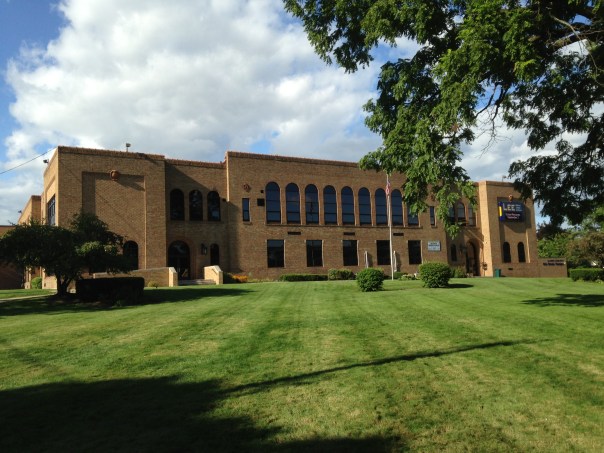 By: David Britten, Superintendent of Godfrey-Lee Public Schools


 By: Erin Albanese –
  ‘Boom, He Was Gone’

 “Drummunity” Encourages Cooperation Through Music


 By: Erin Albanese –

 By: Erin Albanese –
  “The purpose of learning about being a consumer as well as a producer was beyond achieved,” Berry said.


